
Rubbish collection in Bexleyheath
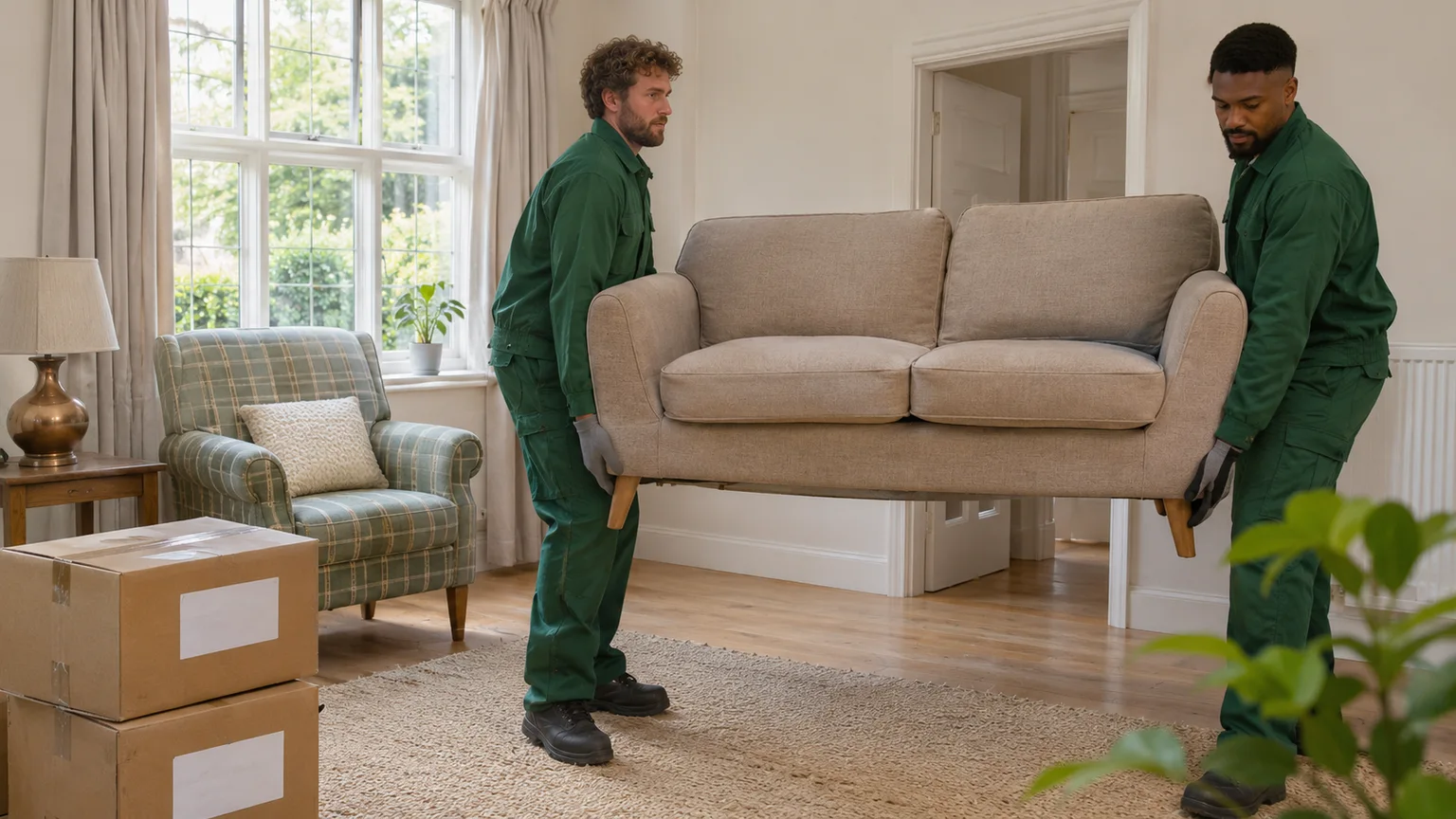
Our Bexleyheath collection removes agreed unwanted furniture and stored household contents from the property. We assess the items where they are located, carry them along the agreed route and load the removal. The enquiry covers selected pieces or a wider clear-out, with same-day availability across London and the M25 and phone enquiries 24/7.
Size a removal from separate indoor points
Include the rear-room furniture and the belongings stored elsewhere.
The guide considers the full ordinary household load while the quotation identifies carrying through the property to the loading point.
Can a furniture enquiry include contents from a rear room?
Yes. The enquiry identifies where the agreed furniture and belongings are within the property, including a rear room or other storage point. Our quotation considers the actual route to the loading position. That records the carrying work instead of treating every collection as an accessible pile already outside the front entrance.
Can I take smaller items on foot to a Bexley recycling centre?
Foots Cray on Maidstone Road allows pedestrian visits, while Thames Road in Crayford is vehicle-only. Both are Bexley resident household routes with address evidence required. That distinction can help with a manageable self-carried item. Our private service separately assesses carrying and loading the agreed furniture and containers from indoors, including rear rooms or other identified storage points.
An old sofa in a back room and boxes near the entrance can belong to the same removal while requiring different carrying routes. Our Bexleyheath enquiry identifies each agreed collection point. That gives the quotation a practical description of the work as well as the amount leaving.
Bexleyheath households organising self-delivery have two borough options: Thames Road in Crayford and Foots Cray on Maidstone Road. Their access differs, particularly for someone carrying a manageable item on foot. Our private collection instead provides carrying and loading for the furniture and belongings agreed at the property, including contents away from the front entrance.
- Rear-room furniture identified at its actual position.
- Separate storage contents included when agreed for removal.
- Carrying through the property assessed with the furniture dimensions.
- Complete load quoted rather than only an outside pile.
| Contents or position | What is recorded | Effect on the removal |
|---|---|---|
| Sofa in a rear room | The enquiry identifies the unwanted piece and its actual position within the property. | The carrying route forms part of the assessment instead of assuming the sofa is already outside and ready for loading. |
| Cabinet beside retained furniture | The agreed unit is distinguished from pieces that remain in use in the room. | A selected removal can address the unwanted furniture while keeping the rest of the room outside the collection list. |
| Boxes near the entrance | The smaller contents are identified as part of the complete household load when they are also leaving. | Their accessible position may differ from the main furniture, but their occupied space and weight still contribute. |
| Belongings in another storage point | The enquiry records the separate location and the agreed contents requiring collection from it. | The quotation can connect that second carrying position with the wider removal rather than covering only the most visible pile. |
Selected furniture from a room still in use
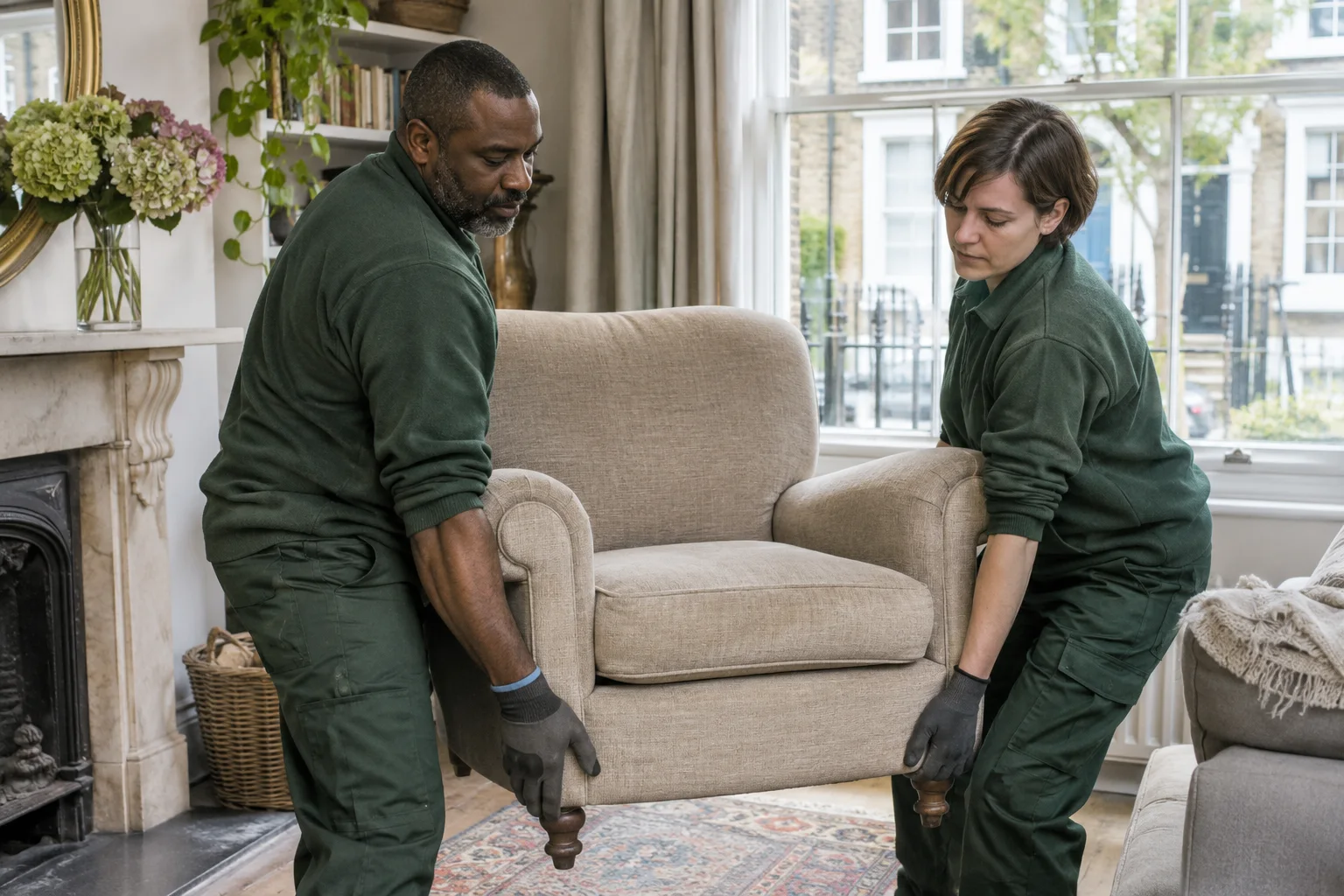
We identify the unwanted pieces while retained furniture stays separate from the removal. A sofa or cabinet can leave with agreed smaller belongings without describing every item in the room as waste. The quotation concerns those actual contents and the work needed to carry and load them.
| Guide price | Paired load limits | How the estimate applies |
|---|---|---|
| £55 minimum | Up to 50 kg. Describe bulky furniture dimensions and the accompanying containers for the quotation. | The enquiry identifies the actual contents and their positions so the collection can receive an appropriate quotation. |
| £120 | Up to 3 cubic yards and up to 250 kg. | Both limits must fit the agreed household load; the furniture’s occupied space and the contents’ weight are considered together. |
| £180 | Up to 6 cubic yards and up to 500 kg. | Smaller belongings in separate storage points count when they form part of the collection, even away from the main furniture. |
| £240 | Up to 9 cubic yards and up to 760 kg. | The guide concerns the whole agreed ordinary household load rather than a fixed price for a particular number of rooms. |
| £305 | Up to 12 cubic yards and up to 1,000 kg. | A collection beyond either limit receives a quote, with the actual carrying and loading work confirmed for the agreed removal. |

Two Bexley centres with different pedestrian access
Thames Road recycling centre is in Crayford, DA1 5QJ, and accepts vehicle visits only. Foots Cray on Maidstone Road, DA14 5HS, permits pedestrians as well as vehicles. Both are resident household routes with proof of a Bexley address required; the council excludes out-of-borough visitors and does not treat contractor-generated waste as the household’s own rubbish.
Bexley lists good-condition furniture, electronics, books and bicycles among goods that can be offered for reuse. A useful chair can therefore be considered separately from worn furnishings needing removal. We assess the actual remainder at the home, including a sofa in a rear room and boxes elsewhere, with each agreed carrying route connected to the loading vehicle.
| Named centre or reuse route | Materials and entry distinction | What our collection provides |
|---|---|---|
| Thames Road, Crayford DA1 5QJ | Bexley identifies Thames Road as a resident reuse and recycling centre with vehicle access only. Proof of a Bexley address is required. | The resident arranges transport to the site for a personal load. Our service addresses furniture and smaller contents still at the property, carrying the agreed items from their rooms and loading the vehicle. A sofa away from the entrance remains part of the assessed carrying task rather than being treated as already delivered to an outside point. |
| Foots Cray, Maidstone Road DA14 5HS | This second borough centre allows pedestrians and vehicles. The resident household eligibility rules still apply to items brought on foot. | A manageable self-carried item presents a different task from a full furniture group indoors. We quote for the actual selected pieces, their dimensions and positions, with containers in another room included where agreed. The team carries and loads that defined remainder while furniture staying in use remains outside the collection. |
| Good-condition goods for reuse | Bexley’s centre guidance includes books, bicycles, clothing, paired shoes, electronics, appliances and furniture among reusable donations. | Condition matters alongside the object’s name. A sound chair may leave through an independent reuse arrangement while an unwanted sofa and containers remain for our team. The quotation then follows that current selection, including dense smaller belongings contributing weight even where the furniture occupies most of the visible space. |
| Household origin and vehicle type | The council requires the visitor’s own household or garden rubbish. Contractor waste is outside that resident route, and vans have separate transfer-station conditions. | Our enquiry names building leftovers and business contents independently of ordinary domestic furniture. Their materials and origin establish the relevant service assessment. The team removes the groups accepted in the quotation from their identified collection points, rather than using resident eligibility to describe every load associated with a home. |
A carrying route from the rear of the property
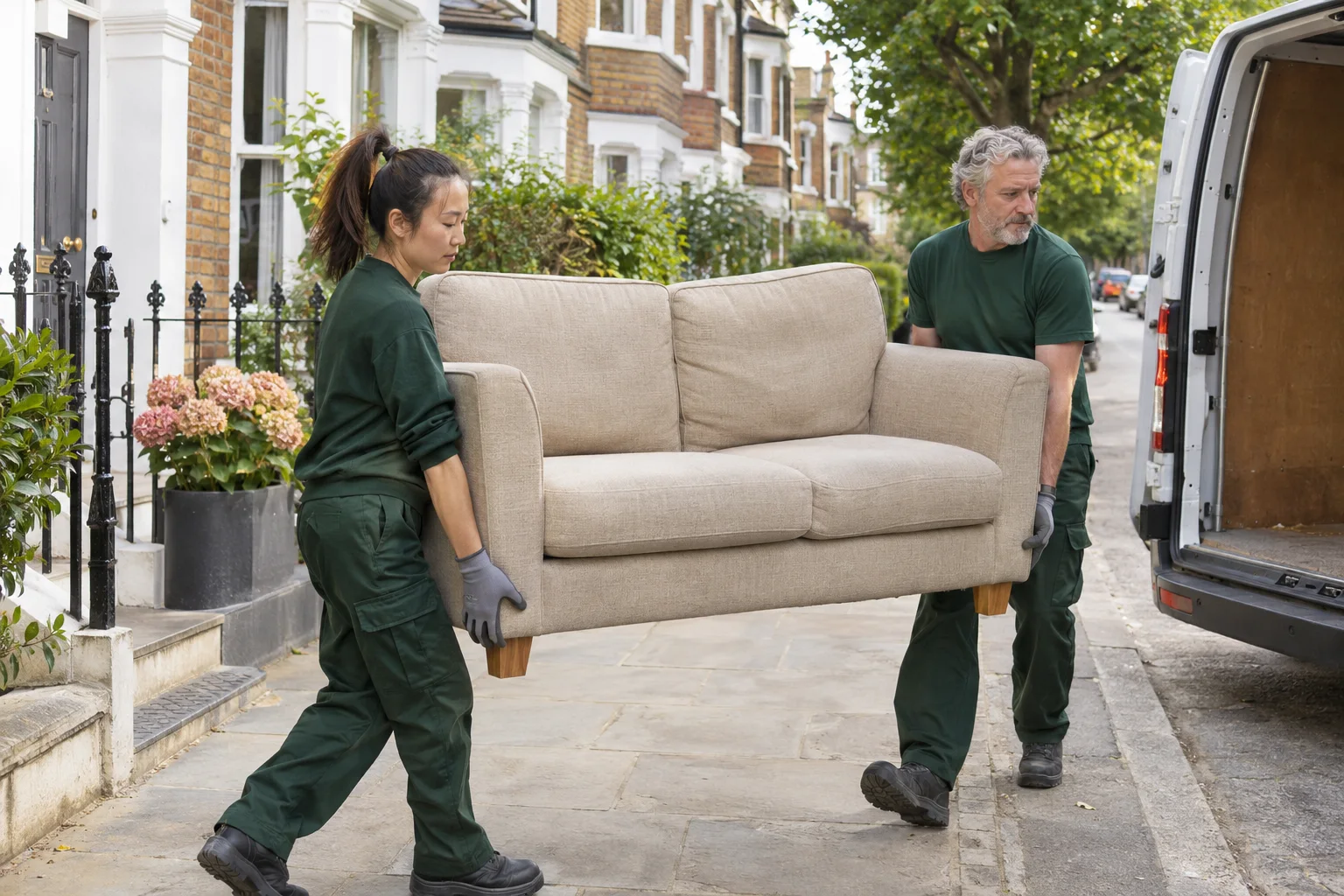
The assessment follows the route from the agreed contents through the property to the loading point. Doorways, passage space and changes of level matter to the actual furniture being removed. The quote records those details instead of assuming all rear-room items have direct outside access.
| Route detail | Assessment for collection | Practical difference |
|---|---|---|
| Room doorway | The furniture dimensions and the opening through which the piece leaves are considered together. | A sofa and compact bags can require different carrying assessments even when they leave from the same room. |
| Internal passage | The route links the rear collection point with the way out of the building. | The quotation concerns the actual property layout rather than assuming every stored piece has its own direct outside entrance. |
| Stairs or level changes | The enquiry identifies the location of the agreed contents relative to the exit. | Carrying from another floor represents different work from loading a piece already standing at the front collection point. |
| Loading position | The assessment connects each agreed indoor collection point with vehicle loading. | The quote can then describe the full removal work instead of separating the visible outside items from contents still requiring carrying. |
Loading furniture and smaller household contents
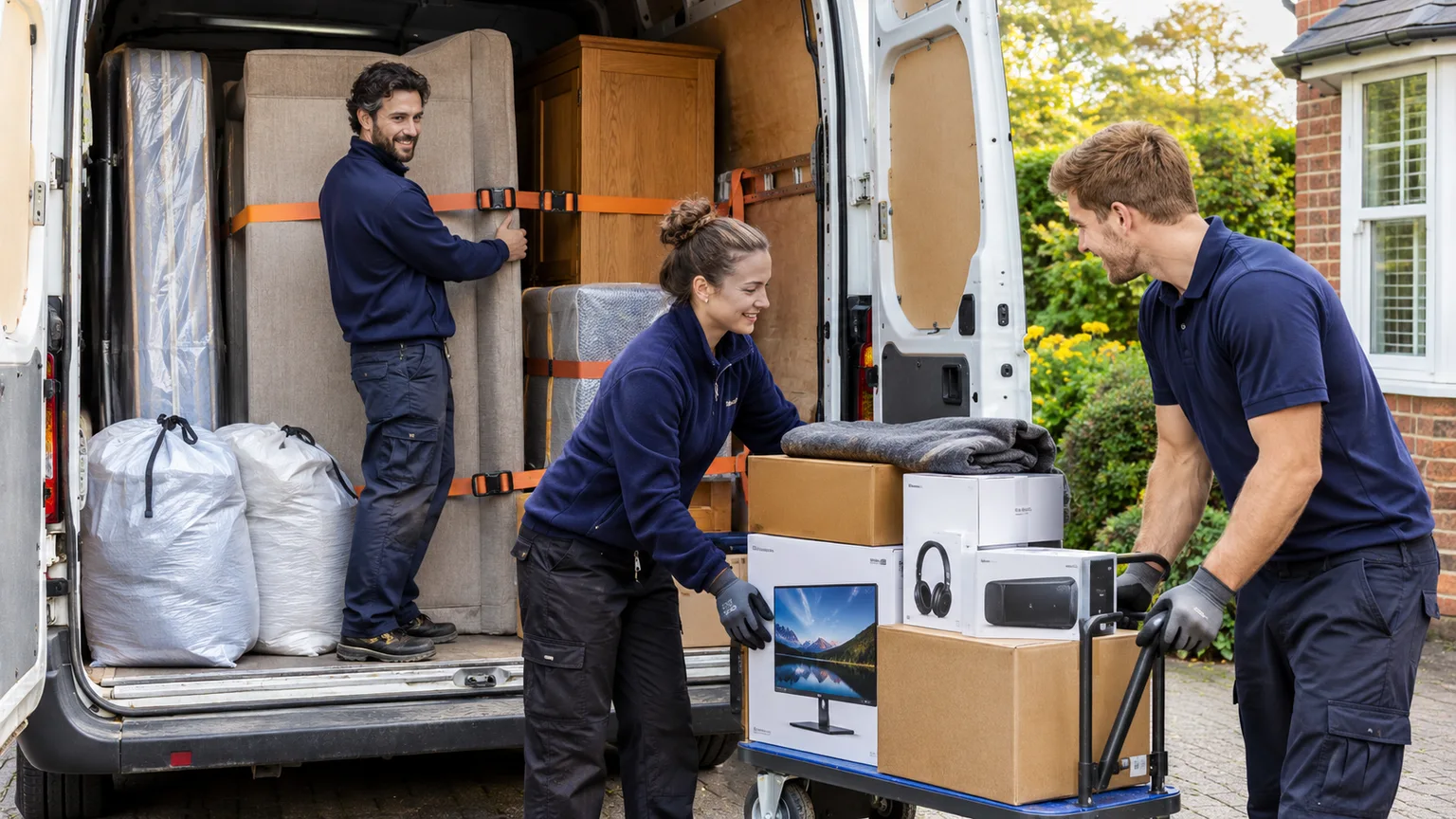
Our household guide checks occupied space and weight together for the ordinary domestic load. Large furniture and compact boxes can affect those measures differently. A whole-house clearance, equipment-focused collection or business load receives its appropriate individual assessment rather than being priced solely by room count.
| Material or service | Quote basis | Why it stays identifiable |
|---|---|---|
| Green waste | Garden cuttings use the approved green-waste guide with paired volume and weight limits. | Outdoor material is kept distinct from indoor furniture, so the request describes the actual contents and collection positions. |
| Building waste | Weight-only bands are up to 50, 250, 500, 760 and 1,000 kg at £55, £120, £180, £240 and £305. | Renovation debris is assessed by its materials and load; anything beyond the published weight bands receives a quotation. |
| Electrical or commercial contents | Equipment-focused and business removals receive individual quotations for the identified contents. | Those loads are not automatically absorbed into a household furniture band merely because they stand beside a cabinet. |
| Whole-property contents | A house-clearance enquiry assesses the unwanted contents and removal work across the property. | Room count alone does not establish the load or price, particularly where retained belongings and separate storage points remain. |
Collections in Bexleyheath
We cover Bexleyheath and the wider London and M25 service area. Same-day collection is available, and our phone line accepts enquiries 24/7. Each quote identifies the agreed contents, their collection points and the carrying and loading work.
Local reuse and recycling information
Frequently asked questions
Can a sofa leave without clearing the rest of the room?
Yes. The enquiry identifies that piece and any accompanying contents while the retained furniture stays outside the removal list. The carrying assessment relates to the agreed items leaving.
Which resident centre has pedestrian access from the Bexleyheath area?
Bexley permits visits on foot at Foots Cray, Maidstone Road, DA14 5HS. Thames Road in Crayford is vehicle-only. A resident still needs to meet the centre’s eligibility requirements. Our collection visits the property for the agreed furniture and belongings, providing the separate carrying and vehicle-loading work there.
Are hidden cupboard contents included automatically?
The enquiry identifies the belongings actually agreed for removal. A furniture description alone does not establish that all stored contents are leaving, so those groups remain distinct in the collection list.
Does the guide use only the size of the furniture?
No. Household bands consider occupied volume and weight together. Compact heavy boxes can influence the band even when the larger furniture accounts for most of the visible space.
Can outdoor debris have its own assessment?
Yes. The enquiry identifies the actual material and its collection position. Green waste, building debris and ordinary furniture retain their appropriate quote basis rather than being treated as one generic pile.