
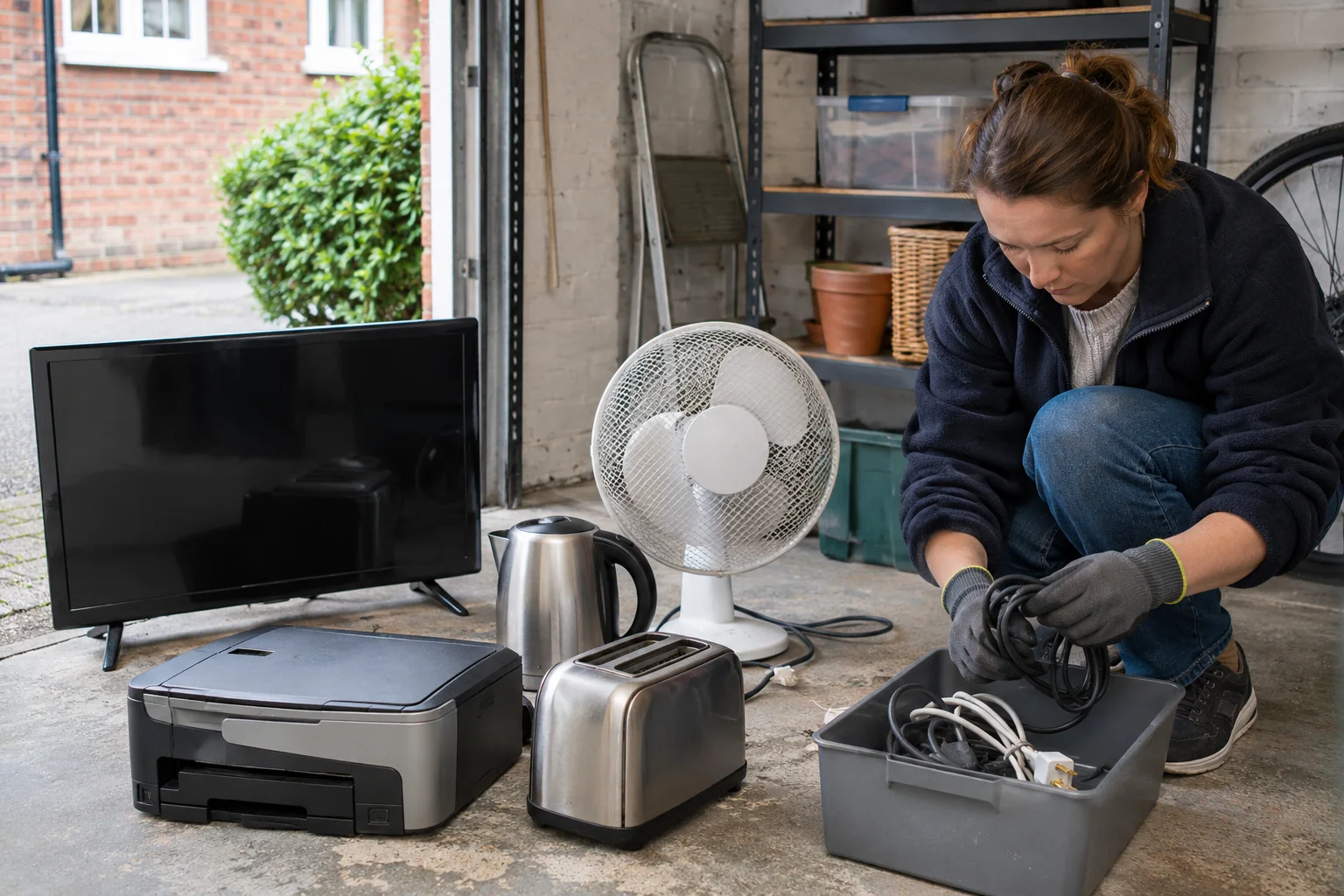
Rubbish collection in East Finchley
We collect unwanted furniture, household belongings and identified electrical items from East Finchley addresses. Our team carries the agreed contents to the vehicle and loads them for removal. Same-day service is available across London and the M25, with our phone line open 24/7.
Estimate furniture beside an appliance
Account for the full load and select electronics for an appliance-focused enquiry.
The assessment distinguishes the furniture from larger equipment, so the collection request describes what needs carrying.
Can an appliance be included with unwanted furniture?
The enquiry identifies an appliance alongside the furniture and household belongings leaving the property. Its type, dimensions and present installed or freestanding condition inform the quotation and carrying route. Our team carries and loads the agreed physical contents, while an equipment-focused request receives an individual quotation for its actual devices and associated removal work.
What is the difference between a Summers Lane visit and collection?
Barnet lists Summers Lane as a reuse and recycling centre receiving suitable household materials. A personal visit involves transporting and unloading those items, with different entry arrangements for vans and cars. Our collection provides carrying and loading at the property, then takes away the contents agreed in the quotation.
We assess unwanted appliances with the furniture and other household contents being removed. The enquiry identifies the larger pieces and their route to the vehicle.
East Finchley has a smaller-goods reuse option at North London Hospice, 123 High Road, N2 8AG, while Summers Lane in North Finchley handles a wider household material range. Those choices help separate reusable belongings from the appliance and furniture group still needing removal. Our team carries and loads the contents accepted in the quotation from their agreed positions.
- Appliances identified alongside household furniture.
- Carrying routes assessed from room to vehicle.
- Electrical and household quotations kept appropriate to the load.
- Responsible onward handling for the collected materials.
| Named facility or route | Specific material and access detail | How the private removal differs |
|---|---|---|
| North London Hospice, 123 High Road | The East Finchley shop is at N2 8AG. Saleable smaller goods in the charity’s guidance include books, crockery, glassware and small electrical items. | A suitable smaller donation can leave through the shop’s own acceptance process. Our quotation addresses the remaining equipment and household contents requiring carrying, with devices and their selected accessories named independently from storage furniture and belongings that stay in use. |
| Furniture uses designated hospice routes | The hospice accepts furniture at its High Barnet and North Finchley furniture shops or through its separate collection arrangement, rather than at every local shop. | A usable cabinet is therefore a different donation decision from a small radio. We collect the furnishings and equipment still agreed for removal, keeping independently accepted donations outside the load and assessing the physical pieces actually present at the property. |
| Summers Lane, Porters Lane | NLWA locates the centre in North Finchley. Barnet’s material list includes fridges and freezers, large appliances, small electricals, televisions and monitors. | This household self-delivery route differs from a team carrying an appliance from a room. We assess the accepted device’s position and present connection condition alongside its dimensions, with any furniture or containers accompanying it added as identifiable parts of the quotation. |
| Cars and vans have different entry arrangements | NLWA does not require advance booking for an ordinary car, bicycle or foot visit to Summers Lane. Vans, trailers and stripped vehicles require booking. | Those public conditions are separate from our property collection. Our team carries and loads the agreed equipment and other contents, with retained devices and useful fittings outside the selection and a wider property removal quoted for its complete accepted load. |
Furniture with an identified appliance in the load
Our removal can cover an old cabinet, seating and the specified appliance within one proposed enquiry. Electrical equipment is named individually so it remains visible among bags, boxes and larger furniture. The team carries the contents covered by the agreed arrangement.
A loose appliance and one still installed present different removal requirements. The quotation considers that condition alongside the location and route, allowing the proposed collection to reflect the equipment rather than only a generic room count.

| Item type | Collection detail | Why it affects the work |
|---|---|---|
| Larger household appliance | The enquiry identifies the appliance, its location and whether it is loose or still installed. | The proposed removal is assessed for that equipment and its route out. An appliance standing near the exit presents a different job from one held within a fitted position. |
| Television or screen | The size and shape of the screen remain visible within a larger furniture enquiry. | A bulky older set and a thin smaller monitor need different descriptions. The team considers the actual item through its doorway and carrying route before loading it with the agreed contents. |
| Computers and smaller devices | Complete devices are distinguished from accessories and ordinary boxes of belongings. | The list shows what equipment is leaving. Owners arrange personal-information preparation separately, while the collection covers physical carrying and transport of the specified devices. |
| Accompanying furniture | The chair, cabinet or storage piece is identified alongside the electrical item. | Both form part of the proposed removal when agreed. The quotation considers their combined amount and carrying work, rather than using the appliance as a substitute description for the whole load. |

Small donations on the High Road and appliances at Summers Lane
North London Hospice’s East Finchley shop is at 123 High Road, N2 8AG. Its donation guidance welcomes saleable smaller goods, including books, crockery and small electricals, while furniture goes to its designated furniture shops or collection route. Summers Lane, at Porters Lane in North Finchley, accepts separate household appliance categories such as fridges, small electricals and televisions.
Our team collects the accepted equipment and furniture remaining after a personal donation or recycling decision. Each device stays identifiable alongside the cabinet, chair or containers leaving with it, and the quotation connects its present condition and collection point with the carrying route.
| Combined limit | Guide price | Use in a mixed domestic enquiry |
|---|---|---|
| Up to 50 kg | £55 | The minimum household band has a confirmed weight cap. Its volume allowance is established with the quote, including the size of any bulky lightweight piece being removed. |
| Up to 3 yd³ and 250 kg | £120 | Both limits apply to the combined domestic load. Furniture and accompanying boxed or bagged belongings count together, with dense contents relevant even if they occupy little space. |
| Up to 6 yd³ and 500 kg | £180 | The quotation assesses the whole household load against its volume and weight allowances. Containers away from the main furniture piece remain included when specified for the visit. |
| Up to 9 yd³ and 760 kg | £240 | The guide remains subject to both ceilings. A material breakdown distinguishes large light pieces from smaller dense contents, helping describe the complete collection rather than only its appearance. |
| Up to 12 yd³ and 1,000 kg | £305 | Loads over either limit need a quote. Whole-property jobs and collections focused on electrical equipment are assessed for their actual requirements, rather than automatically assigned a household furniture band. |
Personal unloading compared with property carrying
A visit to Summers Lane involves reaching the facility with suitable materials and unloading them. Barnet describes assistance for disabled visitors and expects other visitors to unload themselves or with one other person. Its site guidance also distinguishes van bookings from ordinary car visits.
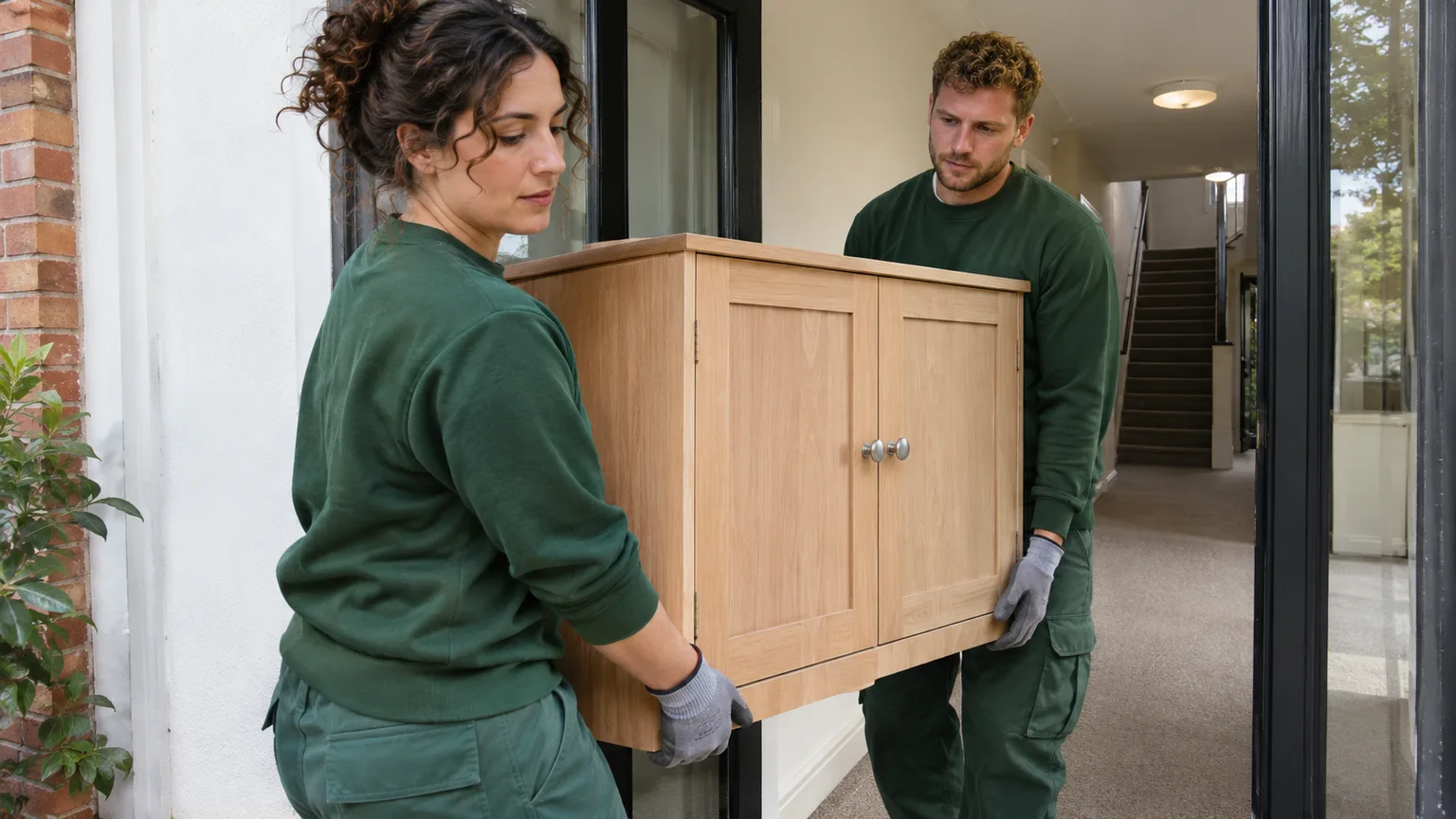
Our team carries the agreed contents from their location at the property and loads the collection vehicle. A room doorway, stairs and the route to the exit are considered with the particular piece, so the quote covers the movement required before transport.
| Location feature | Effect on a larger item | How removal is assessed |
|---|---|---|
| Room and doorway | The piece has to leave its starting position and pass through the room exit. | The team considers furniture or equipment dimensions along that route. Turning space and the door connection matter to carrying, while smaller accompanying containers remain part of the load. |
| Another floor | Stairs or an available lift connect the item with the building exit. | The quotation identifies the floor and available route for the specified piece. A load held upstairs is assessed from that location rather than treated as if everything is already outside. |
| Loading connection | The practical vehicle position defines the final part of movement from the property. | The service carries the agreed contents to that point and loads them. The arrangement joins indoor movement and vehicle transport into a removal for the items named in the quotation. |
The complete household load and its materials
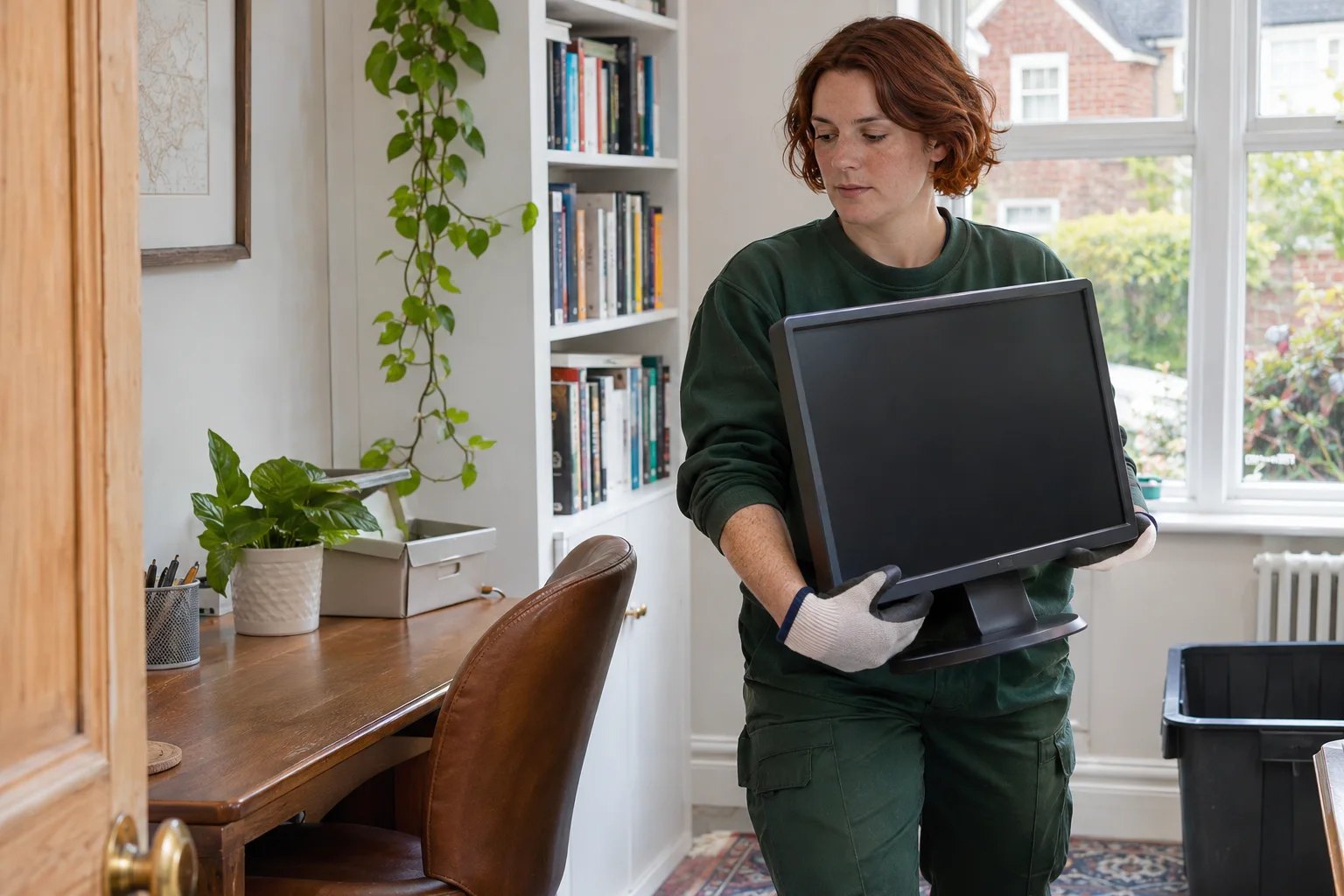
Mixed contents can bring together a light but bulky chair, dense boxed belongings and electrical equipment. The quotation distinguishes those groups and the complete collection points. Furniture at the entrance and additional contents elsewhere remain parts of one agreed removal.
We transport collected rubbish for responsible handling and recycle as much as possible. Household load bands guide mixed domestic enquiries within their limits. Larger property clearances, business rubbish and equipment-focused loads receive a quote for their own contents and carrying work.
| Material group | Part of the load | Appropriate handling description |
|---|---|---|
| Books and boxed possessions | Dense contents may accompany a larger but lighter furniture piece. | Their weight contributes to the mixed household assessment. The enquiry describes what the boxes hold as well as the furniture being carried, giving a useful picture of the combined removal. |
| Textiles and furniture | Loose clothing or bedding differs from a large upholstered chair or sofa. | The team can assess the identified groups together. Their shape, quantity and material affect the load, with recycling where suitable and responsible disposal for material needing another route. |
| Business equipment | An appliance or furniture piece produced by a business has a different origin from domestic belongings. | Commercial rubbish receives its own quotation. The household guide is not a universal equipment tariff, even where the unwanted object resembles something commonly used in a home. |
Collections in East Finchley
We cover East Finchley and all London and the M25. Same-day appointments are available, with the collection arranged for the contents and schedule. Our 24/7 phone line accepts enquiries about furniture, household rubbish and identified electrical equipment.
Local reuse and recycling information
Frequently asked questions
Can I take a cabinet to the hospice shop on East Finchley High Road?
North London Hospice directs furniture to its designated furniture shops or collection route;123 High Road is its East Finchley shop for suitable smaller donations. Our enquiry separately identifies any cabinet and equipment still agreed for private carrying and loading from your property.
Can I use a van for a personal recycling-centre visit?
Barnet says van visits require advance booking and residency evidence. Those facility conditions are separate from arranging our team to collect the agreed contents at the property.
Why mention whether an appliance is still installed?
Its installed condition affects the proposed removal work. The enquiry distinguishes it from loose furniture so the appropriate collection arrangement can be established for that equipment.
Can an old cabinet leave with a screen?
Both can be named in the same enquiry. Their dimensions, locations and combined contents inform the quote, with the screen remaining identifiable within the removal list.
Does collecting a computer include information preparation?
Owners complete their personal-information arrangements before handing over devices. The collection provides carrying and physical transport; specialist data work is arranged separately.