
Home > Building waste removal in London

Building waste removal in London
Tom’s Junk Collectors removes debris from renovation, refurbishment and construction work across London and the M25. Our team serves homeowners, landlords, builders and contractors, carrying and loading the agreed building waste into its collection vehicle. A free, no-obligation quotation is available for the materials and collection required.
Collection, carrying and loading
London service · Quote for your load
Same-day collection available · Call our 24/7 phone line.
Get a collection estimate
Choose your service and describe the load.
How much does building waste removal cost?
Building waste prices are based on weight: £55 up to 50 kg, £120 up to 250 kg, £180 up to 500 kg, £240 up to 760 kg and £305 up to 1,000 kg. Loads above 1,000 kg need a quote. Describe the materials and access when enquiring so the team can assess your collection accurately.
What building materials can I ask to have removed?
The published service covers bricks, concrete, rubble, timber, metal, plasterboard and tiles from building work. Send a breakdown of the materials and show any separate piles in your photographs. If you have an unidentified substance or potentially hazardous material, describe it before booking; its acceptance is not established by the general building waste list.
We clear waste between building stages or after completion. A bathroom refit may leave compact piles of tiles and rubble; larger refurbishments produce timber, metal and plasterboard across several rooms. Collection covers the actual debris.
Our team carries the agreed materials from their collection points and loads the vehicle for removal. Rubbish beside an entrance, upstairs or behind the property involves different carrying routes. The service connects those locations with the loading point, saving the customer a separate journey to a disposal facility.
| Total load weight | Published price | Applying the band |
|---|---|---|
| Up to 50 kg | £55 | The minimum listed rate covers a total building waste weight of no more than 50 kg across the agreed materials being removed. |
| Up to 250 kg | £120 | The combined weight determines this band. Several small bags together can move a collection beyond the minimum allowance even without a bulky heap. |
| Up to 500 kg | £180 | A compact rubble pile may reach this band despite occupying little room. Building waste rates are not calculated from a van-space fraction. |
| Up to 760 kg | £240 | Bricks, timber, plasterboard and metal all count towards the total when included in one collection, along with smaller separate piles of agreed debris. |
| Up to 1,000 kg | £305 | This is the highest published weight band. Additional debris produced before the visit changes the load that the quotation needs to cover. |
| Above 1,000 kg | Quote required | A larger building load receives an individual quotation. The collection can address a completed clearance or waste removed between stages of a continuing project. |
Collection for the stage your project has reached
Collections cover completed loads or waste between building phases. We remove agreed debris so the area can serve the next stage, trade or delivery. The quotation reflects the materials ready for that visit, including additions agreed after the initial enquiry.
Removal can cover one room’s debris or identified piles across the property. The agreed rubbish remains distinct from new building materials, tools and reusable pieces staying on site.

| Material | Collection characteristics | What affects handling |
|---|---|---|
| Bricks and concrete | The service removes loose bricks and concrete rubble, including agreed bagged debris. | These dense materials make weight especially important. A small-looking heap can represent a substantial load, so the assessment considers its contents rather than apparent space alone. |
| Timber and wood | Collection covers identified loose or stacked timber and wood left by building work. | Long pieces affect carrying and loading even when their weight is modest. Their dimensions matter when the route includes a staircase, doorway or narrow passage. |
| Plasterboard | Boards and broken plasterboard sections are identifiable materials within the collection. | Plasterboard requires identification for an appropriate receiving route. It is not treated as interchangeable with every other broken panel or piece of mineral rubble. |
| Tiles and mixed rubble | Tiles can be removed separately or as an identified part of mixed demolition debris. | A material breakdown is more informative than a bag count. Bags can differ in size, fullness and contents, producing very different collection weights. |

Weight-based prices for heavy and mixed debris
Building waste rates are based on weight. Bricks and concrete can make a heavy collection without creating a large heap. Timber can occupy more room for the same weight. Our published bands therefore use kilograms, with the combined building load assessed by weight rather than a fraction of van space.
The price reference applies to all agreed materials in the collection, including smaller piles away from the main work area. Available weight information and a material breakdown help describe that total. Loads over 1,000 kg receive an individual quotation, while changes to the waste are reflected in the agreed removal.
| Project stage | Collection requirement | How the visit fits the work |
|---|---|---|
| Before a strip-out begins | The expected materials establish an initial enquiry before the final load exists. | A collection can be planned around the work, with the actual debris assessed once its amount is known. The eventual quotation reflects what is ready to leave. |
| After one room is cleared | The removal covers the identified materials from the finished room or work area. | The team collects the agreed pile and any included bags, rather than assuming the waste quantity from the name or size of the room alone. |
| Between trades | Collection removes agreed waste so the working area can serve the next stage. | The agreed rubbish is carried and loaded separately from new supplies and equipment remaining for the next trade, with the available appointment confirmed for the project. |
| Near the end of refurbishment | The visit can cover debris left in several rooms and outside storage areas. | A single collection description brings those separate piles together. Smaller groups away from the main work area still form part of the agreed weight being removed. |
Carrying from the work area to the van
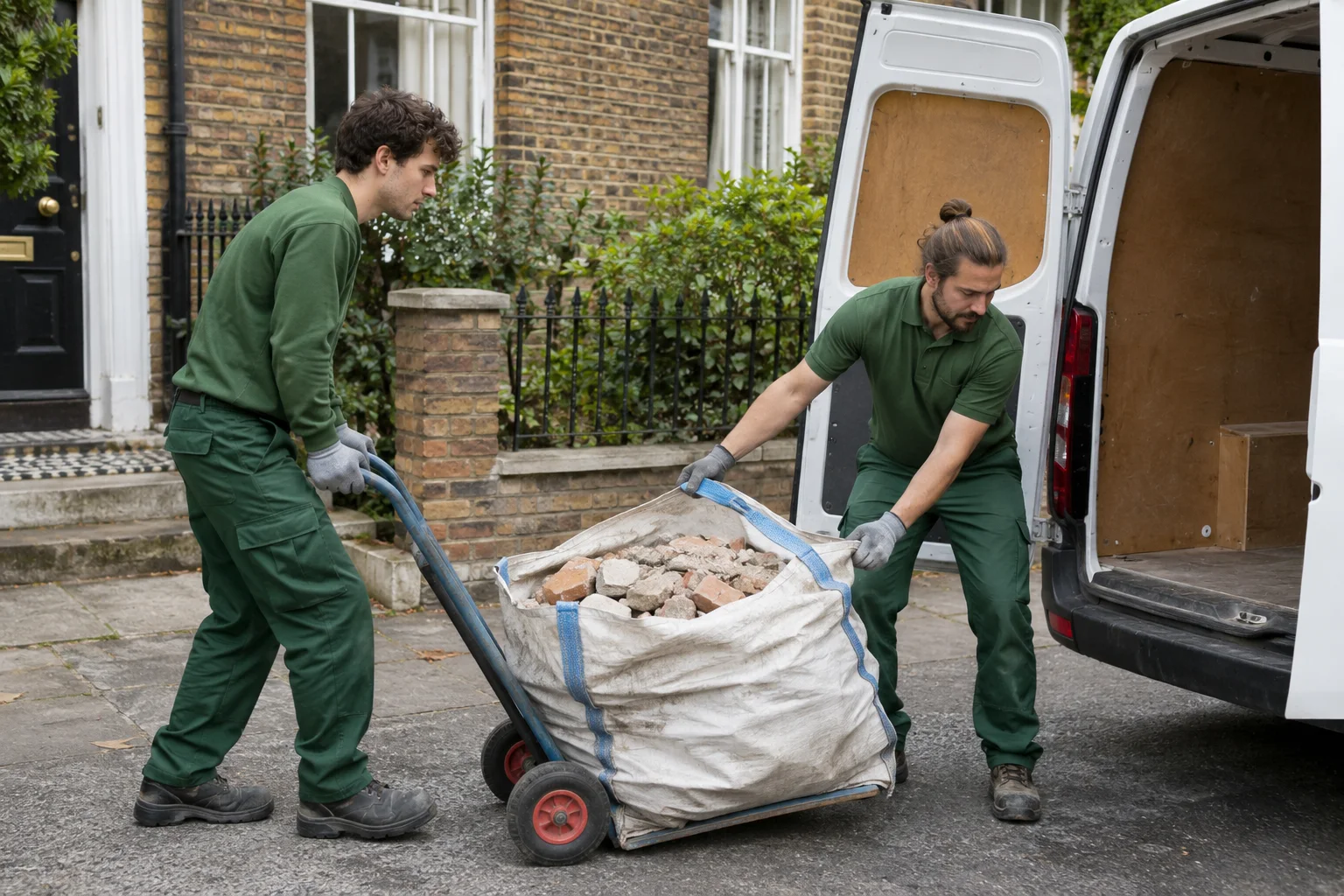
We carry building debris from its agreed location to the collection vehicle. The route may involve an upper floor, basement steps, a narrow corridor or rear access, depending on the property. These features are part of arranging the collection, particularly where refurbishment continues in an occupied home.
Loading takes place at the practical vehicle position. The carrying arrangement connects that point with identified waste in rooms or outside storage areas, rather than assuming debris is already beside the street.
| Collection location | Route to the vehicle | How removal is arranged |
|---|---|---|
| Front garden or driveway | The pile connects to the loading point through the driveway or front approach. | The vehicle position determines the actual carrying distance. The service covers the agreed rubbish from its location rather than assuming the van can stop beside it. |
| Rear of the property | The route may use a side passage, gates or the building itself. | Long timber and awkward pieces need a usable route through the property. The collection arrangement considers the actual passage rather than a distance measured on a plan. |
| Upper floor | Debris reaches the loading point via the available staircase or lift arrangement. | Narrow turns and doorways are relevant to carrying bulky pieces. The agreed arrangement connects the identified floor with the practical vehicle loading point. |
| Basement or lower ground floor | The carrying route includes the changes of level between the work area and street. | Steps and confined passages form part of the carrying arrangement. The collection accounts for where the debris is kept before it can reach the loading point. |

Material handling after the load leaves the site
We collect bricks, concrete, rubble, timber, metal, plasterboard and tiles, then transport the agreed waste to licensed recycling centres. Those materials do not all follow the same processing route. The service aims to recycle as much as possible, with treatment depending on the actual material and the receiving facility.
A refurbishment load can contain mineral debris and lighter offcuts requiring different handling. Acceptance of hazardous material or unknown chemicals requires separate confirmation; the ordinary building material list does not establish it.
| Load characteristic | What the assessment uses | Why the distinction matters |
|---|---|---|
| Bagged debris | The bag count is considered alongside bag size and the identified contents. | Ten bags is not a fixed weight. Different filling levels and a mix of rubble and lightweight offcuts make a simple bag count incomplete. |
| Loose pile photographs | An overview establishes height and edges, with the contents described separately. | Photographs show the extent of a pile, including debris behind a wall or stored materials. They explain shape and quantity without establishing the weight by themselves. |
| Separate material groups | The full material list covers every agreed group across the property or site. | The collection weight includes all agreed groups, not just the largest heap. Several smaller piles can make a significant contribution to the combined building load. |
| Dense rubble and light offcuts | Bricks and concrete are distinguished from timber offcuts and other lighter building material. | Similar-looking pile sizes can have different weights. The building rate follows the combined weight of the agreed debris, so occupied space is not used as a substitute tariff. |
Collection area
Building waste removal is available across London and the M25. Same-day and next-day visits are offered subject to availability, with the appointment arranged for the site postcode and agreed load. Collections serve homes under refurbishment as well as building projects managed by contractors and landlords.
Frequently asked questions
Are building waste prices calculated by van space?
No. The published building waste bands are calculated by weight, from £55 up to 50 kg to £305 up to 1,000 kg. Above 1,000 kg needs a quote. Photographs help explain the load but do not turn these rates into volume-based prices.
Can you collect while my renovation is still underway?
Yes. The service can remove agreed debris between project stages as well as after completion. The visit covers the actual load ready for removal, with any additions incorporated into the collection agreement. Appointments are arranged around the project requirement and available collection times.
Do I need to carry rubble downstairs first?
The service includes carrying and loading the agreed building waste. An upstairs collection can therefore be assessed from its actual location, with the floor, stairs and route forming part of the arrangement. The team does not assume the rubble is already at ground level.
Can plasterboard go with the other debris?
Yes, plasterboard is among the materials covered by the service. It is identified within the collection so suitable handling can be arranged. The quotation covers the agreed plasterboard alongside other specified building materials, with their combined weight determining the relevant published rate.
Can I add chemicals or unidentified materials?
Send details before booking rather than placing them in rubble bags. The general building material list does not establish acceptance of hazardous items or unknown chemicals. A photograph and product label, where available, help the team clarify whether that item can be included.
Arrange your collection
Request a quote for the items you want removed.