
Home > Garden waste removal in London

Garden waste removal in London
Tom’s Junk Collectors removes the waste left by weekend gardening, seasonal pruning and garden renovations across London. Our team carries the agreed rubbish from its collection point and loads the van, then transports the material for suitable recycling, composting or disposal. A free, no-obligation quote covers the proposed collection.
Same-day collection available · Call our 24/7 phone line.
Get a collection estimate
Choose your service and describe the load.
How much does garden waste removal cost?
Garden waste removal starts at £55 for up to 50 kg; the minimum-load volume allowance needs confirmation. Other bands are £120 up to 3 yd³ and 250 kg, £180 up to 6 yd³ and 500 kg, £240 up to 9 yd³ and 760 kg, and £305 up to 12 yd³ and 1,000 kg. Both limits apply.
What garden rubbish can be collected?
The service covers grass clippings, leaves, branches, small tree trunks and soil, alongside old garden furniture and tools. Describe the different materials when requesting collection, especially where a green waste pile also contains heavier landscaping debris. The team can then assess the load, carrying route and suitable disposal arrangements before the visit.
Our garden waste service collects loose cuttings, bagged leaves, branches and material left by border clearances. A springy hedge pile, dense soil bags and an old outdoor table are different loads, even when they come from the same job.
The team handles carrying and loading as well as transporting the rubbish away. Collections can involve waste beside a front gate, at the end of a rear garden or reached through the home. The location and route form part of arranging the removal, so the job covers the rubbish where it is kept.
A collection suited to the material in your garden
We collect grass, leaves and fine hedge trimmings alongside woody branches, small tree trunks and soil. Garden furniture and unwanted tools can also form part of a garden clearance. The team handles the agreed combination of materials, with the quotation reflecting the complete pile rather than just its lightest or most visible part.
Collection can follow a finished tidy or a larger gardening job. Additional branches or soil change the load being removed. Photographs of the completed pile provide a practical basis for the free quotation.

| Load band | Published price | How to read the allowance |
|---|---|---|
| Minimum load: up to 50 kg | £55 | The minimum has a confirmed weight limit; its volume allowance is confirmed with the quote because no minimum volume cap is specified. |
| Up to 3 yd³ and 250 kg | £120 | Both ceilings apply to this band. A smaller pile that weighs more than 250 kg needs assessment against a higher band or a quote. |
| Up to 6 yd³ and 500 kg | £180 | This allowance covers the complete agreed load: all bags, loose cuttings and included outdoor items, rather than only the main visible heap. |
| Up to 9 yd³ and 760 kg | £240 | This is a combined space and weight allowance. Wet leaves and soil can make an apparently modest load heavier than expected. |
| Up to 12 yd³ and 1,000 kg | £305 | The largest listed band still has two limits. Bulky branches and dense sacks both form part of assessing the complete garden load. |
| Above either listed limit | Quote required | A pile over 12 yd³ or 1,000 kg receives an individual quotation based on the actual collection rather than an assumed extension of these rates. |
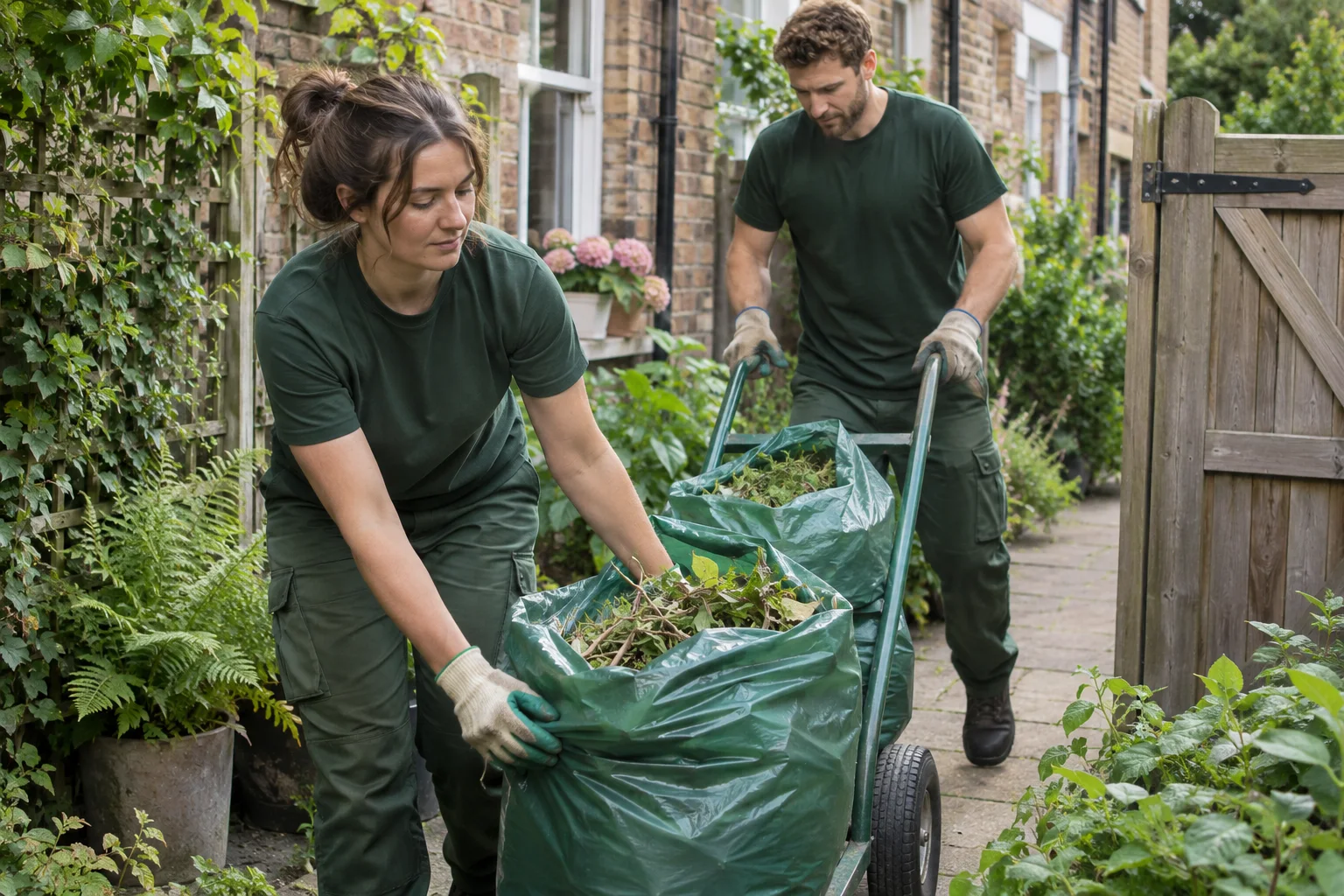
Carrying rubbish out of a rear garden
The team carries garden rubbish along the agreed route to the collection vehicle. Rear gardens can involve side passages, gates, steps or an indoor route; long branches and outdoor furniture need enough turning room as well as a clear exit. These features are considered when arranging how the agreed items will reach the van.
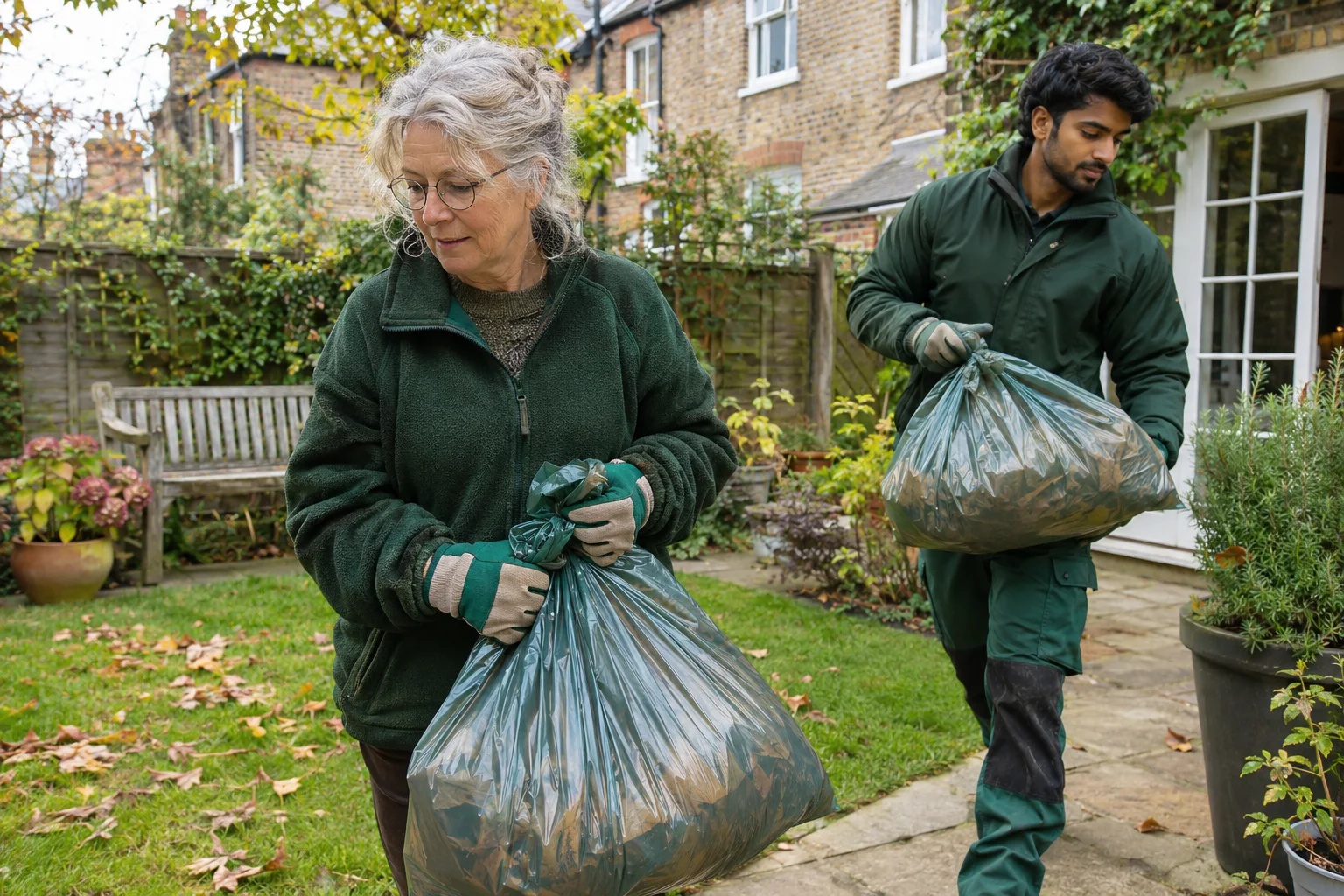
A collection can cover several piles across a lawn, patio and planting area. The agreed removal identifies which cuttings, bags and outdoor items are leaving, while furniture and tools still in use remain at the property.
| Material | Collection characteristics | What affects the load |
|---|---|---|
| Grass clippings and leaves | Grass and leaves can be collected loose or bagged, including material gathered during seasonal garden work. | Wet plant material can be considerably heavier than dry cuttings, so the same apparent size may not fit the same price band. |
| Branches and hedge cuttings | The collection can include long branches and irregular heaps left by hedge cutting or pruning. | Long, springy branches occupy irregular space. A close-up of a few cut ends does not show how much the team must load. |
| Soil from beds or planters | Soil from beds and planters is assessed as dense material, whether held loose in containers or in bags. | Dense garden material needs particular attention to weight. A bag count alone does not establish a reliable total without knowing bag size and contents. |
| Garden furniture and tools | Furniture and tools can be included with plant waste as identified garden clearance items. | These are garden clearance items rather than compostable cuttings. Identifying them helps plan loading and the appropriate treatment after collection. |
Understanding green waste price limits
Volume and weight limits both apply to green waste price bands. We assess the proposed load against those two allowances: springy branches may fill the available space, while wet leaves or soil may reach the weight limit first. Neither a bag count nor an image alone establishes the weight of its contents.
The published bands give a clear reference for garden collections, with an individual quote for loads above either limit. Dense soil and mixed outdoor items are identified as part of that assessment. The £55 minimum covers up to 50 kg; its volume allowance is confirmed with the quotation because no separate minimum volume cap is published.
| Garden project | What the collection covers | How the removal fits the job |
|---|---|---|
| Seasonal lawn and leaf tidy | Several small piles may be scattered between the lawn, beds and patio. | The team can remove the agreed small piles from different parts of the garden, with stored gardening supplies remaining separate from the rubbish. |
| Hedge reduction | The main heap may hide additional branches underneath or behind a fence. | Collection covers the agreed branch heap, including cuttings stored separately from its most visible part, so the removal reflects the completed pruning work. |
| Border or planter clearance | Soil, root material and empty containers may be mixed together. | The load can include the identified soil, roots and unwanted containers together, while pots retained for replanting remain outside the agreed removal. |
| Outdoor furniture replacement | Old chairs, tables and tools may be standing among items still in use. | The team carries and loads the specified chairs, tables or tools. Assembled size and the exit route affect how larger outdoor pieces reach the vehicle. |

Loading, removal and responsible disposal
On collection day, the team carries the agreed garden rubbish and loads it into the van. The removal can include bags, loose plant material and the specified outdoor items from the identified collection points. The load being taken away is the one covered by the quotation, including any changes agreed before the visit.
We transport collected garden material to licensed recycling centres. Suitable plant material can be recycled or composted, while furniture, tools and mixed garden debris require handling appropriate to their materials. This supports recovery where possible without treating a mixed clearance as if every item were compostable. Same-day and next-day appointments are available subject to scheduling.
| Part of the job | Information used for assessment | What it establishes |
|---|---|---|
| Whole load | An overview of the pile’s edges and height shows the amount awaiting collection. | This shows the overall amount to collect and helps avoid a quotation based on a tightly cropped section of the rubbish. |
| Different materials | Views of soil, woody pieces or furniture distinguish them from the surrounding leaves. | The team can distinguish a mostly green load from one with substantial dense or bulky items needing separate consideration. |
| Garden exit | The gate, side passage or doorway identifies the route used to reach the vehicle. | A clear view helps explain turning space and whether longer branches or furniture can travel along the proposed carrying route. |
| Vehicle approach | The vehicle stopping position establishes where carrying ends and loading takes place. | An approximate carrying distance, together with the street position, helps connect the garden photograph to the actual loading point. |
| Material group | Disposal approach | Helpful distinction |
|---|---|---|
| Leaves and grass | Suitable green material can be directed towards composting through the receiving facility. | Household rubbish, bags, tools and outdoor furniture require different handling from plant cuttings, even when they are collected from the same garden. |
| Woody garden material | Branches and small trunks need assessment as woody green waste. | Substantial woody sections differ in weight and shape from loose leaves. They remain identifiable within the agreed collection rather than being treated as fine cuttings. |
| Soil and mixed roots | The receiving route depends on what the material contains. | A mainly soil load differs from a plant pile or mixed landscaping debris. The collection description distinguishes those materials before they reach the receiving facility. |
| Furniture and garden tools | These require a suitable route for their actual materials rather than composting. | A metal tool, plastic chair and timber table should not be treated as one indistinguishable heap of organic garden waste. |
Collection area
Garden waste collections are available across London, with same-day and next-day visits subject to availability. The quotation and appointment are arranged for the postcode, complete load and carrying access, whether the rubbish is at the front of the property or in a rear garden.
Frequently asked questions
Do I have to bring everything to the pavement?
The team carries and loads agreed rubbish from the garden collection point. A rear garden does not automatically require moving everything to the pavement. The agreed carrying arrangement takes account of where the waste is kept and its route to the vehicle.
Can I book before I finish pruning?
Collection can be arranged around completion of the pruning. The quote needs to reflect the final amount ready for removal, including branches or bags added during the work. Updated photographs allow the finished load to be assessed rather than relying on an earlier, smaller pile.
Should soil be included with the leaves?
Soil can form part of a garden waste enquiry, but it is identified as dense material rather than treated as equivalent to loose leaves. Its weight counts towards the load allowance, and the quotation covers the agreed soil as well as the plant material.
Can old garden furniture go on the same collection?
Garden furniture and tools are among the items covered by this service. They can be assessed alongside plant waste for the same proposed collection. The quotation identifies those items, while assembled dimensions and access determine the carrying arrangement for larger pieces.
Is a same-day collection always available?
Same-day and next-day collection can be requested, but availability needs checking for your postcode and load. Send photographs, a material list and access information with the enquiry to help establish whether a suitable visit can be arranged.
Arrange your collection
Request a quote for the items you want removed.