
Home > Domestic rubbish collection in London

Domestic rubbish collection in London
We collect unwanted household rubbish across London, including furniture, appliances, electrical items, clothing and mixed domestic waste. Our team carries and loads the agreed items from your home for responsible recycling and disposal, with clear load pricing and flexible collection availability.
Same-day collection available · Call our 24/7 phone line.
Get a collection estimate
Choose your service and describe the load.
What can domestic rubbish collection remove?
Domestic rubbish collection can remove general household rubbish, old furniture, appliances, clothing, electronics and other unwanted belongings. The service suits a declutter, bulky items or rubbish accumulated in a room or garage. Describe the materials and quantities accurately, with photographs where possible, so the collection can be arranged for the actual load and access.
What are the household rubbish collection prices?
The minimum household tier is £55 for up to 50kg. Larger guide prices are £120 for up to 3 cubic yards and 250kg, £180 for 6 cubic yards and 500kg, £240 for 9 cubic yards and 760kg, and £305 for 12 cubic yards and 1,000kg. Both larger-tier limits apply; loads above them require a quote.
Tom’s Junk Collectors provides domestic rubbish collection across London, removing the household items left by furniture replacements, storage clear-outs, moves and everyday decluttering. We collect small mixed loads as well as larger groups of unwanted belongings.
Our team handles the carrying and loading, then takes the collected materials for responsible disposal and recycling where possible. A free, no-obligation quote is based on the rubbish and the property access. Same-day and next-day appointments are available subject to scheduling, offering flexible collection timing.
Bulky furniture collected with household rubbish
We remove unwanted sofas, beds, tables and storage furniture, either as the main collection or alongside other domestic rubbish. The team carries the agreed pieces out of the home and loads them with the rest of the collection.
Our assessment considers the item’s location and the route out, including narrow doorways and stair turns. One collection can combine furniture and smaller household waste, avoiding separate arrangements for every part of the clear-out. Freestanding pieces are distinguished from fitted or fixed furniture so the proposed removal reflects the actual handling needed at the property.

| Load type | What to describe | How to prepare it |
|---|---|---|
| Mixed bags and boxes | Give the approximate number and explain the contents, such as unwanted clothing, packaging and general household belongings. Mention dense contents like books rather than describing everything simply as rubbish. | Keep bags manageable and containers closed where suitable. Avoid combining sharp objects, unidentified liquids or electrical items with ordinary loose waste where their presence could be missed. |
| Furniture after replacement | List each sofa, bed, table or storage unit, with its approximate size and room location. Photographs are particularly useful when several bulky items make the pile difficult to judge. | Remove the belongings you are keeping from drawers and shelves. Point out fitted or fixed pieces, because they are different from furniture that can be carried straight out. |
| Old household appliances | Name every appliance, including smaller items gathered with a larger kitchen appliance. Say whether it is still connected and where it stands within the home. | Empty retained contents and identify any connection arrangements. Do not assume the collection provides plumbing, gas work or electrical disconnection simply because the appliance is being removed. |

Mixed loads from garages and household storage
We collect unwanted household contents from garages, cupboards and spare rooms, including broken storage units, old belongings, unused electrical equipment and general rubbish. The job can combine larger objects with bags and boxes.
The contents of containers matter as well as their number: boxes of books add different weight from bags of clothing. Our quote uses the materials and approximate quantities to assess the household load. Identified building debris or unusual materials are considered separately from ordinary domestic rubbish, allowing the appropriate service and collection arrangement to be established.
| Household tier | Price | Volume and weight rule |
|---|---|---|
| Minimum: up to 50kg | £55 | The minimum tier has a confirmed weight limit but no defined volume cap. Describe bulky light items to obtain a suitable quote for the actual collection. |
| Up to 3 cubic yards and 250kg | £120 | The collection must remain within both allowances for this guide tier. A compact pile can exceed the weight limit when it contains dense household materials. |
| Up to 6 cubic yards and 500kg | £180 | Check the larger objects as well as the bags around them. Furniture shape affects occupied space, while tightly packed boxes may contribute more weight than expected. |
| Up to 9 cubic yards and 760kg | £240 | Both the volume and the weight limit still apply. Photographs and an explanation of the materials support a more useful assessment than counting rubbish bags alone. |
| Up to 12 cubic yards and 1,000kg | £305 | Collections exceeding either published limit require a quote. Give the complete load description so a larger job can be assessed rather than assuming this tier covers everything. |
Household collections from London flats
Our domestic collection service covers flats as well as houses. We carry household rubbish from the agreed location through the available property access and load it for removal. The floor, stairs, working lift and shared entrance help establish how the collection can be handled, particularly when a sofa or appliance is included with smaller items.
We assess the carrying route alongside the load itself. Loading access outside the building also matters. The quote reflects the described collection, including the position of the items and any restrictions affecting the route between the flat and the vehicle.

| What you have | Why the distinction helps | Relevant service |
|---|---|---|
| Household belongings across several rooms | A property-wide clearance involves coordinating what stays and what leaves, often around a move, downsizing or family decisions. The overall job needs more detail than a loose rubbish pile. | House clearance is the useful starting point when whole rooms or a complete property need unwanted contents removed. Include the room list and larger furniture in your enquiry. |
| Branches, grass and garden cuttings | Green material is different from furniture and bagged domestic belongings. An outdoor project can create a substantial separate load even when the amount of indoor rubbish is small. | Garden waste removal covers the relevant outdoor enquiry. State whether the collection also contains household items so the combined materials can be understood from the outset. |
| Tiles, rubble and renovation debris | Building materials are often dense and can reach a weight allowance quickly. Their quantity cannot be judged reliably from the number of domestic rubbish bags around them. | Building waste removal provides the better route for renovation leftovers. Identify the materials rather than grouping bricks, plaster or tiles under a general household description. |
| Computers and other electrical equipment | Electrical items need identifiable handling and should be described separately from mixed waste. Personal devices may also contain information you want to remove yourself before collection. | Electronic waste disposal gives more focused information for an electrical clear-out. List the equipment and quantities, including small devices that might otherwise disappear inside general boxes. |
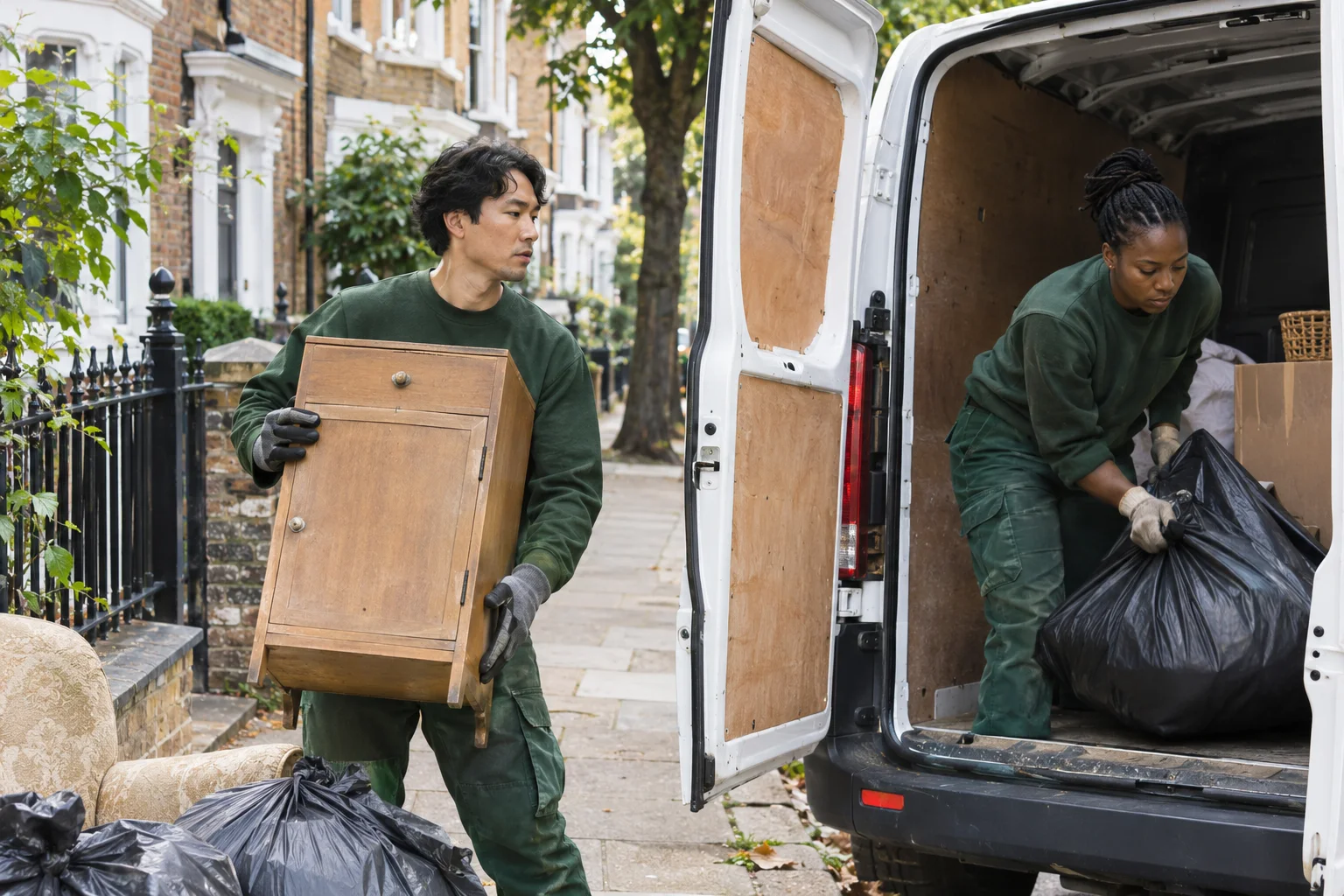
Recycling and disposal for mixed domestic materials
We handle collected household waste responsibly and recycle as much as possible, working with licensed recycling centres. A domestic load may contain wood, metal, textiles, electrical goods and mixed general rubbish, each with different handling requirements.
Electrical equipment is identified separately from mixed rubbish so it can receive appropriate handling. For personal devices, owners remain responsible for preparing their information before collection. Furniture and other contents may be suitable for reuse or recycling according to condition and material. Damaged or mixed waste that cannot follow those routes receives responsible disposal rather than a promise that every collected item will be reused.
| Point in the job | Useful action | Reason it helps |
|---|---|---|
| Final check of the load | Look through the pile once more for retained keys, papers, clothing or other belongings. Identify any additions since the photographs used for the quote were taken. | A final check protects possessions you want to keep and makes changes visible. Extra furniture or additional bags can alter the amount to remove and the appropriate collection arrangement. |
| When the team arrives | Show the agreed items, the route through the property and the nearest practical loading point. Explain any shared-door or lift arrangements that affect access on the day. | A clear walk-through connects the item list with the actual home. It helps distinguish the removal pile from nearby furniture or containers that must remain in place. |
| During carrying and loading | Keep children, pets and loose belongings away from the moving route. Leave space around larger pieces so they can be carried through the property without avoidable obstacles. | The team needs room to handle awkward shapes and move between the home and vehicle. An open route also helps other occupants understand where collection work is taking place. |
| Information | Useful example | What it clarifies |
|---|---|---|
| Quantity and materials | Describe eight bags of clothing and general rubbish, two boxes of books and a small table, instead of calling the entire group a few bags. | The description separates bulky objects from dense contents. It gives a better starting point for assessing volume and weight, both of which matter in the household price tiers. |
| Photographs of the whole load | Take a wider view showing every item, then add a closer image of anything unusually large or difficult to identify. Include concealed items in the written list. | Images show shape and occupied space while the written description explains contents that photographs cannot reveal. Together they reduce uncertainty about what is actually being removed. |
Collection area
Domestic rubbish collection is available across London. Share your postcode, preferred day, load photographs and property access details to check appointment availability.
Frequently asked questions
Do I have to move everything outside?
The team carries and loads the agreed household items. Explain where they are located and the route out of the property. Avoid obstructing communal entrances or pavements with a pile of rubbish while waiting for collection.
Can you take a few bags with an old sofa?
Yes, describe the sofa and the bags together as one proposed household collection. Explain what the bags contain and provide a photograph of the full load. Both occupied space and weight affect the relevant guide tier.
Why do books matter when estimating a load?
Books can make a relatively small collection heavy. A box count alone does not show this difference, so identify book boxes and other dense contents separately. The larger household price tiers each have a weight limit as well as a volume limit.
Can I add more rubbish after receiving a quote?
Tell us about additional items so the collection and quote can be checked against the revised load. More bags, a newly added appliance or extra furniture may change the amount, weight or carrying work involved.
Are phone enquiries available at night?
Our phone line is open 24 hours for enquiries and collection requests. The team can establish the available appointment for your address and the rubbish you want removed. Collection timing depends on the schedule and the job, including requests made overnight.
Arrange your collection
Request a quote for the items you want removed.