

Rubbish collection in South Woodford
We collect agreed unwanted cupboards, furniture and household contents from South Woodford properties. The enquiry identifies the contents stored with the furniture and separates equipment or business loads for their appropriate quotation. Carrying and loading are assessed at the address, with same-day availability across London and the M25 and phone enquiries open 24/7.
Count the contents as well as the cupboard
Include the compact belongings and identify any equipment or business load.
An empty furniture unit and a cupboard leaving with its stored possessions represent different loads; this guide considers the agreed household contents.
Can cupboard contents be included with the furniture removal?
Yes. The enquiry identifies the cupboard and the belongings leaving from it as parts of the agreed removal. We assess their complete load and collection positions, including the carrying route to the vehicle. That keeps compact contents visible rather than estimating an empty furniture unit when its stored possessions also need collection.
Does a local household facility accept commercial contents on the same basis?
ELWA identifies Chigwell Road as a household reuse and recycling centre and states that commercial waste is not accepted there. Our South Woodford enquiry identifies the context of the contents requiring removal. Commercial collections receive an individual quotation rather than automatically using the ordinary household furniture guide or a resident facility arrangement.
A cupboard clear-out can combine a bulky unit with dense books, fabric items and small devices that occupied its shelves. Our South Woodford enquiry identifies those groups directly. The quotation connects the actual unwanted contents with their collection points and carrying work rather than describing the furniture as an empty shell.
Redbridge’s current climate strategy identifies community-led repair activity in South Woodford, while ELWA publishes a separate household route at Chigwell Road. Those arrangements address different needs. Our service assesses removal from the property, including the agreed contents and their appropriate household, electrical or commercial quotation.
- Cupboard and contents identified as separate load components.
- Equipment and business context recorded for quotation.
- Carrying from the actual position assessed with the route.
- Loading covers the agreed removal across its collection points.
| Load component | What the enquiry identifies | Effect on the assessment |
|---|---|---|
| Cupboard or cabinet | The furniture piece and its actual position are recorded within the collection request. | Its dimensions matter for the doorway and carrying route, while the belongings leaving from inside it remain separately identifiable. |
| Books and compact contents | The enquiry records these belongings when they are included with the furniture removal. | They may add considerable weight in a small space, so the household guide considers the full load rather than furniture volume alone. |
| Fabric items | The agreed unwanted textiles or other soft contents remain visible in the removal description. | Their occupied space contributes alongside the unit, even when their weight differs from a compact box of books. |
| Stored devices | Equipment is described by its actual type and whether it belongs to a household or business. | The appropriate service can then be assessed directly instead of automatically treating every device as ordinary cupboard furniture. |
| Retained belongings | The collection list keeps the possessions staying at the property distinct from the agreed removal. | A selected cupboard collection can address the actual unwanted contents without clearing every shelf or room automatically. |
Furniture and the contents stored inside
Our enquiry distinguishes the unit from the possessions leaving with it. A cupboard can be removed with selected belongings while retained contents stay outside the collection list. The quotation concerns the agreed furniture, load and carrying route rather than assuming every stored item is leaving automatically.

| Price band | Paired load limits | What the guide considers |
|---|---|---|
| Minimum £55 | Up to 50 kg; a minimum volume cap has not been specified. | The contents and their collection positions remain identified so the actual removal can receive an appropriate quotation. |
| £120 | Up to 3 cubic yards and up to 250 kg. | Both limits apply to the full agreed ordinary household load, including contents leaving from inside the furniture. |
| £180 | Up to 6 cubic yards and up to 500 kg. | Boxes or bags at a separate collection point contribute alongside the cupboard when they are included in the removal. |
| £240 | Up to 9 cubic yards and up to 760 kg. | The guide checks the complete load rather than pricing the collection solely from the number of storage units or rooms. |
| £305 | Up to 12 cubic yards and up to 1,000 kg. | A load above either limit receives a quote, while commercial and equipment-focused collections receive individual assessment. |

Repair activity and unwanted-content removal
Redbridge’s 2026–2030 climate strategy identifies community-led repair cafes operating in South Woodford, Ilford and Barkingside. Repair concerns keeping suitable belongings in use. Our collection enquiry concerns the furniture and possessions agreed for removal, with their carrying and loading assessed at the property.
| Local or borough option | Authority evidence | Difference from our enquiry |
|---|---|---|
| Community-led repair activity | Redbridge’s current climate strategy identifies repair cafes operating in South Woodford as part of its reuse activity. | A repair arrangement concerns keeping an item; our quotation addresses carrying and loading the agreed unwanted contents from the property. |
| Chigwell Road household centre | ELWA identifies the facility as the Redbridge site within its shared household reuse and recycling network. | A resident facility visit has its own conditions and is distinct from a removal involving collection at the property. |
| Commercial waste distinction | ELWA states that Chigwell Road does not accept commercial waste under its site arrangements. | Our enquiry identifies the load context, with business contents receiving an individual quotation for the agreed removal work. |
| Property removal | The quote identifies the actual contents, collection points and carrying route to loading. | The removal work is assessed directly instead of being established by a repair option or personal household facility visit. |
Household and commercial loads remain distinct
ELWA’s Chigwell Road guidance excludes commercial waste from that household facility. Our enquiry identifies whether the load concerns ordinary household belongings or business contents. A workplace cupboard and its equipment receive their appropriate individual quotation instead of being classified solely by the furniture’s appearance.
| Route detail | Work assessed | Practical distinction |
|---|---|---|
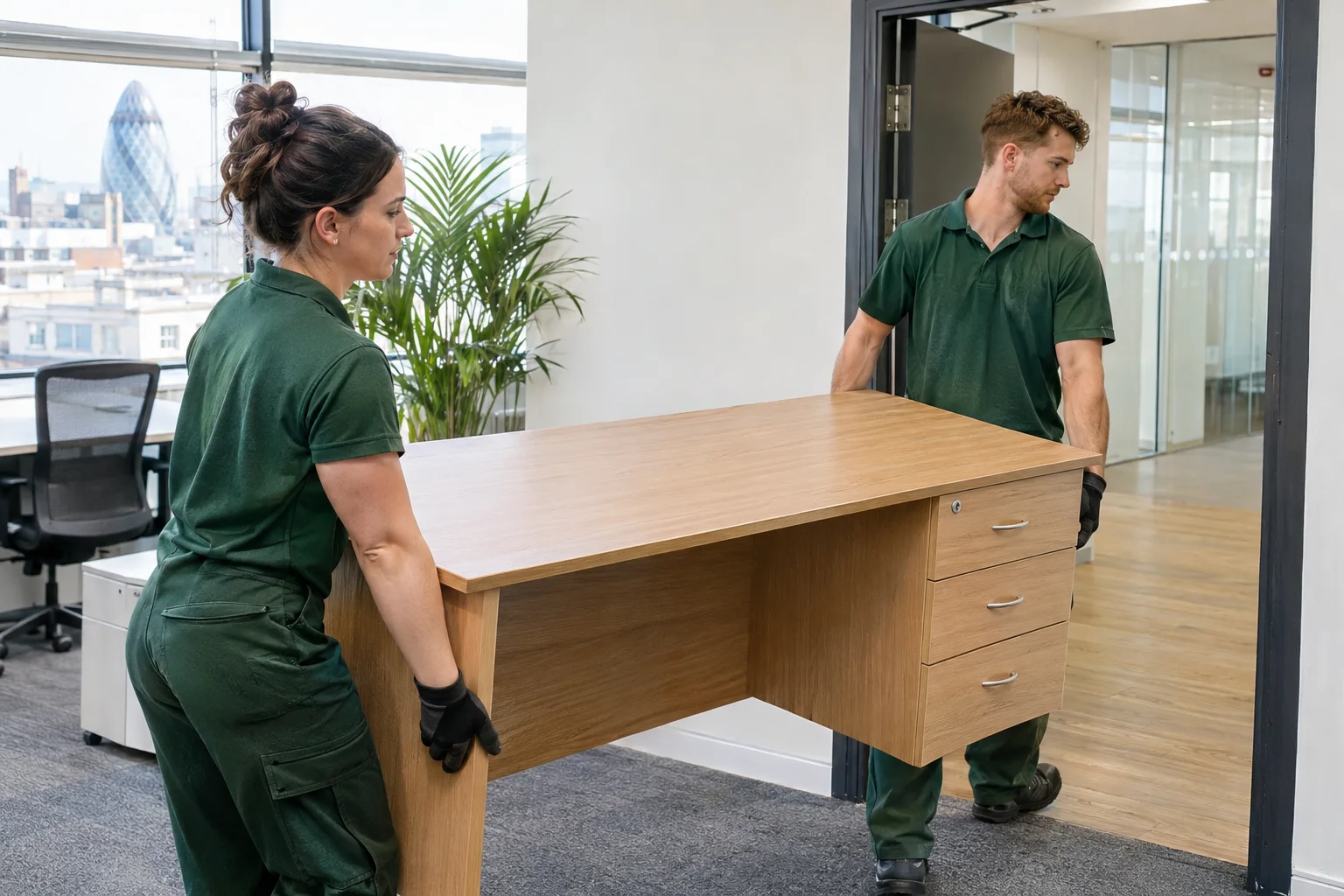
| Furniture position | The enquiry identifies where the unwanted unit stands and where the accompanying contents are held. | The carrying assessment relates to those actual collection points rather than assuming everything is already accessible outside. |
| Doorway and internal route | The furniture dimensions are considered alongside the passage through the property. | A large cabinet and compact boxes can require different carrying arrangements even when they belong to one removal. |
| Changes of level | The quotation records the collection positions relative to the exit and vehicle loading point. | Furniture carried from another floor represents different work from loading a piece already at ground level. |
| Separate storage group | Any additional agreed belongings held elsewhere remain visible within the collection description. | The quote connects their carrying work with the full removal instead of covering only the largest cupboard beside the entrance. |
A complete collection from several storage points
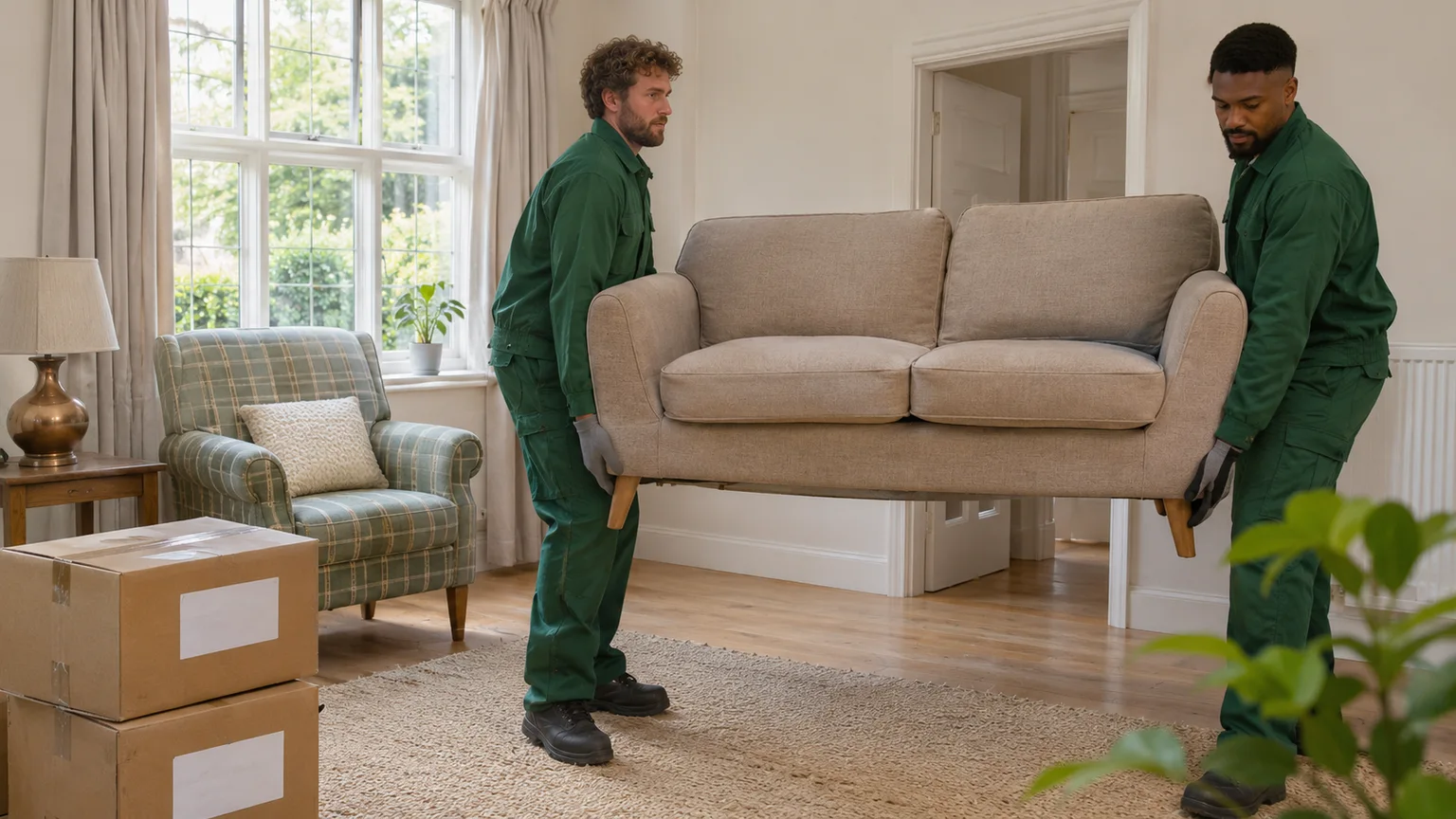
Belongings in a second cupboard or another room contribute when included in the removal. We assess their positions and route to vehicle loading. The household guide checks total occupied space and weight, while larger property clearances and equipment-focused loads receive their appropriate assessment.
| Material or service | Quotation basis | Why the distinction matters |
|---|---|---|
| Whole-property clearance | The unwanted contents and collection work across the property receive an individual assessment. | The number of cupboards or rooms does not establish the amount leaving, especially where selected possessions remain in place. |
| Garden cuttings | The green-waste guide checks the approved paired volume and weight limits for that collection. | Outdoor green material remains distinct from indoor furniture and contents, with its actual position identified for removal. |
| Building materials | Weight-only tiers are 50, 250, 500, 760 and 1,000 kg at £55, £120, £180, £240 and £305. | Renovation debris retains its actual material description, and building loads above the published weight bands receive a quote. |
| Electrical-focused contents | The enquiry identifies the devices and collection work for their appropriate individual quotation. | Equipment requirements stay visible rather than being automatically absorbed into a furniture guide because devices were stored in the cupboard. |
Collections in South Woodford
We cover South Woodford and the wider London and M25 area. Same-day collection is available and our phone enquiry line is open 24/7. The quotation identifies the agreed contents, service context and carrying and loading work from the property.
Local council collection and recycling information
Frequently asked questions
Can only some cupboard contents leave with the unit?
The enquiry identifies the furniture and the belongings actually agreed for removal. Retained possessions remain outside the collection list rather than being included simply because they were stored inside.
Do books affect the weight band?
Agreed books contribute to the full household weight and occupied space. A compact group of heavy contents can influence the guide even when the cupboard accounts for most of the visible volume.
Does repair activity guarantee an item can be repaired?
No. Repair suitability belongs to the separate repair arrangement. Our collection enquiry identifies the agreed unwanted contents and the carrying and loading work needed for their removal.
Can a business cupboard use the household guide automatically?
Commercial furniture and contents receive an individual quote. The enquiry identifies their context instead of classifying the removal solely by the cupboard’s appearance or the building address.
Can the removal include belongings in another storage point?
Yes. Their contents and collection position are included when agreed for removal. The quotation links those additional points with the carrying route and vehicle loading.