
Rubbish collection in Tooting
Our Tooting service collects agreed unwanted contents from homes and business premises, with carrying and loading assessed from their actual collection positions. Household furniture and commercial contents receive the appropriate quotation for the work. Same-day service is available across London and the M25, and our phone line is open 24/7.
Separate the household load from the business enquiry
Choose the service matching the contents being removed from the premises.
Household furniture uses paired load limits; commercial contents receive their own quotation for the agreed collection work.
Can a Tooting enquiry cover furniture still inside the property?
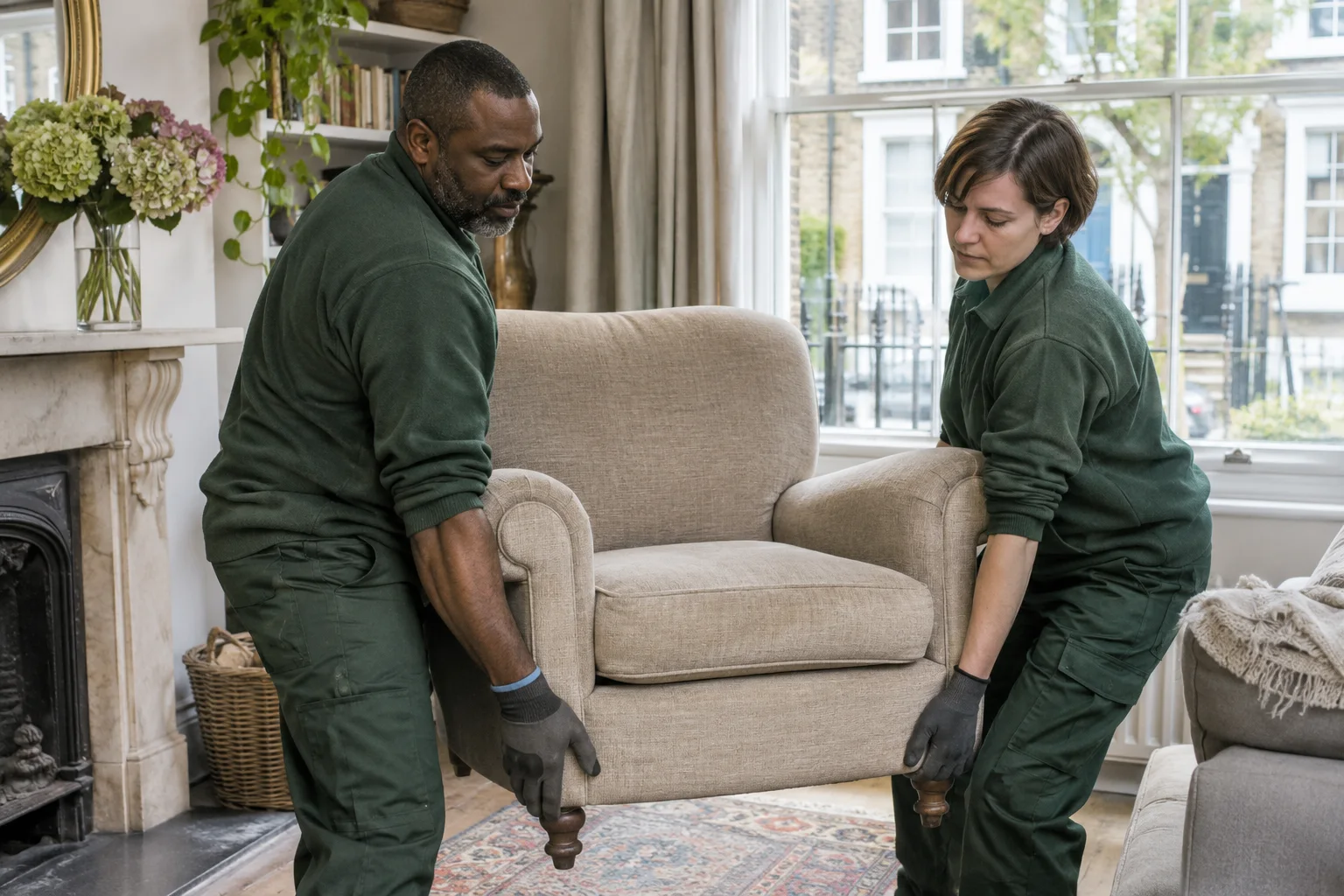
Yes. Our enquiry identifies the furniture at its indoor collection point and assesses the route to the vehicle. That includes the carrying and loading work for the agreed items. It differs from Wandsworth’s standard household bulky service, whose published arrangement requires accessible presentation outside rather than collection from inside.
Do Tooting commercial pavement collections have timed arrangements?
Wandsworth lists Tooting among the locations with time bands for commercial waste collected from pavements. Its guidance distinguishes collections from inside business premises and from the street. Our business enquiry identifies the actual collection position and work, with any applicable street-presentation arrangements kept separate from a household furniture estimate.
A furniture collection from a home and a waste collection from a business can share an address without being the same job. Our Tooting quotation identifies the contents, who they belong to and their actual collection positions. That keeps household belongings separate from a commercial load.
Wandsworth’s local guidance makes collection position especially relevant: its standard household bulky service has an outside presentation arrangement, and designated commercial pavement collections operate within time bands. Our service assesses the agreed carrying and loading work at the property, with the appropriate quotation for each load.
- Indoor furniture assessed at its actual collection point.
- Household and business contents distinguished within the enquiry.
- Carrying and loading connected to the agreed route.
- Street presentation considered separately from an indoor removal.
| Collection position | Work described | Why the position matters |
|---|---|---|
| Inside a home | The agreed furniture and belongings are identified where they stand, with the carrying route included in the assessment. | An indoor sofa removal involves more than loading an already accessible item outside; the quotation describes the actual collection. |
| Inside business premises | The enquiry records the commercial contents, their position and the route to the loading point. | The load receives a commercial quote rather than automatically applying ordinary household furniture bands to workplace contents. |
| At an outside collection point | The agreed contents and their accessible position are identified as part of the removal description. | The assessment concerns the actual loading work, while any applicable pavement-presentation arrangements remain relevant to that location. |
| In a flat above premises | The enquiry identifies the residential collection point and the entrance used for the carrying route. | The business below and the household above need not form one load; their ownership and collection arrangements remain distinct. |
Household furniture from inside the building
We collect the agreed unwanted pieces from their identified positions in the property. A sofa, table or storage unit can be part of a selected removal while retained contents stay. The quotation considers their size and route, including changes of level and the position available for loading.

| Price band | Paired limits | Basis of the enquiry |
|---|---|---|
| Minimum £55 | Up to 50 kg; a minimum volume cap has not been specified. | The enquiry identifies the furniture and accompanying contents so the actual collection can receive an appropriate quote. |
| £120 | Up to 3 cubic yards and up to 250 kg. | The complete household load must fit both limits; occupied volume and total weight are considered together. |
| £180 | Up to 6 cubic yards and up to 500 kg. | Bags and boxes leaving with the furniture contribute to the collection rather than being excluded from the load description. |
| £240 | Up to 9 cubic yards and up to 760 kg. | The guide concerns the agreed ordinary household contents, with the actual carrying and loading work confirmed in the quotation. |
| £305 | Up to 12 cubic yards and up to 1,000 kg. | A collection above either limit receives a quote; the household band does not automatically price a business or equipment-focused removal. |
Commercial contents with their own quotation
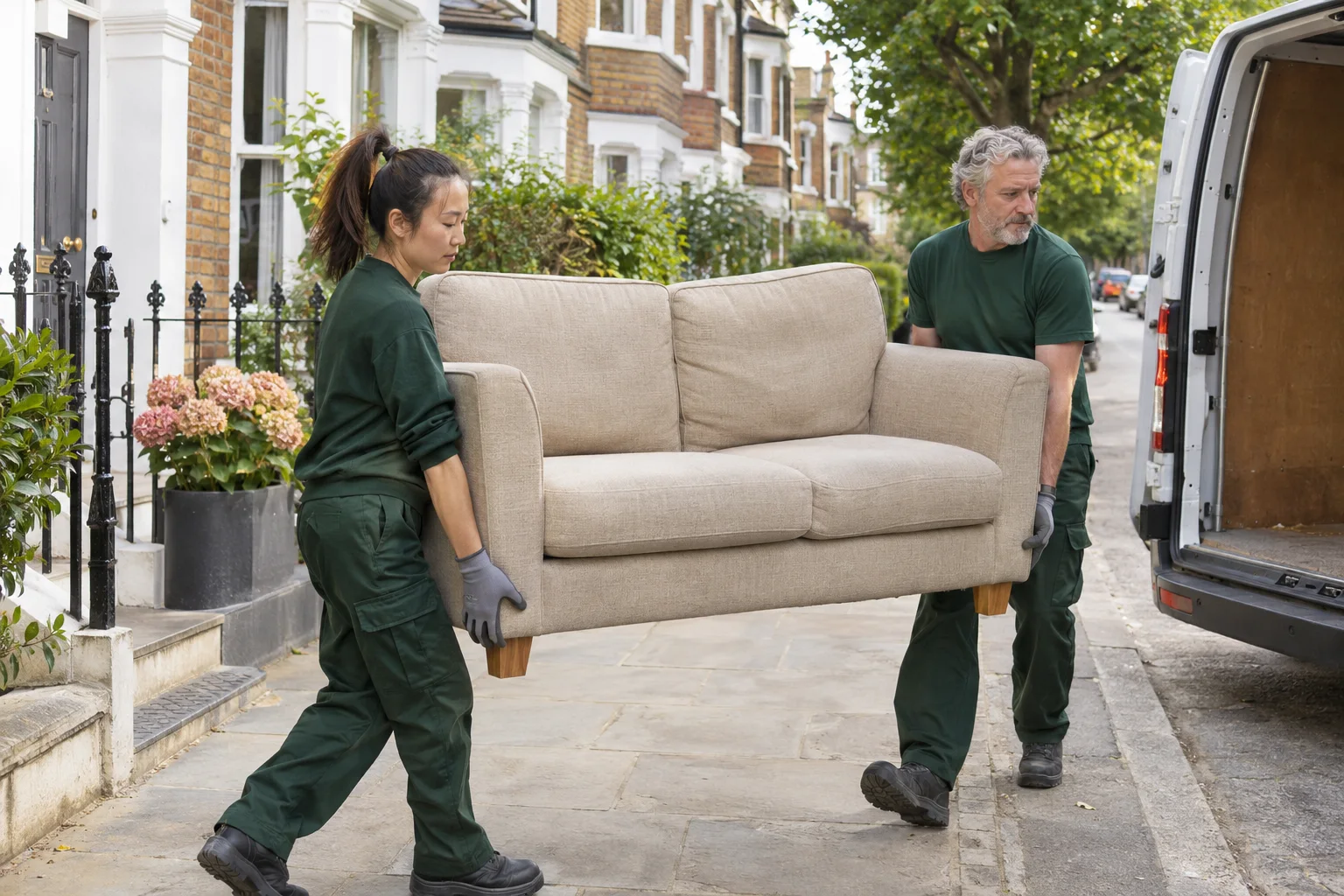
Furniture and equipment leaving business premises are described as a commercial enquiry. We identify the contents and their collection point rather than placing a workplace clear-out automatically into household bands. Wandsworth’s Tooting pavement arrangements are relevant where business waste is presented on the street.
| Published local arrangement | What it covers | Service distinction |
|---|---|---|
| Standard household bulky collection | Wandsworth describes an accessible outside presentation arrangement and does not collect these items from inside the property. | Our enquiry can assess furniture at its indoor position, including the carrying and loading required for the agreed removal. |
| Tooting commercial pavement time bands | The council lists Tooting among designated locations with morning and evening bands for commercial street collections. | A business enquiry identifies where the waste is collected; the quotation does not turn a household load into a commercial pavement allowance. |
| Collections from business interiors | Wandsworth’s commercial guidance distinguishes waste collected inside premises from waste collected on the street. | Our assessment records the actual position of the business contents and the carrying route associated with their collection. |
| Flat-above-shop council bookings | The council’s standard bulky guidance directs residents to arrange their collection point with the council. | For our quotation, the actual entrance, indoor location and carrying route form part of the property removal description. |
A flat collection with a defined carrying route
The enquiry records where the contents are inside the building and how they reach the exit. For a flat above other premises, that means the actual entrance and route form part of the assessment. We quote the agreed collection work rather than treating every address as a street-level pile.

| Contents | Collection description | Effect on the assessment |
|---|---|---|
| Selected furniture | The enquiry identifies the individual unwanted pieces and the rooms or positions from which they leave. | A partial collection can keep the rest of the property furnished while the agreed furniture receives its own carrying assessment. |
| Bagged household belongings | The smaller contents are included alongside the larger pieces when they form part of the agreed removal. | Their combined space and weight matter even when the furniture is the most visible part of the load. |
| Business equipment | The enquiry describes the commercial equipment and associated contents requiring removal from the premises. | The appropriate individual quote addresses those items directly rather than treating them as an unrecorded addition to domestic furniture. |
| Renovation materials | Building debris is identified by its actual material type and kept distinct from ordinary household belongings. | The building-waste guide is weight-based; the enquiry also establishes the collection position and carrying work for the quoted removal. |
The load after the furniture is counted
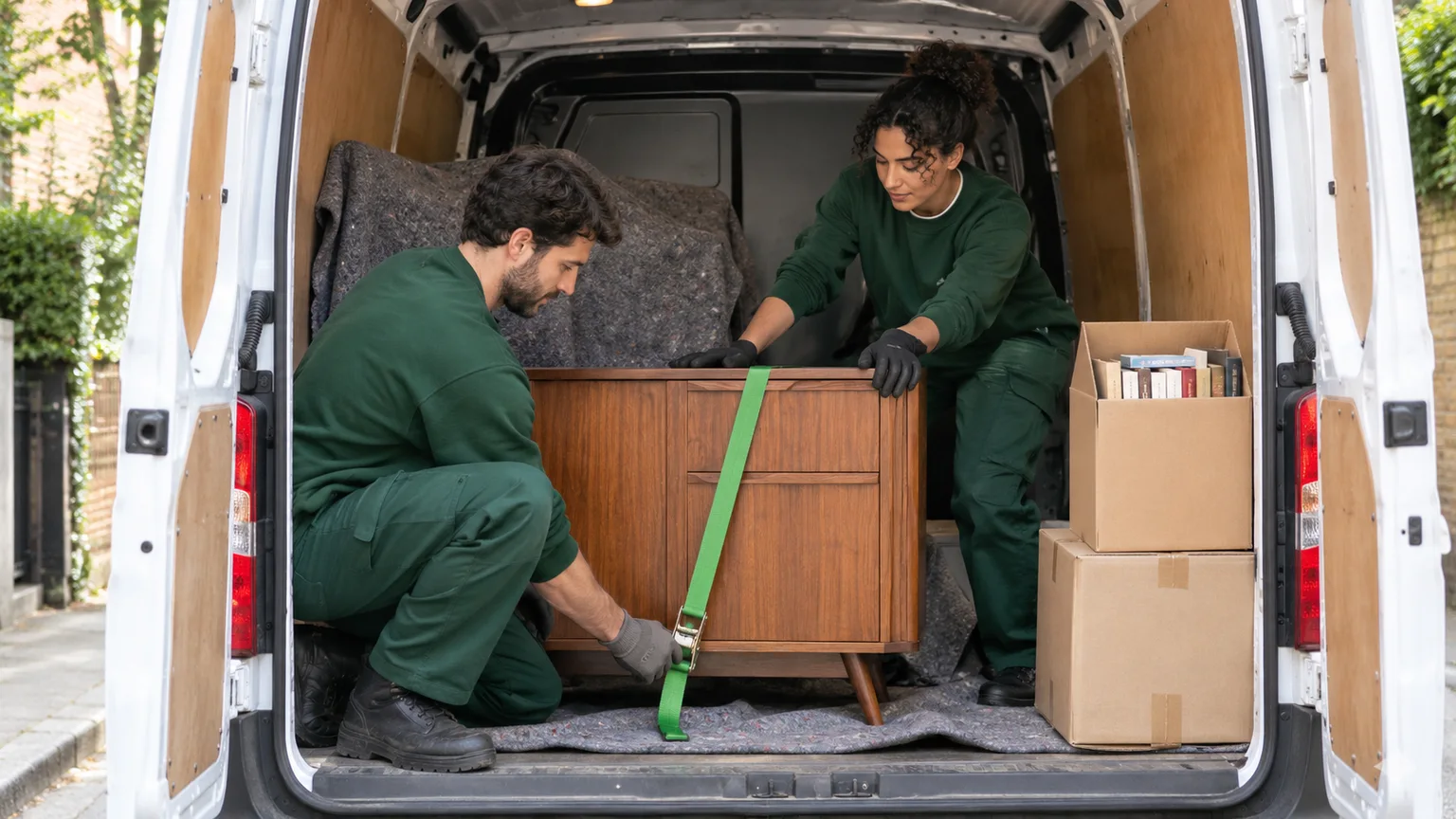
Bags, boxes and smaller belongings contribute alongside bulky furniture when included in the removal. Our household guide checks their combined volume and weight. Equipment-focused and commercial collections receive their own quotes, while building waste is identified separately with its weight-based guide.
| Route detail | What is assessed | Practical result |
|---|---|---|
| Room and doorway | Furniture dimensions and the opening through which it must pass are considered for the agreed removal. | The quote concerns the actual piece and property arrangement, rather than a general promise that all furniture fits every doorway. |
| Floor and stairs | The enquiry identifies changes of level between the contents and the exit from the building. | The carrying work can be assessed for furniture still upstairs instead of assuming everything is already at street level. |
| Shared entrance | The collection description identifies the entrance serving the relevant home or business and the route for its contents. | Separate premises can retain distinct collection arrangements even when their doors face the same section of street. |
| Vehicle loading point | The route from the agreed collection positions to the loading point forms part of the assessment. | The quotation connects indoor carrying and loading with the actual address rather than applying a single access assumption across Tooting. |
Collections in Tooting
We cover Tooting and the wider London and M25 area. Same-day collection is available, with a 24/7 phone line for enquiries. The quote identifies the agreed contents, their collection positions and the carrying and loading work.
Local council collection and recycling information
Frequently asked questions
Can household and shop contents receive different quotes?
Yes. The enquiry identifies which contents are household belongings and which belong to a business. Commercial collections receive their appropriate quotation rather than being automatically included in a household furniture band.
Does indoor collection mean everything moves to the pavement first?
Our enquiry assesses carrying from the agreed indoor collection position to the loading point. The work is described for that route, with any applicable outside presentation arrangements considered for the actual address.
Is a desk from a workplace ordinary household rubbish?
Workplace furniture and equipment are identified as business contents for quotation. A similar-looking desk from a home can belong to a domestic enquiry; the collection context matters alongside its physical size.
Are the published household bands unlimited by weight?
No. Both volume and weight limits apply to household bands above the minimum. A load exceeding either published limit receives a quote, even when it fits the other measure.
How is building waste quoted instead?
Its guide is weight-only: up to 50, 250, 500, 760 and 1,000 kg at £55, £120, £180, £240 and £305. Larger building loads receive a quote for the identified materials and work.