

Rubbish collection in Worcester Park
We collect agreed unwanted furniture and household contents from Worcester Park properties, carrying the load from its collection points and loading it for removal. The enquiry brings together bulky pieces, boxes and bags that need to leave. Same-day collection is available across London and the M25, with a 24/7 phone line.
Size the collection across your rooms
Bring the furniture and separately stored boxes into the same load estimate.
A hallway clear-out can draw contents from several indoor points; the household guide considers everything agreed for removal.
Can boxes and furniture leave in the same Worcester Park collection?
The enquiry can include the furniture and smaller household contents leaving with it. We identify the collection points, carrying route and complete load before quoting the removal. That connects the visible bulky pieces with boxes or bags stored elsewhere, rather than assessing only the item nearest the entrance.
Are Central Road recycling litter bins suitable for a household clear-out?
Sutton describes these as on-the-go recycling bins for everyday litter materials, such as bottles and newspapers. They serve a different purpose from removing furniture and accumulated household contents. Our property collection assesses the agreed items, indoor carrying route and vehicle loading needed for the clear-out.
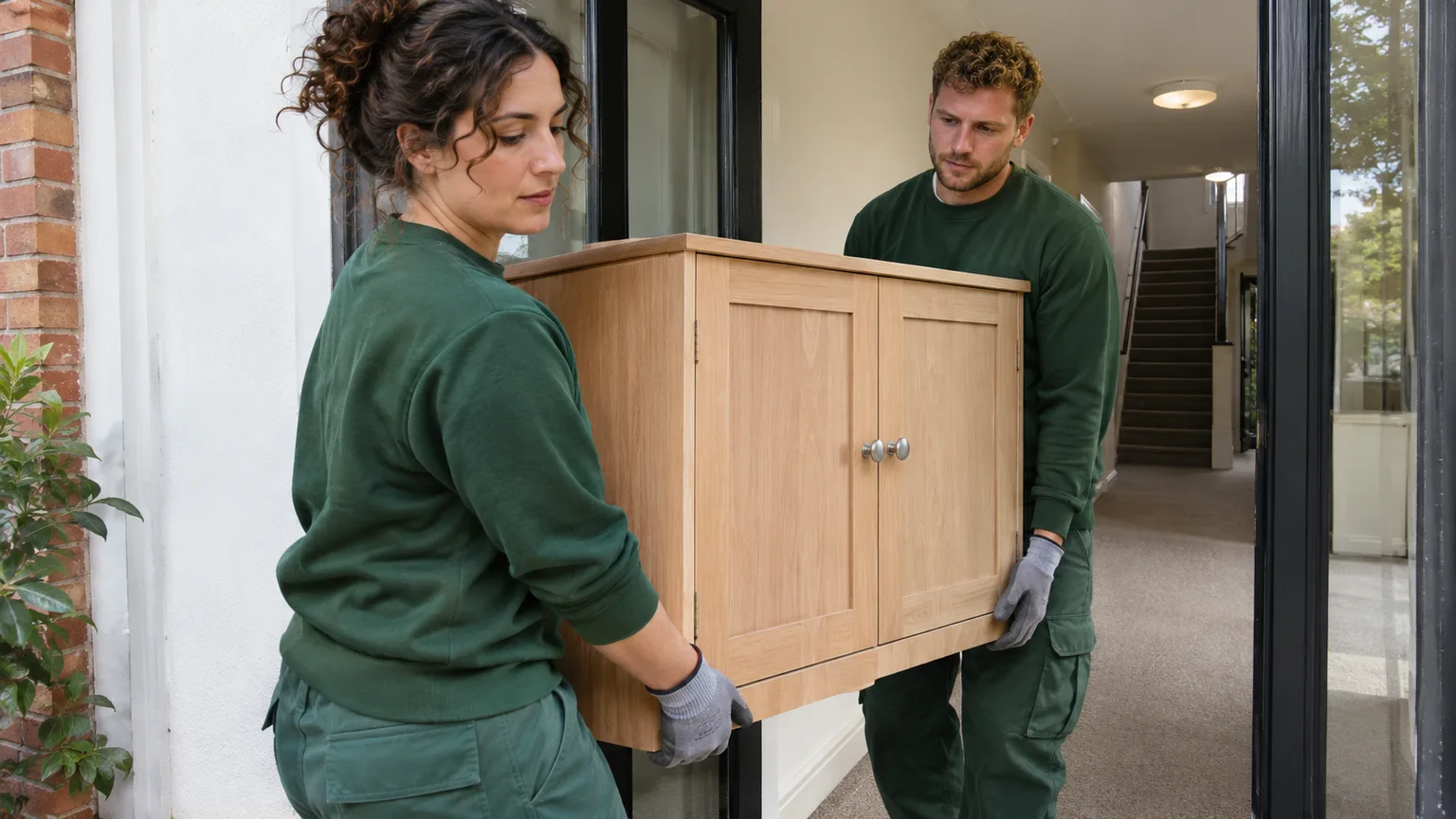
A hallway can connect several different collection points: a cupboard near the entrance, a larger item in a room and boxes held further inside. Our Worcester Park service identifies those groups together, then assesses the carrying and loading work for the full agreed removal.
Local recycling options have specific uses. Sutton lists textile banks at Stone Place Car Park and on London Road opposite the Lord Nelson, while Central Road has on-the-go recycling litter bins. Our furniture and household collection concerns the unwanted contents requiring removal from the property.
- Furniture and boxes included in one clear collection description.
- Separate indoor points recorded before the load is quoted.
- Carrying route assessed from the contents to the loading point.
- Local drop-off roles distinguished from bulky removal work.
| Collection group | What the enquiry identifies | How it affects the work |
|---|---|---|
| Hallway cupboard | The unwanted unit and any contents leaving from inside it are described as separate parts of the collection. | Its size affects the route through the entrance, while the stored belongings also contribute to the load. |
| Living-room furniture | The enquiry records the actual piece and its position in the room rather than using a general room-clearance label. | A partial collection can remove selected furniture while other pieces stay in use around the property. |
| Boxes and bags | The description includes smaller household contents, including those stored away from the largest furniture. | The complete load can then be assessed for carrying and loading rather than missing a second collection point. |
| Separate storage contents | Items in another room or storage area are identified when they are included in the agreed removal. | The quotation connects each group with its collection location, so the work reflects more than the visible entrance pile. |
A clear collection list across several rooms
We identify the unwanted furniture and accompanying belongings at their actual positions in the property. A partial clear-out can leave the rest of the rooms furnished. The enquiry keeps the pieces for removal distinct from retained possessions and connects the separate collection points.
| Guide price | Volume and weight limits | How the band works |
|---|---|---|
| £55 minimum | Up to 50 kg; the minimum volume cap has not been specified. | The removal enquiry still identifies the furniture and other contents so the actual collection receives an appropriate quotation. |
| £120 | Up to 3 cubic yards and up to 250 kg. | Both limits apply to the complete household load; the amount fitting one limit may still exceed the other. |
| £180 | Up to 6 cubic yards and up to 500 kg. | Bags stored in a second room contribute alongside the furniture, rather than forming an uncounted addition to the collection. |
| £240 | Up to 9 cubic yards and up to 760 kg. | The guide considers the occupied space and total weight together, not simply the number of furniture pieces being removed. |
| £305 | Up to 12 cubic yards and up to 1,000 kg. | A load beyond either limit receives a quotation; bulky light furniture does not create an unlimited allowance for dense contents. |

Textile bags and furniture need different arrangements
Sutton’s Worcester Park textile-bank locations give suitable reusable fabrics a local drop-off option. A sofa, shelving unit or cupboard needs a different arrangement. We assess the bulky collection and the accompanying unwanted bags rather than treating a textile bank as a destination for mixed household contents.
| Local option | Purpose confirmed by Sutton | Difference from our collection |
|---|---|---|
| Stone Place Car Park near the library | The council lists this Worcester Park location in its textile and shoe bank network. | A suitable reusable textile drop-off is different from carrying a cupboard or furniture load out of a property. |
| London Road opposite the Lord Nelson | This is another Worcester Park location listed for textiles and shoes. | Its role does not make it a mixed household rubbish destination or an alternative loading point for bulky furniture. |
| Central Road recycling litter bins | The council describes an on-the-go recycling service for bottles, cans and paper litter materials. | Street litter recycling and accumulated household contents require different arrangements; our enquiry identifies the property removal. |
| Furniture and mixed household belongings | The collection request records the unwanted pieces and accompanying contents that need carrying and loading. | The quotation addresses their actual position and load rather than applying a public recycling-bin allowance. |
The route through the entrance
The collection assessment considers the furniture’s size, changes of level and route through the building. Boxes stored behind a bulky item remain part of the agreed load when included in the enquiry. Carrying and loading relate to those actual positions, rather than only the amount placed next to the front door.

| Part of the route | Collection work assessed | Useful detail within the quote |
|---|---|---|
| Room to doorway | The furniture’s position and dimensions form part of the enquiry for the agreed removal. | A large unit may require a different assessment from boxes that pass easily through the same opening. |
| Changes of level | The enquiry identifies the floor or collection position for the furniture and accompanying household contents. | A load at the entrance and one carried from upstairs represent different work even when their materials are similar. |
| Passage to the exit | The route links the agreed contents with the way out of the building. | Items remaining in the property are kept distinct from those leaving, which supports a selected furniture collection. |
| Exit to vehicle | The loading point is considered with the carrying route from the actual collection positions. | The quote concerns the property arrangement rather than assuming every Worcester Park address has the same loading access. |

Loading the whole agreed removal
Our guide considers both occupied space and weight for ordinary household rubbish. Large furniture can fill space while compact boxes contribute substantial weight. The quotation confirms the contents and work, with separate service assessment for building materials, business equipment or a whole-property clearance.
| Material or service | Assessment basis | Collection distinction |
|---|---|---|
| Household furniture and belongings | The published household guide uses both volume and weight for the agreed ordinary domestic load. | Compact heavy contents and large light furniture contribute differently, so both measures remain relevant to the enquiry. |
| Green waste | Garden cuttings use the approved green-waste bands with paired volume and weight limits. | The outdoor material is identified separately from indoor furniture rather than being absorbed into a generic room estimate. |
| Building waste | Weight-only bands are up to 50, 250, 500, 760 and 1,000 kg at £55, £120, £180, £240 and £305. | Materials from renovation remain visible in the enquiry; building loads above the published weight bands receive a quote. |
| Commercial or electrical collections | These receive individual quotations for the identified equipment and collection work. | A workplace device load is assessed as its appropriate service rather than automatically placed in a household furniture band. |
Collections in Worcester Park
Our service covers Worcester Park and the wider London and M25 area. Same-day collection is available, and phone enquiries are open 24/7. The agreed removal is quoted around the actual contents, their collection locations and the carrying and loading work.
Local council collection and recycling information
Frequently asked questions
Can the collection remove only the hallway cupboard?
Yes. A selected furniture enquiry can identify that unit while the surrounding furniture stays. Any contents leaving from the cupboard are included separately within the collection description.
Do street recycling bins replace a furniture collection?
Central Road’s recycling litter bins serve on-the-go materials. A cupboard, sofa or mixed household clear-out needs its own collection arrangement, with carrying and loading assessed for the actual pieces.
What happens when boxes are in a different room?
The enquiry records them as an additional collection point within the agreed removal. Their occupied space and weight contribute to the complete household load alongside the furniture.
Can reusable fabric bags and unwanted furniture be distinguished?
Yes. The enquiry identifies what actually needs removal. Sutton’s textile-bank network serves suitable reusable textiles, while the furniture quote addresses the bulky pieces and agreed accompanying belongings.
Does the household guide price a full house?
Whole-property clearance receives an individual assessment of the contents and work. The household load guide supports an enquiry for ordinary rubbish collections rather than establishing a price from the number of rooms.