

Rubbish collection in Clapham
We collect unwanted furniture and household rubbish from Clapham properties, with business contents assessed through the relevant enquiry. Our team carries and loads the agreed items. Same-day service is available across London and the M25, with our phone line open 24/7.
Estimate a bulky collection beyond daily sacks
Choose household or commercial contents for the removal being requested.
A furniture clear-out is assessed for its load and indoor carrying, separately from the regular timed rubbish and recycling service.
Are timed street-sack collections the same as a furniture booking?
No. Lambeth identifies timed rubbish and recycling areas within Clapham, with specific arrangements for those regular waste services. Its bulky collection is a separate booking route. Our private quotation identifies the furniture and contents requiring removal, including indoor carrying and loading for the actual property rather than treating a bulky item as an ordinary street sack.
Can a collection cover contents in a flat or workplace?
The enquiry can identify the rooms or working areas holding the items and their route to the vehicle. We assess the floor, doors, stairs or an available lift with the larger pieces. Household belongings and commercial rubbish receive the appropriate quotation, while the team carries and loads the contents agreed for that removal.
A furniture replacement or room clear-out can produce bulky pieces and smaller belongings that need a different arrangement from ordinary rubbish sacks. Our Clapham service quotes for those identified contents at the property, including the carrying required before they reach the vehicle.
Lambeth’s timed collection information names areas within Clapham, while its bulky booking has separate presentation conditions. Those services address different tasks. Our enquiry connects the actual unwanted furniture, containers and equipment with the property route, including whether the waste is household or commercial.
- Furniture collection distinguished from regular street-sack services.
- Indoor carrying assessed for the floor and route.
- Household and business contents quoted appropriately.
- Loading and transport provided for agreed items.
| Service or condition | Lambeth’s published distinction | How to compare with private removal |
|---|---|---|
| Timed rubbish and recycling | The council names defined timed collection areas within Clapham. | Those regular street-sack arrangements are not a general furniture booking. Our enquiry identifies the bulky pieces and contents requiring carrying, loading and transport from the property. |
| Standard paid bulky booking | The council’s booking information says items are not collected from inside the property. | A private quotation can address moving agreed contents from their indoor location to the vehicle. The carrying route is assessed with the pieces leaving, rather than relying only on items presented outside. |
| Reusable-item route | Lambeth separately describes an Emmaus route for accepted reusable items with its own conditions. | That service differs from a mixed rubbish clear-out. Our quotation covers the agreed unwanted contents and suitable handling, while donation acceptance remains with the receiving reuse service. |
| Business or other premises | The council’s household bulky information directs businesses, schools and charities to the relevant alternative enquiry. | Waste origin matters alongside the furniture’s appearance. Our commercial collection is individually quoted rather than automatically applying a household guide because a desk or chair resembles domestic furniture. |
Bulky pieces and the smaller contents leaving with them
We can assess a sofa, table or storage unit with the specified bags, boxes or other belongings leaving the property. The quotation identifies the complete removal rather than only the most visible furniture.
The team carries and loads the agreed contents. Selected pieces can leave while the rest of the room remains furnished, with retained items outside the collection list.

| Contents | Useful description | Effect on the removal |
|---|---|---|
| Larger furniture | The enquiry names seating, tables or storage units and their locations. | The quotation follows the agreed pieces while retained contents stay. Dimensions and current form matter to carrying through the route, as well as the space the furniture occupies once loaded. |
| Boxes and bags | The contents and quantity distinguish books, clothing and ordinary mixed belongings. | Those groups contribute different weight and space. They remain part of the proposed collection when stored away from the main furniture, rather than unmeasured additions to a single-piece description. |
| Electrical equipment | Devices or appliances are listed separately within the mixed enquiry. | Type, size and location make the equipment visible. A device-focused load can follow its relevant service, while owners complete personal-information preparation before handing over information-bearing items. |
Timed collections and bulky bookings have separate purposes
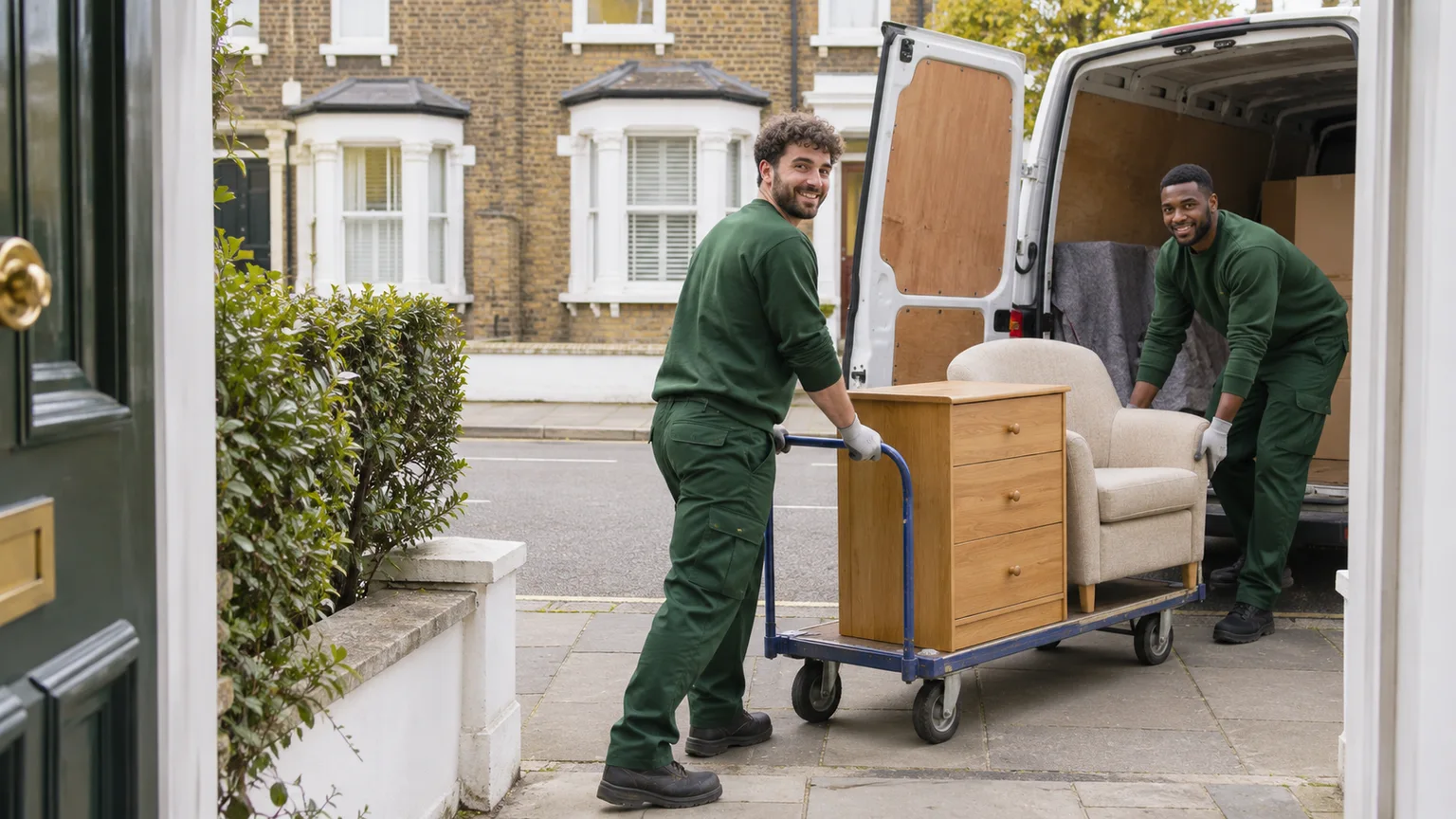
Lambeth names Clapham among its town centres with timed collection areas. The council describes arrangements for rubbish and recycling sacks in those defined areas. A piece of furniture still needs an appropriate bulky collection or disposal route.
The council’s standard paid bulky booking says it does not collect from inside the property. Our private enquiry can address that indoor carrying for the agreed contents, with the route assessed for the particular address and load.
| Combined domestic allowance | Guide price | What the band measures |
|---|---|---|
| Up to 50 kg | £55 | The minimum household band has a confirmed weight limit and no separately published volume cap. The quote establishes the arrangement for the actual bulky size and collection contents. |
| Up to 3 yd³ and 250 kg | £120 | Both limits apply together to the domestic load. Furniture and smaller containers count in the same assessment, including dense contents that may occupy relatively little space. |
| Up to 6 yd³ and 500 kg | £180 | The whole household collection must fit within weight and volume ceilings. Empty furniture and pieces accompanied by packed boxes have different characteristics even if the room count is identical. |
| Up to 9 yd³ and 760 kg | £240 | The larger guide retains two limits. Items from different agreed collection points form the same proposed removal, rather than only the main furniture visible near the entrance. |
| Up to 12 yd³ and 1,000 kg | £305 | Loads over either allowance require a quotation. Whole-property, commercial and equipment-focused jobs receive the relevant assessment rather than a household guide treated as an unlimited tariff. |
The route through the building and entrance
The collection may involve a room on another floor, a shared doorway or a working area behind the entrance. The quotation connects those locations with the practical vehicle position, considering the actual route for the pieces leaving.
A tall unit and compact chair have different dimensions, while full book boxes contribute weight. The team assesses those features together rather than defining the physical removal only by the property’s room count.

| Route feature | Part of the collection | Work assessed in the quotation |
|---|---|---|
| Doorways and turns | A bulky piece starts at its actual location among remaining contents. | The team considers the route through the room exit and subsequent doors. The larger item’s shape matters along that passage while retained furniture remains outside the agreed removal. |
| Floor connection | Stairs or an available lift link the identified location with the building exit. | The quotation assesses carrying for the actual piece and floor. Contents upstairs and containers at entrance level can form the same collection with their different movement requirements identified. |
| Shared entrance | A common doorway may connect rooms or working areas with the outside loading point. | The enquiry establishes that route for the agreed contents. It connects the inventory with the practical movement through the building rather than describing the job only by an exterior photograph. |
| Vehicle position | The practical loading point defines the final part of carrying. | Our team takes the agreed contents to that position and loads them for transport. This completes the property removal before taking the material away for appropriate onward handling. |
Domestic belongings and commercial rubbish stay identifiable
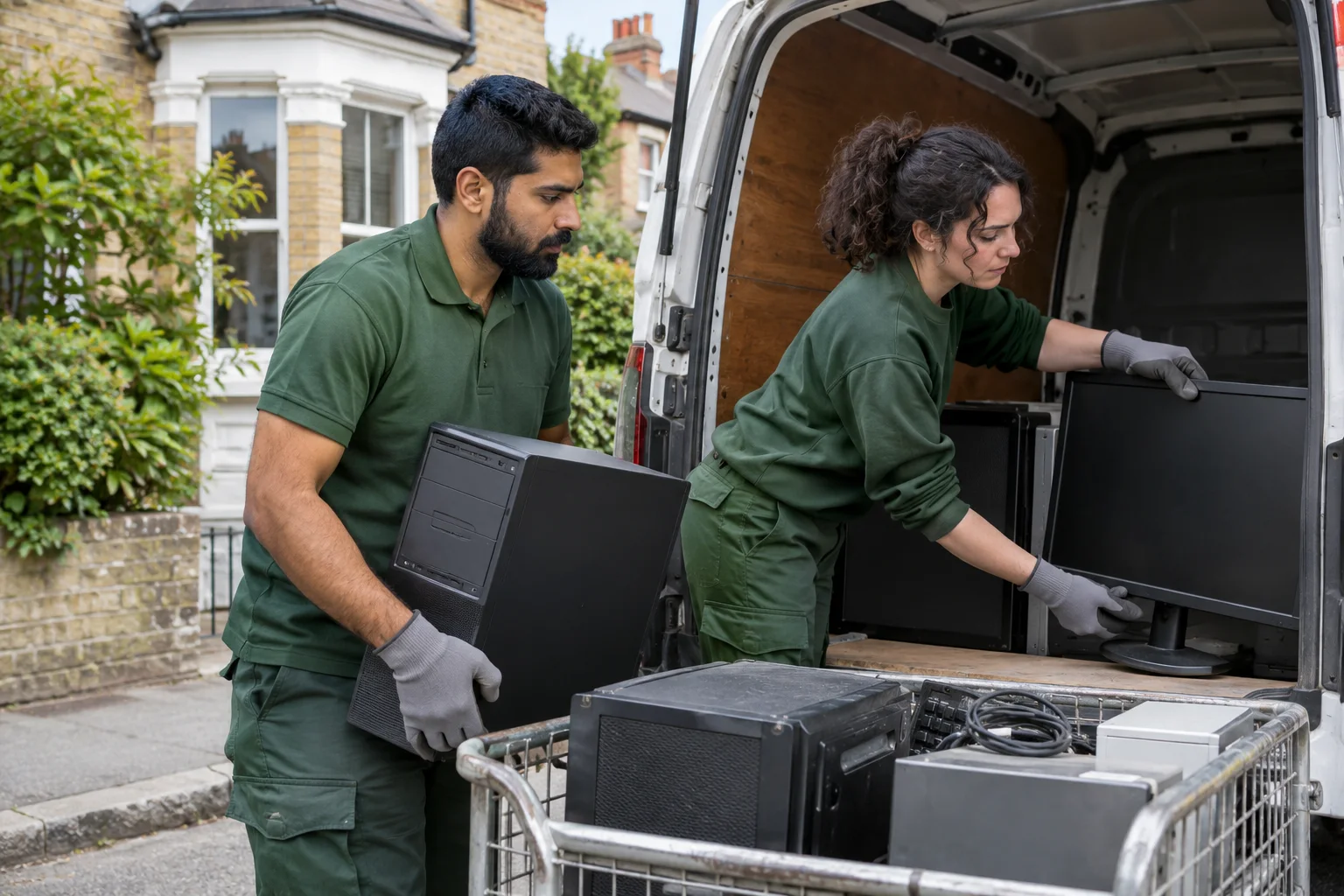
Furniture and devices may look similar whether produced by a household or a business. The enquiry establishes their origin and the material mix, so the appropriate quotation addresses the actual collection required.
We transport agreed rubbish for responsible handling and recycle as much as possible. Whole-property jobs and building debris receive their relevant assessments, while the household guide remains a reference for mixed domestic loads within its limits.
| Load type | What makes it distinct | Appropriate collection approach |
|---|---|---|
| Household contents | A resident’s furniture, textiles, books and ordinary belongings can form a domestic load. | The household guide provides a reference within its combined limits. The complete list and carrying route establish the proposed removal, with heavier contents identified alongside the larger furniture. |
| Commercial rubbish | A business can generate furniture, devices and packaging similar to household items. | The commercial quotation considers the business origin, materials and removal required. Household load prices do not become an office tariff solely because the objects look familiar. |
| Building debris | Rubble, timber or plasterboard differs from ordinary boxed possessions. | The building service uses weight-based guidance. Separating those materials within an enquiry ensures the quotation addresses the actual debris rather than describing every bag as household belongings. |
Collections in Clapham
We cover Clapham and all London and the M25. Same-day service is available, with an appointment arranged for the contents and schedule. Our 24/7 phone line accepts enquiries for household furniture, business clear-outs and larger property removal.
Frequently asked questions
Does the timed collection area cover every Clapham address?
Lambeth describes defined timed areas rather than a blanket rule for every property. The relevant council information and street signs establish the public service arrangement for an address.
Can a sofa use the ordinary street-sack route?
A bulky furniture item needs its appropriate booking or disposal arrangement. Regular timed rubbish and recycling services have a different purpose from removing a sofa from a room.
Can furniture leave from a room behind a shared entrance?
The quotation can identify that collection point and route through the building. The team assesses carrying with the actual pieces, doors and floor involved in the removal.
Does a business chair use the household minimum?
Commercial rubbish receives an individual quote. The waste origin and material mix establish the appropriate enquiry rather than the appearance of the chair alone.
Can selected contents leave while the room stays in use?
Yes. The quotation identifies the unwanted pieces and accompanying items. Retained furniture and belongings remain outside that removal list.