
Rubbish collection in King’s Cross
We collect furniture, household belongings and electrical items from King’s Cross properties. The team carries the agreed contents from their location and loads the vehicle. All London and the M25 are covered, with same-day service available and a 24/7 phone line for enquiries.
Check a furniture and equipment load
Identify the electrical items alongside the ordinary household contents.
A cabinet, boxed belongings and a device can form one enquiry; choose the service that matches the material being removed.
Can furniture and electrical items be collected together?
The enquiry can include both, with each appliance or device identified alongside the furniture and other belongings. We assess the complete removal, including the location of larger items and their carrying route. An equipment-focused load can follow our electronic waste service, while a mixed household collection is quoted for the contents being removed.
Which household centres can be compared with a King’s Cross collection?
Regis Road in Kentish Town and Hornsey Street in Islington offer named household recycling routes. Hornsey Street’s pedestrian point excludes large furniture, appliances and general rubbish. Those self-delivery options differ from our collection, where the team carries and loads the accepted furniture and equipment from the actual property address under its quotation.
Tom’s Junk Collectors removes identified contents from homes and business premises in King’s Cross. A collection can cover one unwanted unit or belongings across several rooms. The quote brings those items together, with electrical equipment and business rubbish described as their own material groups.
King’s Cross enquiries can involve Camden or Islington addresses. Regis Road in Kentish Town and40 Hornsey Street in Islington provide named household recycling options, with different pedestrian arrangements. Our quotation follows the selected furniture and equipment at the actual collection address, and the team carries and loads that agreed group rather than assuming the whole building is being cleared.
- Furniture and equipment identified within the same enquiry.
- Indoor carrying assessed for each larger item.
- Household and workplace waste quoted appropriately.
- Loading and transport provided for the agreed contents.
| Named facility or route | Specific material and access detail | How the private removal differs |
|---|---|---|
| Regis Road, Kentish Town | Camden identifies the centre at NW5 3EW and lists unwanted furniture, electrical items, scrap metal and garden waste among household categories. | A resident taking a device there transports and unloads it under the site’s conditions. Our collection provides carrying from the actual property, with accepted screens, cabinets and containers identified by their positions and loaded together where they form the agreed request. |
| Hornsey Street, Islington | The centre is at 40 Hornsey Street, N7 8HU. Its pedestrian and cycle drop-off is at the entrance, separate from vehicle access inside the main centre. | An address near a borough boundary still needs its complete location and material description. Our quote identifies the furniture and equipment awaiting removal there, connecting each accepted group with its room, floor and route to the vehicle rather than relying on the locality name alone. |
| A bulky group cannot use the pedestrian point | Islington excludes large appliances, large furniture and general household rubbish from the Hornsey Street entrance drop-off. These items need a different suitable arrangement. | Our team carries a selected cabinet and agreed appliance from the property where accepted in the quotation. Smaller bags elsewhere can join that load, while items reserved for a personal recycling trip remain outside the collection shown by the handover contact. |
| Regis Road van or trailer booking | A van or trailer visit to Regis Road needs advance booking. Camden expects visitors without a disability to unload themselves or with one assisting person. | Public self-delivery is therefore distinct from our team carrying and loading work. We assess the agreed objects at their current locations, with fitted condition or connections identified independently from loose furniture and the required collection arrangement established for each accepted material group. |
A mixed collection with the electrical items visible
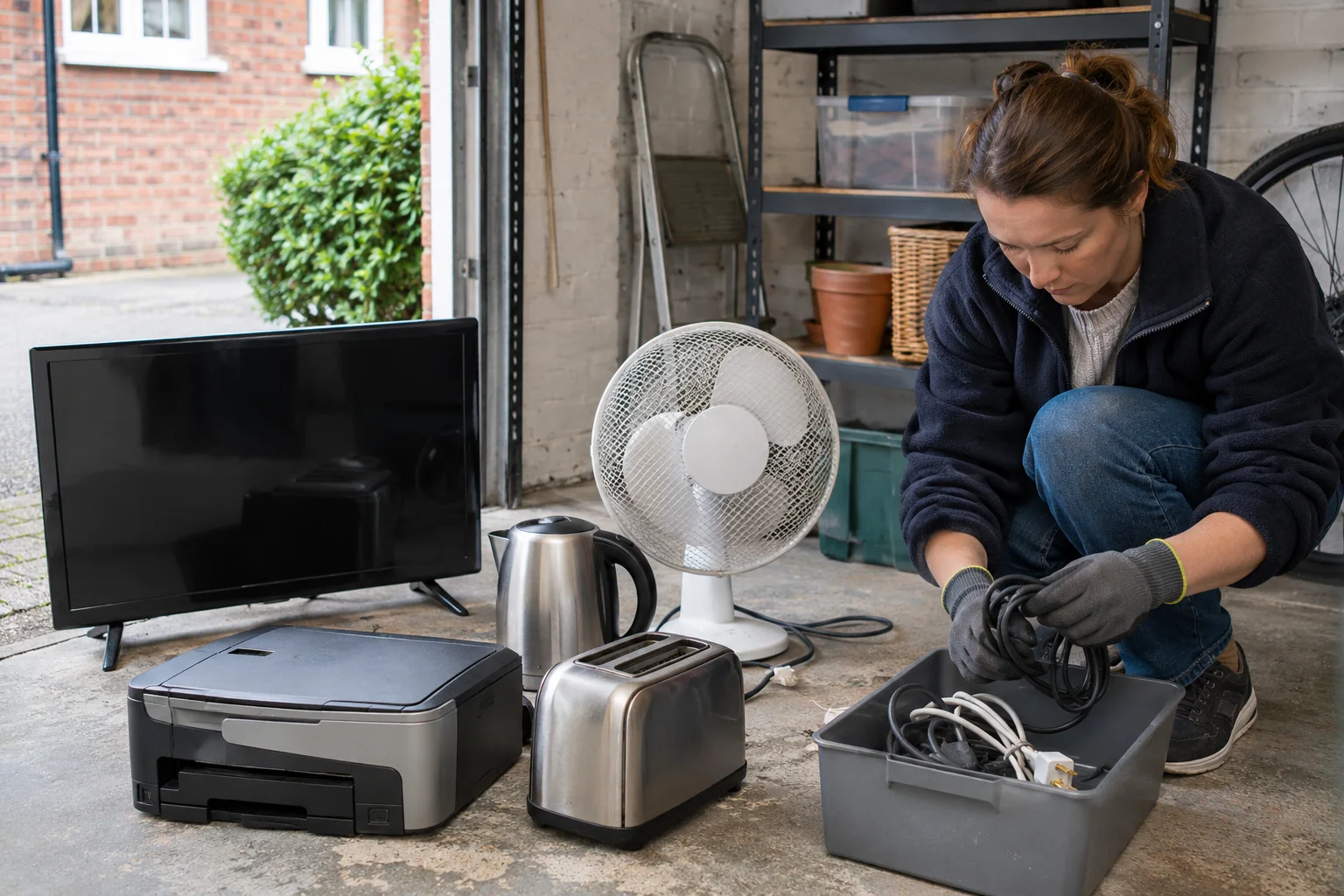
We can assess a television accompanying an old cabinet, a printer beside boxed belongings or an appliance included in a larger home clear-out. The equipment remains identifiable in the quotation. That makes the removal list useful when objects are stored in several rooms rather than grouped in a single pile.
Our team carries and loads the agreed items. Larger appliances and screens are considered at their actual location, while owners complete personal-information preparation before computers or storage devices are handed over.

| Equipment group | Collection description | Carrying and handover distinction |
|---|---|---|
| Television or monitor | The enquiry identifies the screen type, approximate size and location with the furniture leaving. | A large screen and a compact monitor create different carrying tasks. The quotation considers the piece along its route, including any relevant doorway, stairs and final connection to the loading point. |
| Kitchen appliance | The listed appliance is identified individually rather than disappearing within a general room-clearance description. | Installed or connected condition is relevant to arranging removal. The service assessment establishes the proposed collection for that equipment alongside any ordinary loose furniture and associated household contents. |
| Computer or printer | The collection list separates complete devices from accessories, boxes and ordinary rubbish. | The team carries and loads the agreed equipment. Owners complete any personal-information preparation beforehand, so devices awaiting that work remain distinct from those ready for physical removal. |

Regis Road and Hornsey Street serve different self-delivery decisions
Regis Road, Kentish Town NW5 3EW lists household furniture, electrical items and scrap metal. At Hornsey Street, N7 8HU the pedestrian and cycle route uses an entrance drop-off, not access inside the main centre; it excludes large furniture, appliances and general household rubbish. These distinctions matter when a King’s Cross clear-out contains a cabinet, computer equipment and smaller containers together.
Our team carries the accepted mixed group from its agreed rooms and loading points. Household furniture and business equipment remain independently identified in the quotation, while working devices and possessions retained by another occupant stay outside the removal.
| Combined household allowance | Guide price | What is included in the load assessment |
|---|---|---|
| Up to 50 kg | £55 | This minimum is weight-limited, with the volume allowance established through the quotation. A light bulky piece still needs a description of its size and collection location. |
| Up to 3 yd³ and 250 kg | £120 | The domestic load must remain within both limits. Furniture, boxed contents and any identified smaller electrical items count together when included in the same agreed household removal. |
| Up to 6 yd³ and 500 kg | £180 | Both ceilings apply to the combined contents. Several full containers may add substantial weight even where the furniture is the most obvious part of the collection. |
| Up to 9 yd³ and 760 kg | £240 | This larger household band retains both limits. The quotation considers all agreed collection points and material groups rather than only the largest heap visible in a photograph. |
| Up to 12 yd³ and 1,000 kg | £305 | Loads exceeding either published allowance need a quote. Whole-property, commercial and equipment-focused clearances receive an assessment appropriate to their actual contents and removal requirements. |
The route through rooms and building entrances
The team connects the unwanted item’s position with the building exit and the practical vehicle loading point. Doors, floor level, stairs or a working lift affect that route. Each agreed collection location forms part of assessing the removal.
A shared entrance may link different rooms or occupants with the same outside loading position. The collection list distinguishes the contents leaving from equipment and furniture staying in use. The work covers the specified items rather than the entire contents of a building.
| Origin of the load | Useful distinction | Appropriate quotation |
|---|---|---|
| Resident’s belongings | Unwanted furniture, clothes, books and appliances can form a domestic collection. | The household guide provides a reference within its combined limits. The complete item list and carrying work inform the quote, including smaller belongings stored away from the principal furniture. |
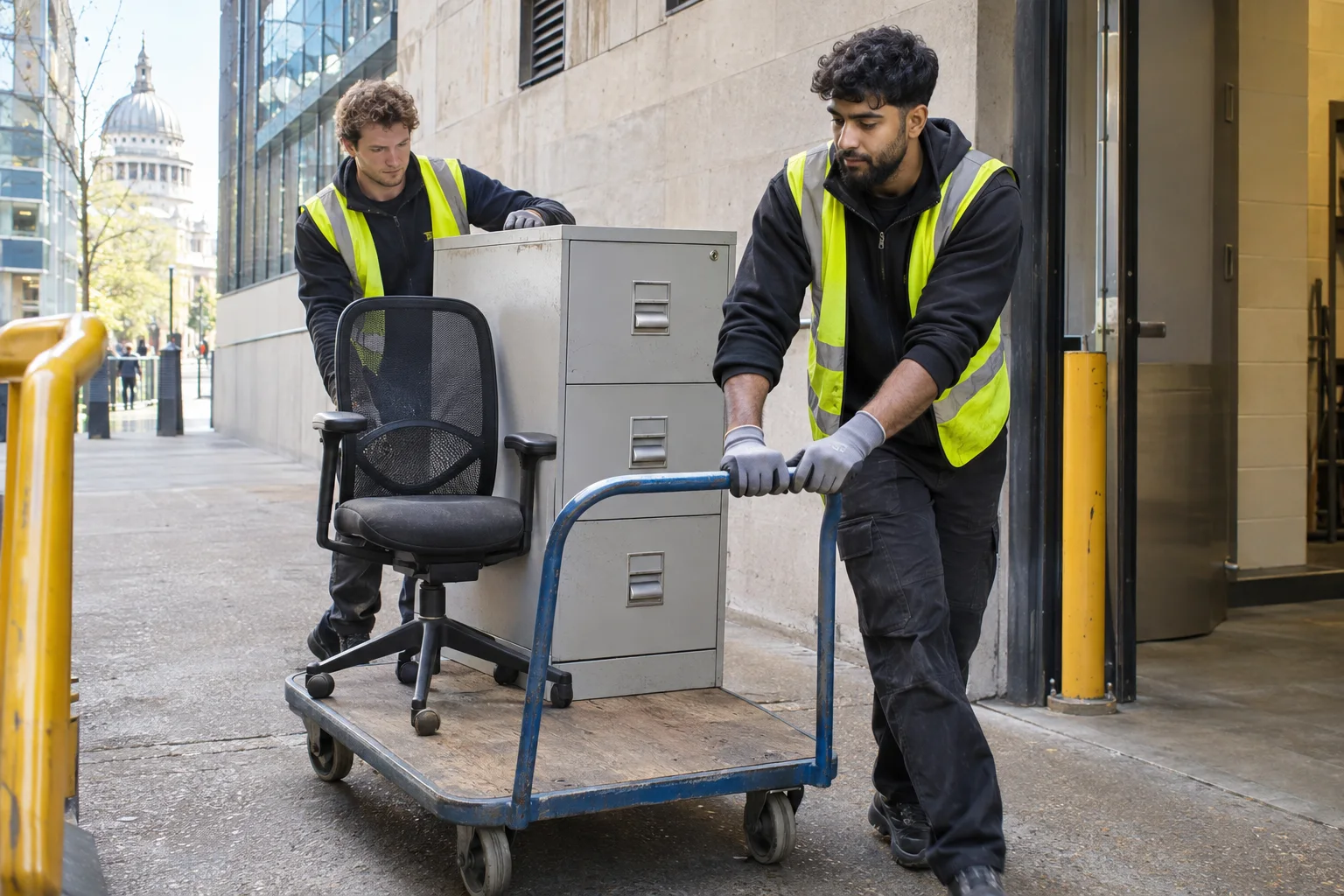
| Business clear-out | An office can generate desks, chairs, packaging and unwanted electrical equipment. | Commercial rubbish receives its own quotation. Similarity to household furniture does not make a business collection subject to the household minimum or its published volume allowances. |
| Refurbishment work | Bricks, timber, rubble and plasterboard differ from ordinary property contents. | Building waste follows the weight-based service enquiry. Dense debris is identified separately so a furniture clearance description does not conceal a different material load requiring assessment. |
From collected contents to material handling
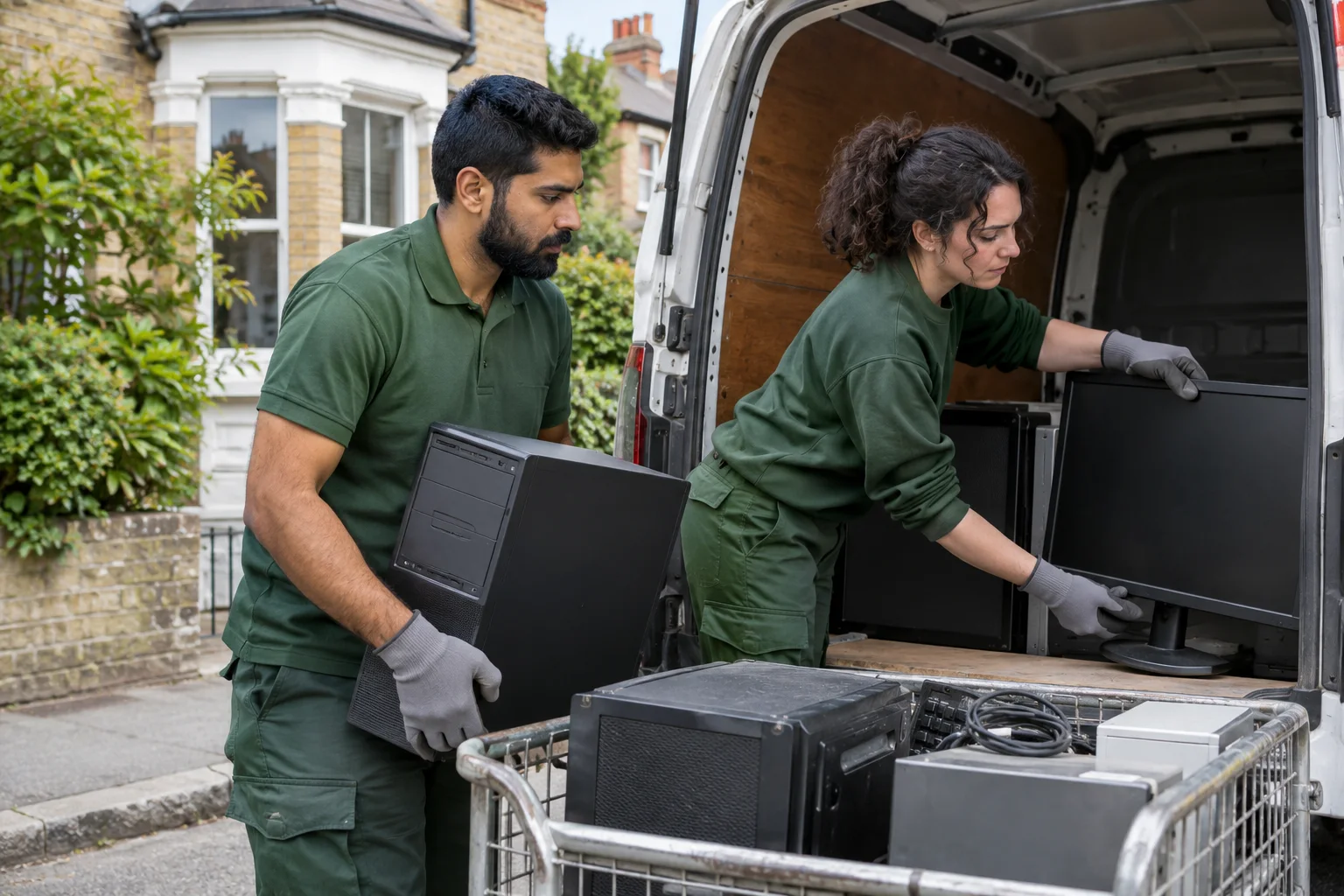
A mixed load can contain timber furniture, metal, textiles, packaging and devices. We transport the agreed rubbish for responsible handling and recycle as much as possible. The material breakdown remains useful after collection because these groups can require different onward routes.
Household bands are a guide for domestic loads within both weight and volume limits. Whole-property clearance receives its own quotation, while workplace rubbish and building debris are assessed through the relevant service. The origin and materials determine the appropriate enquiry.
| Collection point | Route feature | Removal work assessed |
|---|---|---|
| Separate rooms | A main item may be upstairs while accompanying boxes are in another room. | The quotation covers the agreed points together. Their positions connect the collection inventory with the carrying work rather than assuming all contents are already waiting at the building entrance. |
| Shared doorway | Furniture or equipment needs a usable route through the doors between its room and the outside. | The item’s dimensions and available turning room matter along that passage. The collection arrangement reflects the actual pieces leaving and the route identified for the visit. |
| Vehicle loading position | The practical stopping point establishes where the team loads the collected contents. | The agreed items are carried to that position and loaded into the vehicle. This completes the physical removal from the property before the materials are transported away. |
Collections in King’s Cross
Our service covers King’s Cross and all London and the M25. Same-day collection is available, with an appointment arranged for the proposed removal and schedule. The phone line is open 24/7 for household, equipment and business enquiries.
Local reuse and recycling information
Frequently asked questions
Can a King’s Cross sofa go through Hornsey Street’s pedestrian drop-off?
Islington excludes large furniture from that entrance point, alongside large appliances and general household rubbish. A sofa needs another suitable arrangement. Our private quotation can identify the agreed sofa and accompanying contents for carrying from their present positions and loading at the collection address.
Does Camden’s electrical partnership take every item?
The council names particular large household electrical items for that route. It is separate from a general furniture clearance and has its own booking and eligibility requirements.
Is Regis Road in King’s Cross?
Camden identifies Regis Road in Kentish Town. It is a borough self-delivery option for suitable materials, rather than a recycling centre located in King’s Cross.
Can you collect from rooms behind a shared entrance?
The quotation can address the agreed indoor locations and route through the building. Doors, floor level and the practical loading point are part of assessing carrying and removal.
Does workplace furniture use the household guide?
Business rubbish receives a commercial quotation for its contents and removal work. A desk’s appearance alone does not determine whether its collection is domestic or commercial.