
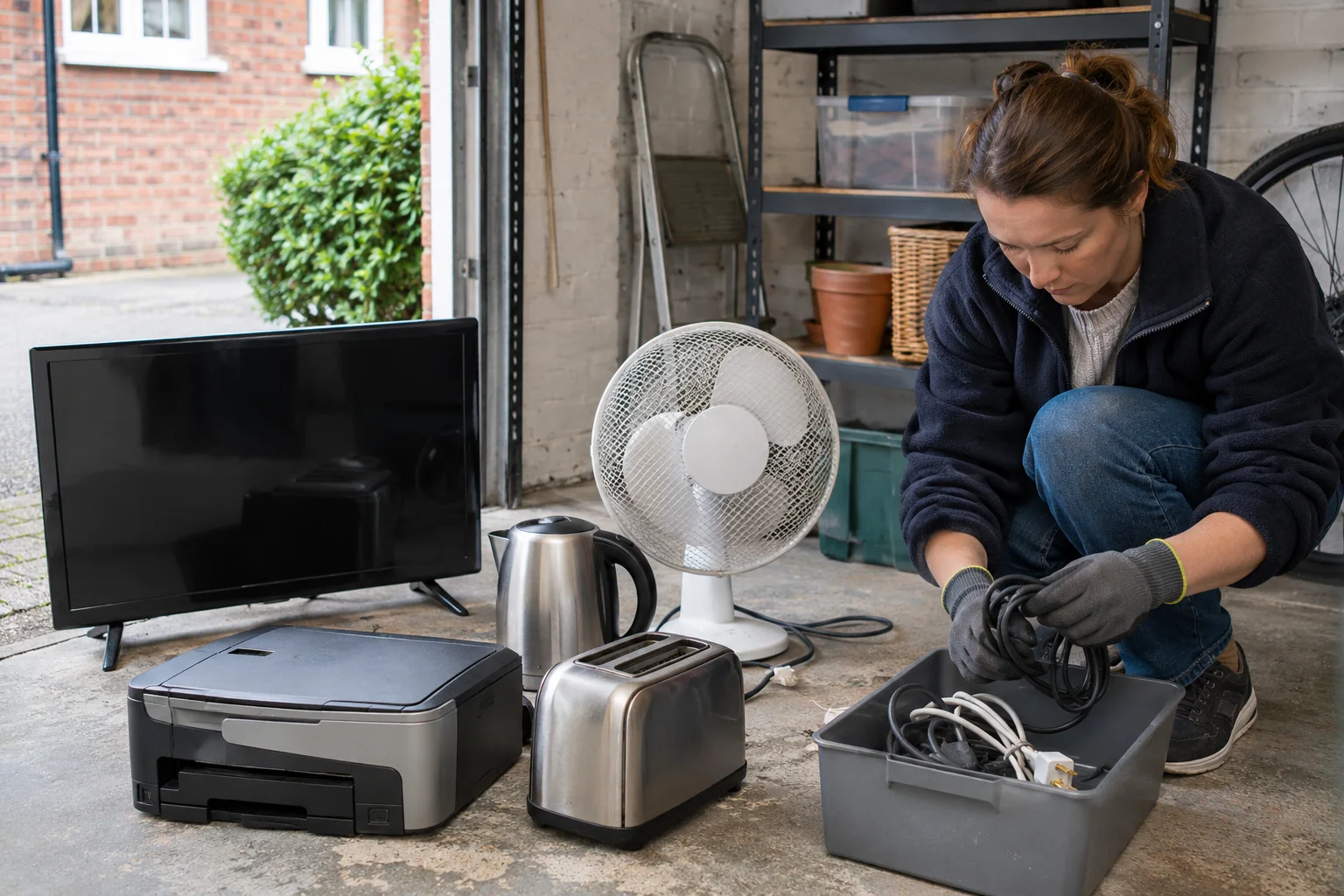
Rubbish collection in Twickenham
We collect agreed unwanted furniture and stored contents from Twickenham properties, including garage-clearance enquiries with several material groups. Our team carries and loads the identified contents from their collection points. The quotation assesses the load and route, with same-day availability across London and the M25 and phone enquiries open 24/7.
Separate the stored furniture from other garage materials
Choose the service matching household contents, green cuttings or building debris.
A garage clear-out can combine several material groups; the enquiry keeps each identifiable for its appropriate quotation and carrying work.
Can garage contents include several separately identified material groups?
Yes. The enquiry can identify stored furniture, ordinary belongings, equipment and other materials as distinct parts of the proposed removal. Their appropriate service assessments remain clear. The quotation connects the agreed contents with their collection positions and carrying work rather than treating every object in the garage as one household furniture load.
Is Patch Twickenham a drop-off for unwanted household equipment?
The Library of Things at Patch Twickenham on York Street provides equipment borrowing, with collection and return of the borrowed items. That differs from disposing of an old possession. Our enquiry identifies the unwanted furniture and equipment requiring removal from the property, with their appropriate quotations and carrying and loading work assessed.
A garage can hold an old cabinet, boxed belongings and equipment requiring different collection assessments. Our Twickenham enquiry identifies the actual contents agreed for removal. The team carries and loads those contents, while retained possessions and borrowed kit remain outside the removal list.
Patch Twickenham hosts a Library of Things on York Street, and the council also identifies a local repair cafe. These services concern borrowing or keeping items in use. Our quotation addresses the unwanted contents requiring collection from the property, with the material groups and carrying work made clear.
- Stored furniture and belongings recorded within the removal.
- Equipment and other materials distinguished for quotation.
- Retained or borrowed kit separated from contents leaving.
- Carrying and loading provided from the agreed collection points.
| Contents | What the request identifies | Effect on the quotation |
|---|---|---|
| Stored furniture | The actual cabinet, shelving or other piece and its collection position are recorded within the enquiry. | Its dimensions affect the carrying route, while accompanying belongings remain visible within the complete agreed removal. |
| Boxed household belongings | The contents are identified when they are included alongside the furniture. | Their occupied space and weight contribute to the ordinary household load rather than being ignored within a count of large pieces. |
| Equipment and tools | The actual kit and collection context remain identifiable within the proposed removal. | Equipment-focused or business contents receive their appropriate individual quotation instead of automatically sharing a household furniture allowance. |
| Other material groups | The enquiry distinguishes actual green cuttings or renovation debris from furniture and stored belongings. | Each retains its appropriate guide and collection description rather than treating every object in storage as one generic material load. |
Stored furniture and boxed belongings
Our team collects the agreed cabinet, shelving or other furniture and the contents included with it. Boxes held elsewhere contribute when they are part of the removal. The quotation connects those collection points with the actual carrying route rather than pricing the garage by its floor area alone.

| Guide price | Paired limits | What the enquiry distinguishes |
|---|---|---|
| Minimum £55 | Up to 50 kg; the minimum-band volume cap has not been specified. | The actual contents remain identified for the appropriate household or green-waste collection quotation rather than a price set by room name. |
| £120 | Up to 3 cubic yards and up to 250 kg. | Both limits apply to the relevant material load; furniture and organic cuttings remain distinguishable within the enquiry. |
| £180 | Up to 6 cubic yards and up to 500 kg. | Boxes and furniture contribute to the household load, while actual garden cuttings retain their green-waste description. |
| £240 | Up to 9 cubic yards and up to 760 kg. | The guide checks occupied space and weight together, with the carrying and loading work confirmed for the agreed collection. |
| £305 | Up to 12 cubic yards and up to 1,000 kg. | A load beyond either published limit receives a quote; commercial and equipment-focused removals receive individual assessment. |

Borrowing and repair have different local roles
The Library of Things identifies its lockers at Patch Twickenham, 42 York Street, for borrowing and returning household equipment. Richmond Council also identifies Twickenham Repair Cafe. Our property collection concerns the actual unwanted contents requiring carrying and loading, keeping those separate arrangements distinct.
| Named local arrangement | Verified purpose | Difference from property removal |
|---|---|---|
| Patch Twickenham, York Street | The Library of Things identifies its equipment lockers at 42 York Street. | The named venue serves borrowing and return of household kit rather than accepting a mixed load of unwanted property contents. |
| Equipment borrowing | The service concerns useful household items borrowed for a period of use. | Our quotation addresses the possessions actually agreed for removal and does not replace the return arrangement for borrowed equipment. |
| Twickenham Repair Cafe | Richmond Council identifies a separate local repair service within its reuse and repair information. | A repair arrangement concerns keeping an item in use; our collection assesses the carrying and loading of unwanted contents. |
| Collection at the property | The quote identifies the agreed furniture, belongings and material groups at their actual positions. | The work concerns removal from the address rather than personally delivering contents to a borrowing or repair service. |
Equipment, cuttings and materials stay identifiable
The enquiry distinguishes stored equipment from garden cuttings and renovation materials. A garden tool or furniture piece is not described as green cuttings simply because it came from outdoors. The appropriate service assessment follows the actual contents, with building waste using its weight-based guide.

| Weight band | Guide price | Collection distinction |
|---|---|---|
| Up to 50 kg | £55 minimum. | The enquiry identifies the actual renovation materials rather than treating a compact debris group as ordinary furniture or green cuttings. |
| Up to 250 kg | £120. | Dense materials can reach a weight band while occupying little space, so the guide is based on weight rather than household volume limits. |
| Up to 500 kg | £180. | The quoted removal concerns the actual materials and collection work rather than assigning a universal weight from the number of bags. |
| Up to 760 kg | £240. | Furniture and other household belongings remain separately identified instead of being absorbed into one building-material estimate. |
| Up to 1,000 kg | £305; larger loads receive a quote. | The enquiry keeps the material description and carrying work connected with the actual collection position in the property. |

The route from storage to vehicle loading
The team carries the agreed contents along the route covered by the quotation and loads the vehicle. The assessment considers the actual collection positions, furniture dimensions and changes of level. Contents elsewhere in the property remain visible in the request when they are also agreed for removal.
| Route element | Work assessed | Practical distinction |
|---|---|---|
| Actual storage point | The enquiry records where the agreed furniture and other contents stand within the property. | The carrying work concerns those positions instead of assuming everything has already reached an accessible outside loading point. |
| Furniture dimensions | The piece is considered alongside the doorways and passages through which it must leave. | A cabinet and compact boxes can require different carrying assessments while forming one agreed collection. |
| Changes of level | The quotation identifies the contents’ positions relative to the exit and vehicle loading point. | Carrying from another level describes different work from loading similar contents already accessible at ground level. |
| Separate collection group | Additional agreed belongings held elsewhere remain visible within the removal description. | The quote connects that carrying position with the complete load rather than covering only the contents nearest the entrance. |
Collections in Twickenham
We cover Twickenham and the wider London and M25 service area. Same-day collection is available, and phone enquiries are open 24/7. The quotation identifies the agreed contents, material groups and carrying and loading work at the property.
Frequently asked questions
Can some garage contents stay while the old cabinet leaves?
Yes. The enquiry identifies the furniture and belongings actually agreed for removal. Retained equipment and possessions remain outside the collection list rather than being included automatically.
Is an old garden tool the same as green cuttings?
The enquiry identifies the actual contents. Equipment and furniture retain their appropriate assessment, while organic garden cuttings use the green-waste guide rather than every object stored outdoors sharing that material description.
Does borrowed kit belong in the removal list?
The request identifies only the possessions agreed for collection. The borrowing service has its own return arrangement, which remains separate from the unwanted-content removal quotation.
Can building debris receive a different guide from furniture?
Yes. Building waste is identified by its actual materials and uses weight-only guide bands. Ordinary household belongings retain their paired volume and weight assessment where applicable.
Can boxes elsewhere in the house join the same enquiry?
The request can identify those agreed contents and their separate collection position. The quotation connects their carrying work and load with the wider proposed removal.