

Rubbish removal in West Hampstead
We carry and load desks, storage furniture and contents in West Hampstead. Our 24/7 phone line takes quotation, same-day availability and scheduled appointment enquiries.
Choose the service for your workspace contents
Household guides and commercial quotes are separate options.
Choose household or commercial origin for the workspace contents, then describe the furniture and devices requiring the relevant quotation.
Can a home workspace clear-out include the desk and stored belongings?
Yes. Describe the desk, chair and storage furniture, then identify the boxes or equipment leaving with them. Explain whether the contents are household belongings or business waste. Our quotation addresses the actual origin, amount and carrying work, so the enquiry remains clear even where a room has been used for more than one purpose.
Does the West End Lane council timetable apply throughout West Hampstead?
Camden’s West End Lane page specifies a particular stretch of the road, while its broader business guidance names other streets separately. Use the full address when checking those services. Our private furniture and rubbish collection has an agreed appointment for the premises and load, distinct from routine business sack presentation information.
We collect the selected workspace furniture, devices and containers in West Hampstead. Household and commercial contents receive their relevant assessment, with retained equipment outside the load.
- Desks and storage furniture counted by piece.
- Household and business contents identified separately.
- Equipment and accessories kept visible in the inventory.
- Carrying and loading arranged from the actual rooms.
Workspace furniture and contents collected by origin
We assess accepted workspace contents under their actual household or commercial arrangement. The team carries and loads the approved desks, seating, devices and containers from agreed points, while working equipment and retained belongings remain outside the selection.
Our collection can remove only the accepted part of the workspace. The contact identifies the approved furniture, devices and containers while working screens, personal records and equipment retained for another location stay outside the load. Our team carries and loads that physical remainder without treating the entire workspace as unwanted.
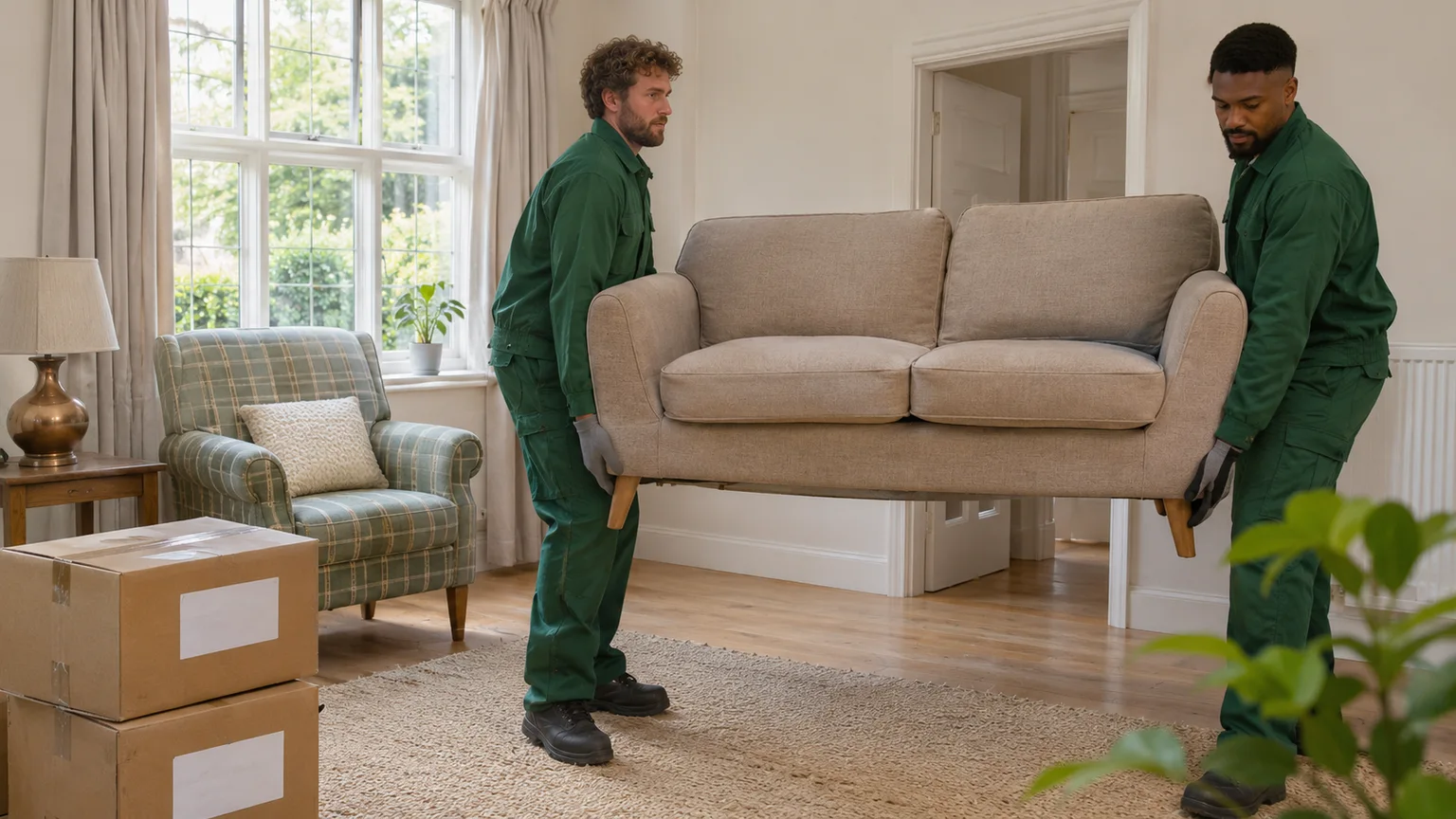
| Contents | Describe the origin | Quotation approach |
|---|---|---|
| Personal desk and belongings | A resident is removing household furniture and the personal contents stored around a workspace. | Use the domestic service for a load guide and describe the full collection. Volume and weight apply together above the minimum, with a specific quote for a larger property clearance. |
| Company furniture | A business is discarding desks, chairs or storage units as part of changing its working premises. | Request a commercial quotation for the identified furniture and handling. The household bands remain separate from the business service, even where the objects resemble ordinary domestic desks or cabinets. |
| Business records with furniture | The enquiry includes containers of commercial material alongside the furniture used to store them. | Describe the containers and their amount separately. Their contents contribute to the load description and should remain visible in the quote rather than disappearing behind a count of empty furniture pieces. |
| A room with mixed contents | Household belongings and business equipment are present together but have different owners or origins. | Identify each group and the responsible contact. The collection list can distinguish the separate requirements while presenting a clear practical handover for the agreed items at the same address. |
The material’s origin guides the quotation
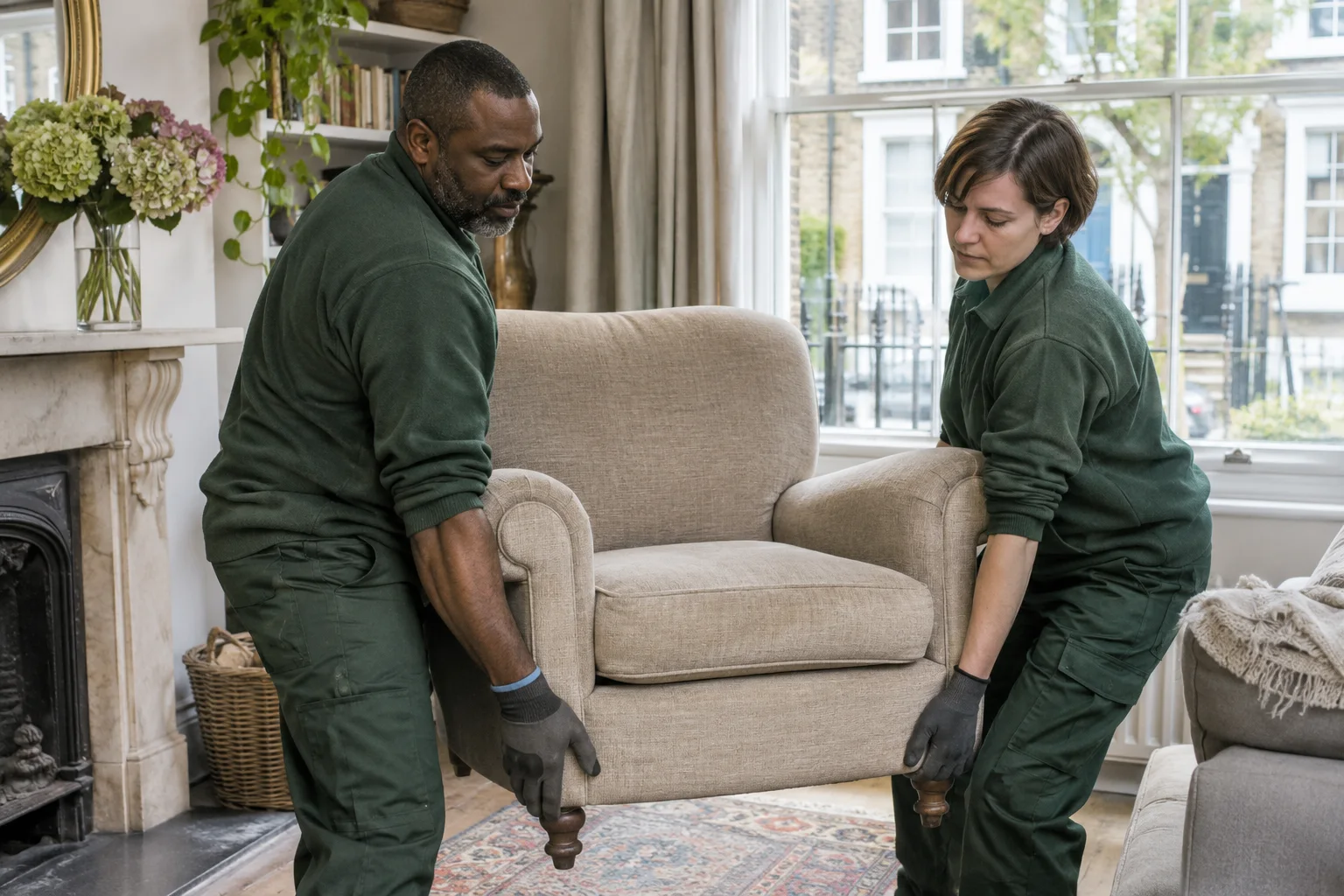
We assess the actual workspace contents under their relevant household or commercial collection arrangement. Personal furniture and belongings can use the domestic guide, while company desks and other business contents receive a commercial quotation. The team carries and loads the accepted group from its agreed locations, with the quotation following origin and amount rather than the room’s name alone.
For a mixed enquiry, identify the groups individually. This helps the quotation address the appropriate service while keeping each group recognisable for the carrying and loading work.
| Item | Useful description | Associated contents |
|---|---|---|
| Desk | Count the desks, give useful dimensions for large pieces and explain their assembled condition. | List equipment, drawers of belongings and loose accessories separately when included. A desk photograph can show the working area while the inventory specifies exactly which objects should leave. |
| Drawer pedestal | Identify whether it is a separate mobile unit or part of another piece and whether its drawers are empty. | Keep retained papers and personal items apart. Containers of discarded contents can be described as their own group so their quantity contributes to the actual collection assessment. |
| Shelving | Give the number of units and explain whether they remain assembled or have already been separated into panels. | Describe boxes, files or household belongings leaving with the shelving. The amount in storage matters alongside the frame, especially where a compact group contains heavier material. |
| Office chair | Count individual chairs, distinguishing retained seating from the redundant pieces selected for removal. | Include any associated loose parts or accessories intended to leave. A partial furniture change can remain clear where several similar chairs continue to be used in the same room. |
Separate routine collections from a furniture removal
Camden’s routine arrangements distinguish West End Lane between Sherriff Road and Fortune Green Road and a defined Broadhurst Gardens section. Our separate private collection carries and loads the furniture and materials accepted for the premises. The quotation follows that actual property selection and its route, while ordinary rubbish allocated to routine public arrangements remains outside our agreed load.
Our private removal is arranged for the agreed furniture and contents. A business can maintain its ordinary bins or sack service while a redundant desk, storage unit or equipment backlog is collected separately.

| Local reference | What the council page identifies | Information for our enquiry |
|---|---|---|
| West End Lane | Camden’s business page defines a stretch between Sherriff Road and Fortune Green Road. | Provide the full premises address and check current council arrangements for routine waste. Our quote identifies the actual redundant furniture and contents requiring carrying and loading from that property. |
| Broadhurst Gardens | Camden’s wider business guidance lists the section from West End Lane to Priory Road separately. | Use the specific address when comparing services. The collection task remains the group agreed with our team, with the item locations and route described for the proposed appointment. |
| Other local addresses | A neighbourhood name can cover premises beyond a road section specified in a particular service page. | Describe the building and contents directly. The address establishes the collection point for our quotation, while the material list and physical route explain the work being requested. |

Workspace contents carried from room to vehicle
Our team carries accepted workspace furniture and contents from the agreed room or store points and loads them for removal. The assessment connects each physical piece with its floor and the relevant stairs or lift along the route. Larger units and separately stored containers remain visible in the task rather than being reduced to a general workspace count.
Accepted wood, metal, packaging and electrical equipment are collected for appropriate handling or disposal. Complete devices remain identifiable within that physical load, with retained parts outside the selection. The owner completes required information protection before releasing computers or storage devices, while our team’s agreed role concerns carrying and loading the accepted equipment.
| Detail | Show or explain | How it informs the collection |
|---|---|---|
| The full group | Photograph the redundant furniture and all containers included, including contents stored away from the main workspace. | The quotation has a complete load description. A screen close-up or one desk at the front of a room does not communicate the other equipment and boxes selected for removal. |
| Dense containers | Name the main contents of boxes, particularly books or records that add weight without taking much additional space. | The household guide considers both volume and weight where applicable, while commercial contents receive their own quote. Material descriptions make either enquiry more useful than a box count alone. |
| Equipment | Count printers, screens, computers and other devices, with cables or peripherals described as an accessory group. | The physical collection identifies complete devices and smaller components. The handover contact can distinguish equipment staying in use from the unwanted group approved for carrying and loading. |
| Location and route | Give each room or storage point, the floor and any stairs or lift involved in moving larger pieces. | The carrying task connects the contents’ actual position to the loading point. A collection spanning two rooms can be assessed as its real route while retained areas remain outside the agreed removal. |
| Decision | Practical action | Collection result |
|---|---|---|
| Furniture reused elsewhere | Remove a desk or storage unit from the list when it is reassigned or reserved for another person. | The quotation and handover reflect the remainder. Staff can continue using retained furniture while the team identifies the items that still need to be collected from the premises. |
| Equipment staying | Keep retained devices and accessories apart from the furniture group being removed, with a contact who knows their destination. | The team can carry the selected desk or cabinet without treating every nearby object as part of the load. The owner’s decisions about equipment remain clear during the physical handover. |
Collections in West Hampstead
West Hampstead is included in our London and M25 service. Request a quote with the complete premises address and selected contents, with an available appointment confirmed for the actual collection.
Local council collection and recycling information
Frequently asked questions
Can you take a desk while its computer stays?
Yes. Identify the desk and any other furniture leaving, then keep the retained computer and accessories outside that group. The contact meeting our team can show the selected removal list.
Does a home address automatically make records household waste?
Describe the material’s origin. Business contents receive a commercial assessment even when stored at a home address, while personal belongings can be identified as their own household group.
Can a business keep its ordinary waste arrangement?
Yes. Our quoted furniture and contents removal is a separate job. The business can retain its routine waste services while the agreed redundant items are carried and collected.
Should I list a drawer unit separately from its desk?
Identify the pieces and whether they are attached or separate. Explain the assembled condition and contents so the quotation and physical handover reflect the actual furniture being removed.
Is the West End Lane council page a timetable for your team?
Our appointment is arranged separately. The council page describes its own address-specific service; our quote covers the agreed collection points, load and carrying work at your premises.