

Rubbish collection in Woolwich
We collect agreed unwanted furniture and household belongings from Woolwich properties, including contents held in separate storage points. Our enquiry identifies the load and its route from the property to the vehicle, with carrying and loading assessed for the quotation. Same-day availability covers London and the M25, and phone enquiries are open 24/7.
Estimate the contents coming out of storage
Include the furniture and smaller belongings at every agreed collection point.
The guide considers the ordinary household load as a whole, while the quote connects its stored contents with carrying and loading.
Can furniture stored separately from the main room be collected?
Yes. The enquiry identifies the agreed furniture and belongings at their actual collection points, including a separate storage location. Our quotation connects those positions with the carrying route and loading work. That gives the removal a complete description rather than assuming all unwanted contents are already together beside the entrance.
Can a Woolwich storage collection leave usable donations separate?
Yes. BHF’s Hare Street furniture and electrical store and Emmaus Greenwich’s Plumstead shop provide independent reuse options for suitable goods. Our quotation covers the unwanted remainder agreed at the property. A piece reserved for a charity assessment stays outside that load, while furniture, equipment and accompanying containers still requiring team carrying and loading are identified together.
A storage clear-out can include furniture removed from use some time ago and smaller possessions still held around it. Our Woolwich enquiry identifies the agreed contents at each collection point. The quotation then relates the full load to its carrying route rather than only the easiest items to see.
BHF on Hare Street and Emmaus Greenwich in Plumstead offer named options for suitable reusable belongings. Their acceptance arrangements remain separate from our private collection. We assess the unwanted furniture and contents still leaving from each storage position, carrying and loading that agreed remainder while possessions retained or reserved for donation stay outside the removal list.
- Stored furniture recorded with its accompanying belongings.
- Separate collection points identified within the same enquiry.
- Reusable possessions separated from the agreed unwanted furniture, devices and containers.
- Carrying and loading assessed for the complete load.
| Local option | Accepted purpose or condition | How the choice affects the removal |
|---|---|---|
| BHF Furniture and Electrical Store | The charity’s Woolwich store is at 36–42 Hare Street, SE18 6LZ, and handles quality furniture, electricals and homeware. | This is a potential reuse choice for suitable possessions. Our removal selection remains the furniture and belongings accepted for private collection, including items that are not reserved for a charity assessment or continued use. |
| BHF’s donation assessment | Its collection guidance requires saleable condition, complete parts and working electrical items; upholstered furniture needs its fire label. | A non-working device or damaged unit does not become an accepted donation simply because the store sells similar products. Our equipment enquiry identifies that actual item and condition separately from the ordinary household contents. |
| Emmaus Greenwich, Plumstead shop | The operator lists Earl Rise, off Brewery Road, Plumstead SE18 7NF, within its furniture and household reuse network. | A suitable possession can be considered through that organisation’s own donation route. It stays outside our carrying task when reserved for that arrangement; other contents can still form a separate quoted collection from the Woolwich property. |
| Smaller items and a larger remainder | BHF identifies a store drop point for smaller suitable donations, separately from its furniture and electrical collection service. | A bag of usable small objects need not define the fate of the cabinet around it. Our team carries and loads the larger furniture and accompanying belongings still agreed to leave, from their actual storage positions. |
Furniture taken out of use but still in storage
Our collection enquiry identifies the unwanted cabinet, table or other piece at its current position. Belongings held around or within it are included when they are part of the agreed removal. That keeps the quote connected to the actual collection rather than assuming storage furniture is empty.

| Guide price | Both limits apply | What the enquiry includes |
|---|---|---|
| Minimum £55 | Up to 50 kg; the minimum-band volume cap has not been specified. | The actual furniture and belongings are still identified so the collection can receive an appropriate quotation. |
| £120 | Up to 3 cubic yards and up to 250 kg. | Both occupied space and weight matter to the agreed ordinary household load, rather than the number of storage points alone. |
| £180 | Up to 6 cubic yards and up to 500 kg. | Boxes and bags accompanying furniture contribute when they are included in the removal, even at separate positions in the property. |
| £240 | Up to 9 cubic yards and up to 760 kg. | The guide concerns the entire household collection; the carrying route and loading work are confirmed for the quoted removal. |
| £305 | Up to 12 cubic yards and up to 1,000 kg. | A collection above either published limit receives a quote, with commercial and equipment-focused loads assessed individually. |
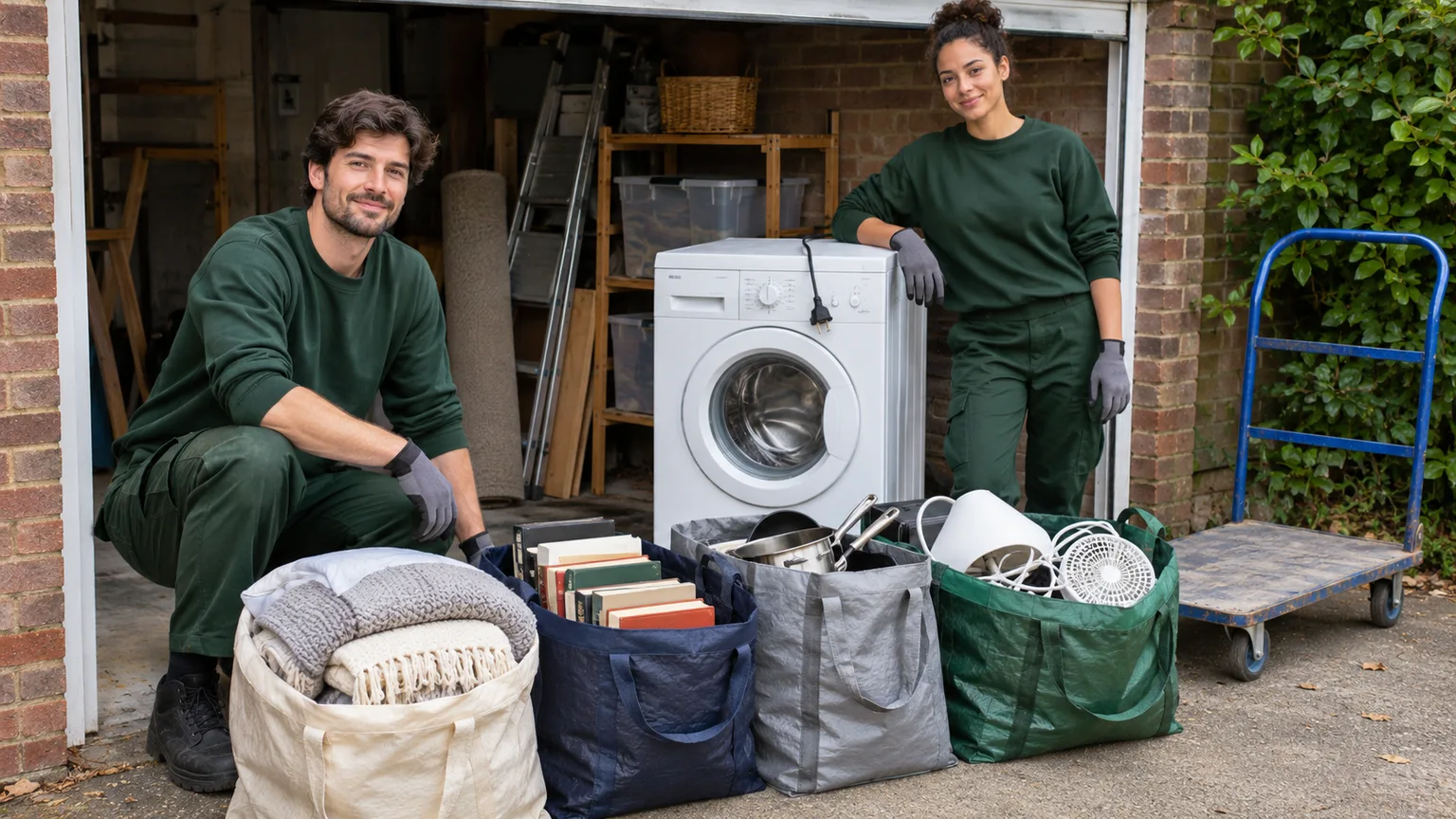
Hare Street furniture donations and nearby Plumstead reuse
Woolwich’s British Heart Foundation Furniture and Electrical Store is at 36–42 Hare Street. Its operator invites quality furniture and electrical donations through its collection service and provides a shop drop point for smaller suitable items. Emmaus Greenwich separately lists its Plumstead shop at Earl Rise, off Brewery Road, for household reuse. These are named alternatives for possessions with further use, rather than general disposal points for everything in a storage room.
Our team collects the accepted contents still requiring removal after items are retained or reserved for donation. A damaged cabinet, boxes of unwanted belongings and equipment remain individually described within that remainder. The quotation connects each group with its current room or store and the route to loading. We carry and load the agreed selection while useful possessions intended for a charity assessment stay apart, with equipment-focused or business contents receiving their relevant collection quotation.
| Material or physical group | What stays clear in the enquiry | Collection work at the property |
|---|---|---|
| A complete cabinet or table | The unwanted piece is described in its present form, with its size and location and any accompanying smaller belongings identified. | Our team assesses the route for that actual furniture, including openings and changes of level between its storage point and the vehicle. A usable piece reserved for BHF or Emmaus assessment remains outside our removal list; the quotation follows the items still agreed for carrying and loading. |
| Upholstered seating | The enquiry identifies the sofa or chair and its condition separately from other furniture and loose belongings. | BHF’s donation conditions include saleable condition and an attached fire label for upholstered furniture. A seat not reserved for that independent route can remain in our removal enquiry with its actual dimensions and current position. We quote for the accepted collection rather than treating similar-looking furniture as one interchangeable object. |
| Electrical devices and accessories | Complete equipment, selected leads and ordinary household containers are distinguished from the storage unit around them. | A working device considered for reuse and other equipment still requiring removal need separate decisions. Our quotation names the actual devices and carrying positions, with an equipment-focused or business collection individually assessed. Retained equipment and useful accessories remain outside the contents loaded by the team. |
| Bags and boxes at another storage point | Their contents, number and position form part of the full household group when they are agreed for removal. | Dense books or homeware contribute weight even where larger furniture occupies most of the visible space. The team carries the selected containers along their identified route and loads them with the agreed furniture. This includes smaller groups elsewhere without describing every stored possession as unwanted. |
Contents within a building need a defined collection point
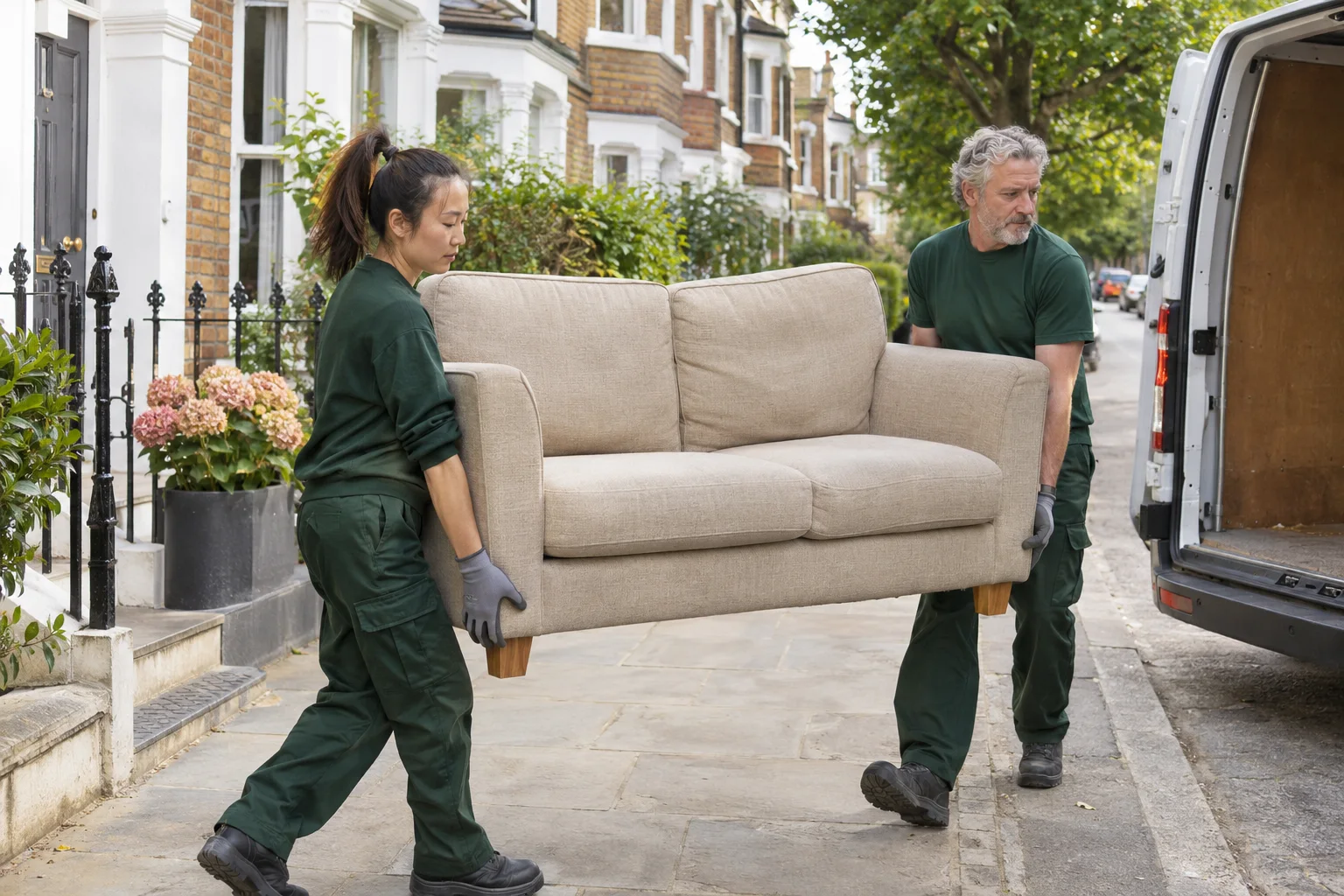
The assessment identifies the actual position of the agreed belongings and their route out of the property. A collection from an indoor room and loading from an accessible outside position describe different work. The quotation connects the contents with the route rather than treating every building’s storage arrangements as identical.
| Collection detail | Work assessed | Why it stays within the enquiry |
|---|---|---|
| Room or storage point | The collection description identifies where the furniture and belongings are held at the property. | This connects the carrying work with the actual contents rather than assuming everything has already reached an outside loading point. |
| Doorway dimensions | The assessment considers the piece and the opening through which it must leave. | Large furniture and compact boxes can require different carrying arrangements even when they belong to the same removal. |
| Changes of level | The enquiry records the position of the agreed contents relative to the building exit. | Carrying furniture from another floor represents different work from loading a similar piece already accessible at ground level. |
| Vehicle loading position | The route links every agreed collection point with the position used to load the removal. | The quotation describes the actual property arrangement rather than applying one access assumption to all Woolwich buildings. |

The full load includes the smaller possessions
Boxes, bags and compact belongings contribute alongside the furniture when they are agreed for removal. Our household guide checks occupied volume and weight together. A larger property clearance or a commercial equipment removal receives its appropriate quote instead of being priced simply by how long the contents have been stored.
| Load type | Assessment basis | Collection distinction |
|---|---|---|
| Ordinary household belongings | The domestic guide checks both occupied volume and total weight for the agreed contents. | Compact heavy possessions can affect the weight band even when the stored furniture accounts for most of the visible space. |
| Whole-house clearance | The property contents and collection work receive their own individual assessment. | A room count or the time spent in storage does not establish the price of removing the unwanted contents throughout a property. |
| Garden cuttings | The green-waste guide uses the approved paired volume and weight bands for that material collection. | Outdoor green waste remains distinguishable from furniture and stored household belongings within the enquiry. |
| Building materials | Weight-only bands are up to 50, 250, 500, 760 and 1,000 kg at £55, £120, £180, £240 and £305. | Renovation debris is identified separately from furniture; building loads above the published weight tiers receive a quotation. |
| Business equipment | Commercial and equipment-focused collections receive individual quotations for the actual contents and work. | Their service context remains visible even when the equipment has been stored beside ordinary household furniture. |
Collections in Woolwich
We cover Woolwich and the wider London and M25 service area. Same-day collection is available and our phone enquiry line operates 24/7. The quotation identifies the agreed contents and the carrying and loading work from their actual collection positions.
Frequently asked questions
Does storage time determine the collection price?
The quotation concerns the actual contents, load and removal work. The household guide checks volume and weight, rather than setting a price from how long a cabinet or box has been stored.
Can retained possessions stay in the same room?
Yes. The enquiry identifies the agreed unwanted contents while retained belongings remain outside the removal list. That supports a selected collection rather than treating the whole room as a clearance.
Does reserving a cabinet for Emmaus mean the whole room is a donation?
No. The charity assesses its proposed donation independently. Our removal list can still identify the unwanted boxes, furniture or equipment remaining in the room. The quotation follows those actual contents and collection positions, while the reserved cabinet and other retained belongings stay outside the team’s carrying and loading task.
What if furniture and boxes are at different levels?
Their actual positions and changes of level form part of the carrying assessment. The quotation connects those separate collection points with the complete removal and vehicle loading.
Does the Hare Street store take every item from a Woolwich storage room?
No. BHF’s donation service needs items it can sell, including complete furniture and working electricals, with fire labels on upholstered pieces. Our collection is a separate quotation for the contents accepted for removal. Items reserved for the charity or another reuse arrangement stay outside the physical group our team carries and loads.