
Rubbish collection in Muswell Hill
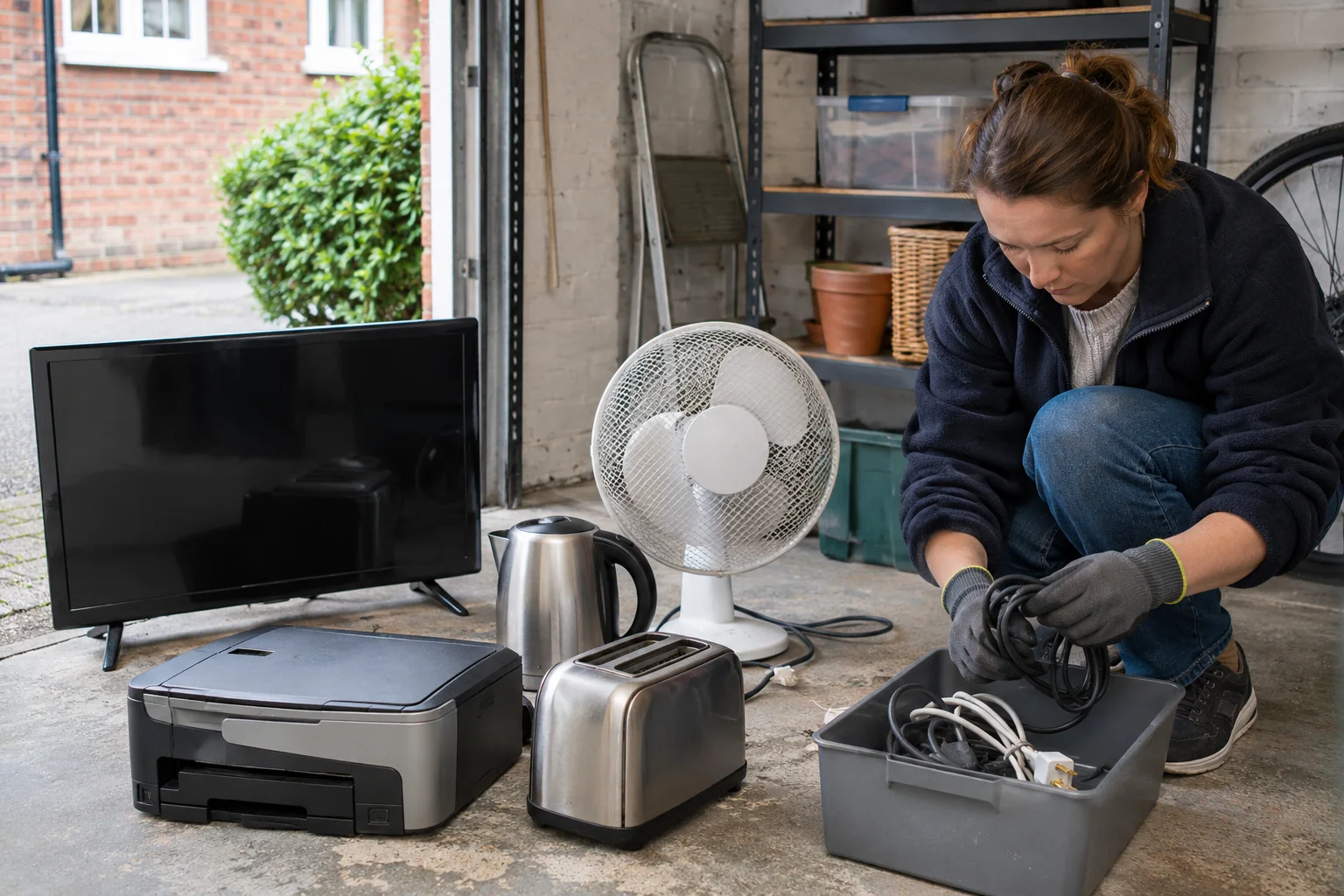
We collect unwanted furniture and household rubbish from Muswell Hill properties, with identified electrical items included in the enquiry. Our team carries and loads the agreed contents. Same-day service is available across London and the M25, and our enquiry line is open 24/7.
Estimate furniture with smaller devices
Include the furniture and identify any electrical equipment in the load.
A small-electrical drop-off and a mixed room collection serve different needs; this guide concerns the contents requiring removal.
Can a small electrical bank replace a furniture collection?
A small-electrical recycling point serves a particular material stream. Haringey’s published information identifies a point at 58 Colney Hatch Lane, while our collection addresses the contents requiring removal from the property. Furniture, boxes and larger equipment are described in the enquiry so the quotation covers their carrying, loading and transport.
Can you take a household load containing several different materials?
The enquiry can identify furniture, ordinary household belongings and devices as separate groups within the proposed removal. We assess their amount, weight and collection locations, then carry and load the agreed contents. Recycling is used where possible, with appropriate disposal of the remainder and relevant quotations for business or other distinct material loads.
A room clear-out can leave a large chair, a storage unit and a handful of old gadgets at the same time. Our Muswell Hill collection identifies those contents together for removal. The enquiry describes the smaller devices as well as the furniture, keeping the complete load visible.
A local small-electrical point can suit a different task from carrying bulky furniture out of a home. The comparison below distinguishes those options without treating an electrical bank as a general household disposal facility. Our quotation covers the agreed items and their route to the collection vehicle.
- Furniture carried from its identified room or storage point.
- Devices listed separately within a mixed household load.
- Loading and transport provided for the agreed contents.
- Local electrical recycling distinguished from bulky removal.
| Option | Published local distinction | When the collection task is different |
|---|---|---|
| 58 Colney Hatch Lane | Haringey’s council guide and waste service information identify a small-electrical recycling location here. | The point addresses suitable electrical items, not general furniture removal. A bulky chair, cabinet and mixed household load require an appropriate collection or disposal arrangement for those contents. |
| Other named electrical locations | The service information also identifies Cranley Gardens and Western Road among electrical recycling options. | Those are separate locations with their own purpose. A facility list does not provide carrying from a home; our quotation can include moving the agreed contents from their indoor collection points. |
| Devices within a clear-out | Our enquiry identifies the equipment alongside the furniture and other household belongings. | Type, size and quantity distinguish a few gadgets from a larger equipment load. The quote reflects the actual proposed removal, with the devices remaining visible rather than hidden in a general bag count. |
| Private furniture collection | The team carries the agreed pieces from the property and loads the collection vehicle. | The work addresses moving the furniture out as well as transporting it away. Smaller listed belongings can leave with the main piece, while retained contents remain outside the removal list. |
Bulky furniture and the smaller contents around it
We can assess seating, a table or a storage unit alongside boxes and bags of unwanted belongings. Each group forms part of the proposed collection when identified. A photograph of the largest piece alone may not show the equipment or containers stored in another part of the room.
The team carries and loads the agreed contents. Selected items can leave while retained furniture remains, so replacing one piece does not require clearing everything from the room.

| Item group | What the enquiry identifies | Effect on the combined removal |
|---|---|---|
| Seating and tables | The larger pieces are named with their dimensions and current location. | Their shape contributes to occupied space and the route through doorways. The quotation identifies which pieces leave, so similar furniture remaining nearby stays outside the collection. |
| Storage furniture | A cabinet, chest or shelf unit is described with any contents being removed alongside it. | An empty unit and one accompanied by boxes create different loads. Upright furniture also needs a workable route to the exit before it reaches the collection vehicle. |
| Books and textiles | Containers are identified by their contents as well as their number. | Books can make a compact group heavy, while textile bags may be lighter for the space they occupy. Both contribute to the complete household assessment and carrying work. |
| Appliances and devices | Equipment is listed separately within the proposed collection. | The description distinguishes a small device from a larger appliance or screen. Its size and location remain relevant to the removal, with an appropriate quote for equipment-focused enquiries. |
The Colney Hatch Lane electrical point has a specific purpose
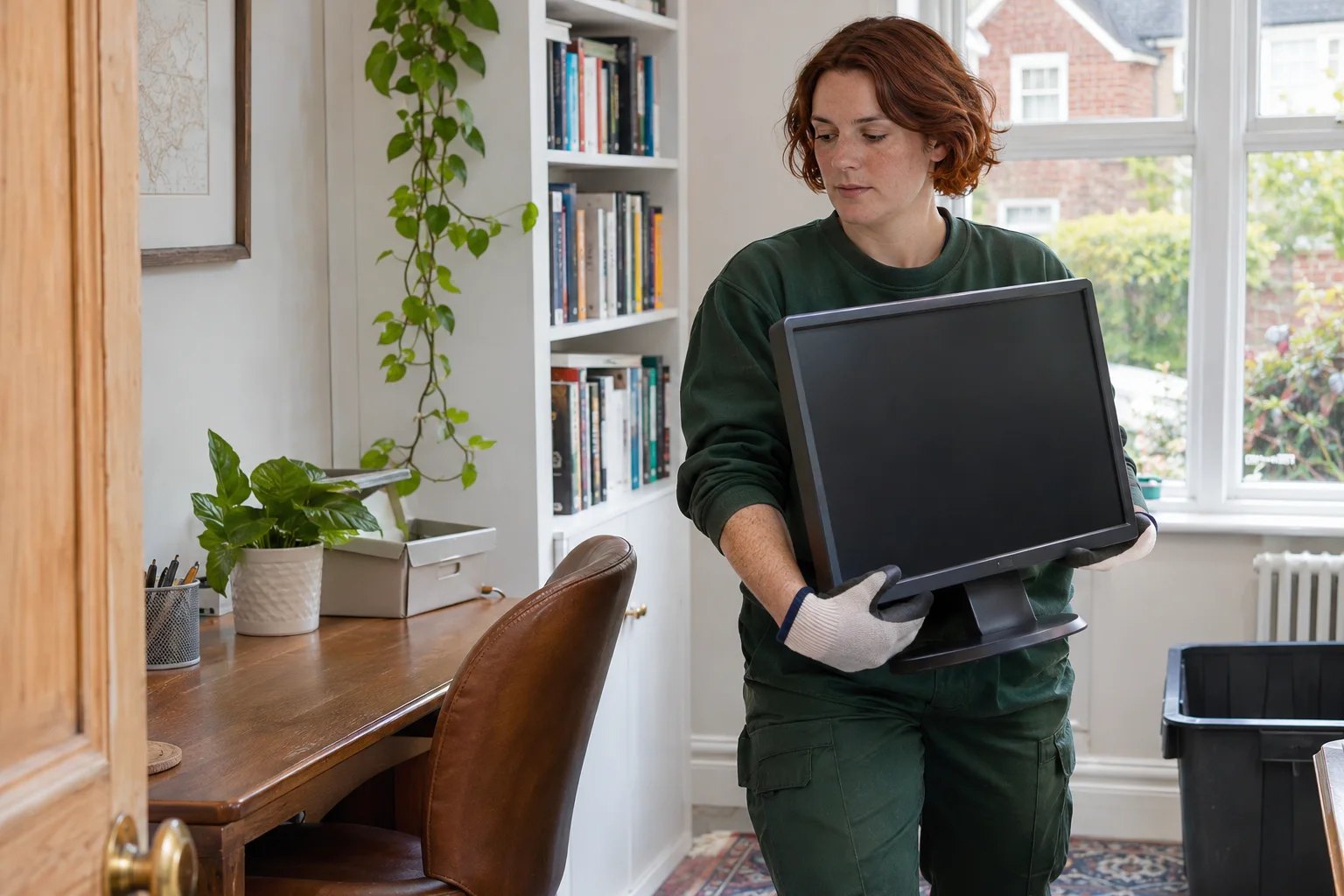
Haringey’s council guide and its waste service information identify an electrical recycling point at 58 Colney Hatch Lane. This provides a local option for suitable small electricals. It is a material-specific facility rather than a place to leave furniture, ordinary bags or every item from a room clearance.
Our property collection can address larger contents requiring carrying and transport. Devices are named within the enquiry, including their approximate size and collection location. Owners complete personal-information preparation before computers or other information-bearing equipment is handed over.
| Combined volume and weight | Guide price | How the load is assessed |
|---|---|---|
| Up to 50 kg | £55 | The minimum is a confirmed weight band, with its volume allowance established in the quotation. Bulky light furniture is described for its actual size and collection location. |
| Up to 3 yd³ and 250 kg | £120 | Both limits apply to the domestic removal. Furniture and accompanying containers count together, including dense boxed belongings or identified smaller devices collected with the main piece. |
| Up to 6 yd³ and 500 kg | £180 | The combined contents must fit both ceilings. Empty storage furniture and tightly packed boxes have different weight characteristics even where the overall pile appears similar in size. |
| Up to 9 yd³ and 760 kg | £240 | This band retains its volume and weight limits. Items held at different points in the property remain part of the proposed removal when included in the same enquiry. |
| Up to 12 yd³ and 1,000 kg | £305 | A load above either published allowance requires a quotation. Whole-property clearances, business rubbish and equipment-focused collections are assessed for their actual contents and removal rather than an unlimited household band. |
A carrying route based on the pieces leaving
The floor, doors, stairs or available lift connect an indoor collection point with the exit. The team assesses those features alongside the furniture’s shape and dimensions. A chair, upright cabinet and dense box create different carrying tasks even when they start in the same room.
The practical vehicle position establishes the final part of carrying before loading. Several identified locations can form part of the enquiry, bringing furniture and smaller containers into a single description of the removal.

| Route stage | Relevant feature | Work established in the quotation |
|---|---|---|
| Starting position | The agreed item may stand among furniture and belongings staying at the property. | The removal list identifies the unwanted pieces rather than treating the room as a complete clearance. Carrying is assessed from each listed location, including smaller containers stored elsewhere. |
| Internal passage | Doorways, stairs or an available lift connect the furniture with the building exit. | The item’s dimensions matter along that route. A tall unit and compact chair create different movement requirements, even when both are collected during the same proposed visit. |
| Vehicle connection | The practical loading position defines the last part of carrying. | The team takes the agreed contents to that point and loads them for removal. This connects the property task with transport, rather than providing only a destination for self-delivered material. |

Material handling after a mixed household collection
We take the agreed rubbish away for responsible handling and recycle as much as possible. Wood, metal, fabrics and electrical equipment remain identifiable material groups. Their treatment depends on the materials.
Household guide bands apply within their volume and weight limits. A larger property clearance receives a job-specific quotation, while business rubbish, renovation debris and equipment-focused collections follow the relevant enquiries. The quote describes the actual load and removal required.
| Load type | What makes it distinct | Relevant quotation route |
|---|---|---|
| Household belongings | A resident’s furniture, clothing, books and ordinary unwanted contents form a domestic enquiry. | The guide provides a reference within its combined limits. The complete item list and route establish the proposed removal, including heavier contents concealed within boxes. |
| Business rubbish | A workplace may produce similar furniture and devices alongside packaging or other commercial waste. | The commercial quotation reflects the business origin and actual materials. Household guide bands are not used as an office tariff merely because the pieces resemble domestic furniture. |
| Building material | Timber, rubble or plasterboard from work differs from ordinary room contents. | Those materials follow the building waste service and its weight-based guidance. The enquiry keeps renovation debris distinct so the quoted furniture collection describes the actual load being removed. |
Collections in Muswell Hill
We cover Muswell Hill and all London and the M25. Same-day collection is available, with the visit arranged for the load and schedule. Our 24/7 phone line accepts enquiries about furniture, household contents and identified equipment.
Local council collection and recycling information
Frequently asked questions
Is the Colney Hatch Lane point a furniture bank?
The published information identifies it for small electrical recycling. Furniture and general household rubbish need their appropriate collection or disposal route rather than being left at that point.
Can devices leave with an old cabinet?
Both can be identified in the proposed enquiry. The quotation considers their combined amount and carrying locations, with equipment remaining separately described within the removal list.
Do book boxes affect the guide band?
Books add weight within a relatively compact space. The larger household bands have a weight ceiling as well as a volume limit, so those contents count with the furniture.
Can you remove selected pieces from different rooms?
Yes. The quote can identify several collection points and the unwanted contents at each. Retained furniture and belongings remain outside the agreed removal.
Will a business load use the household minimum?
Commercial rubbish receives its own quotation. The origin of the waste and material mix establish the appropriate enquiry rather than the appearance of an individual furniture item.