
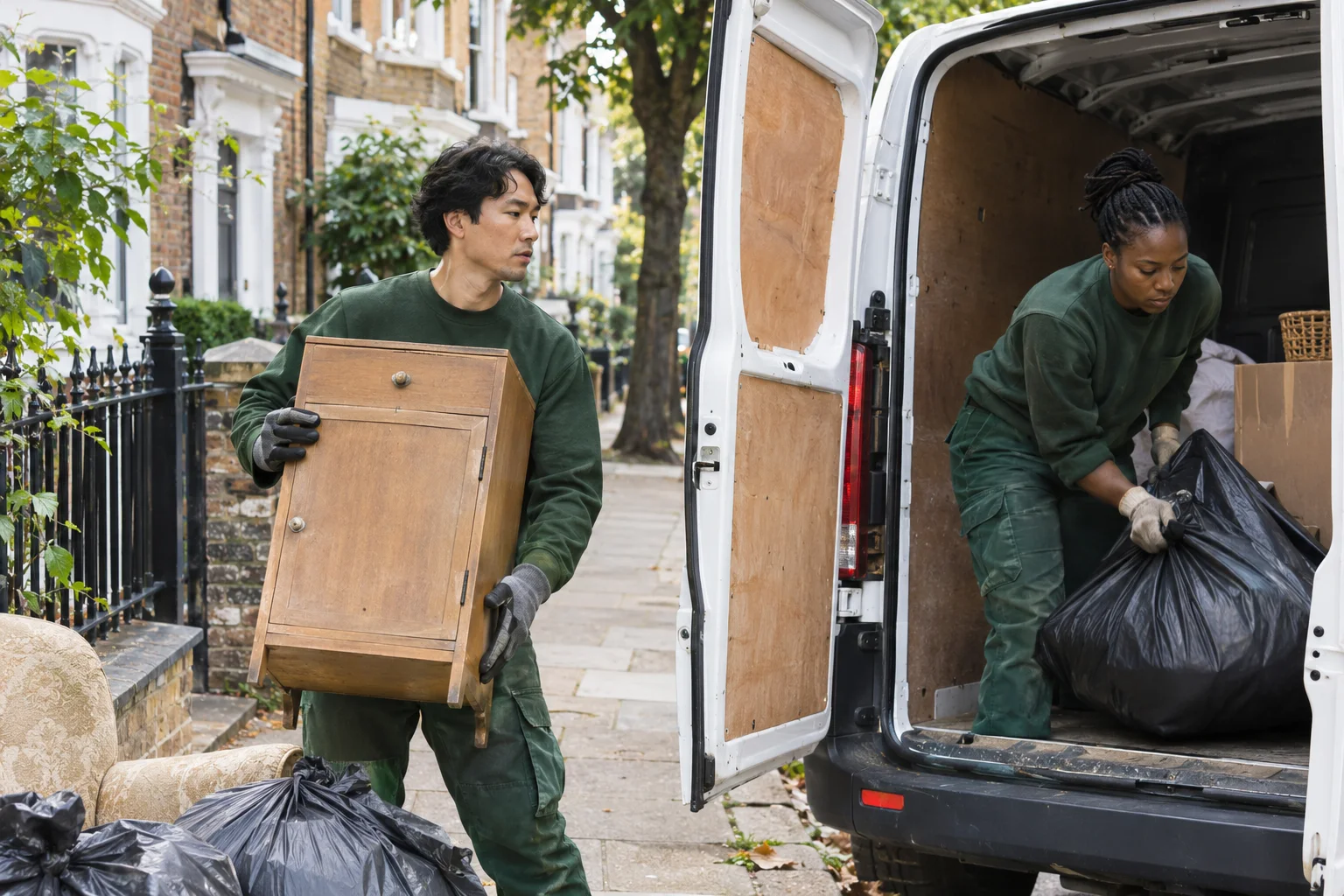
Rubbish collection in Archway
We collect unwanted furniture and household rubbish in Archway, carrying the agreed contents from their location and loading the vehicle. Same-day service is available across London and the M25. Our phone line is open 24/7 for enquiries about a single item or larger removal.
Estimate a bulky item and its bags
Describe what needs carrying rather than a small-material pedestrian drop-off.
A sofa or cabinet can leave with the agreed smaller belongings while the rest of the room remains furnished.
Can furniture go to Hornsey Street’s pedestrian drop-off?
Islington’s council guidance excludes large furniture, large appliances and general household rubbish from that pedestrian point. It has a different material range from a vehicle visit. Our quotation can address carrying furniture from the property and loading it for transport, providing removal for the agreed contents rather than a small-material personal drop-off.
Can you collect a larger item without emptying the room?
Yes. The quotation can identify a sofa, cabinet or other unwanted piece and specified accompanying belongings. Our team carries and loads those agreed contents while retained furniture remains at the property. The assessment considers their location and route, including the relevant doors, floor and connection to the vehicle loading point.
A small recycling drop-off and a bulky property collection involve different physical work. Our Archway service can address the contents that need carrying out: furniture, household belongings and identified equipment. The enquiry describes the full proposed removal and where the items are kept.
For an Archway household, Hornsey Street and Regis Road offer distinct self-delivery choices. Hornsey Street’s pedestrian point excludes large furniture, appliances and general rubbish; Regis Road accepts unwanted household furniture under its site rules. Our team performs the separate carrying and loading work for the furnishings and containers agreed at your property.
- Selected furniture removed while retained contents stay.
- Indoor carrying assessed for the item and route.
- Smaller belongings identified alongside the main piece.
- Transport and loading connected with property removal.
| Named facility or route | Specific material and access detail | How the private removal differs |
|---|---|---|
| Hornsey Street entrance drop-off | The centre is at 40 Hornsey Street, Islington N7 8HU. Pedestrians and cyclists use a separate point at the entrance rather than entering the main facility. | A small personal drop-off begins with the resident carrying the items there. Our team carries the agreed property contents from their indoor or storage positions and loads the vehicle, including accepted furniture that cannot use the pedestrian route. |
| Large items excluded on foot | Islington excludes large furniture, large appliances and general household rubbish from Hornsey Street’s pedestrian point. These restrictions differ from a vehicle visit. | A worn sofa and accompanying household bags therefore need their own suitable arrangement. We quote for the actual selected pieces and their positions, then carry and load the accepted group while furniture staying in use remains outside the removal. |
| Regis Road, Kentish Town NW5 3EW | Camden lists unwanted furniture, electrical items, scrap metal and garden waste among household materials that can be taken to this centre. | This is a second centre to consider for a personal household visit, with the complete address and materials establishing the relevant enquiry. Our private service instead removes accepted objects from the collection property and loads them for transport along the assessed route. |
| Van and trailer visits | Regis Road requires an advance booking for a van or trailer. Hornsey Street’s own operator also publishes vehicle arrangements separately from its entrance drop-off. | Public-site vehicle conditions do not supply carrying from a home. Our quotation connects a cabinet’s dimensions, floor and doorway route with the team’s removal task, with denser containers and furniture in another agreed room included in the selected load. |
A furniture collection from the room itself
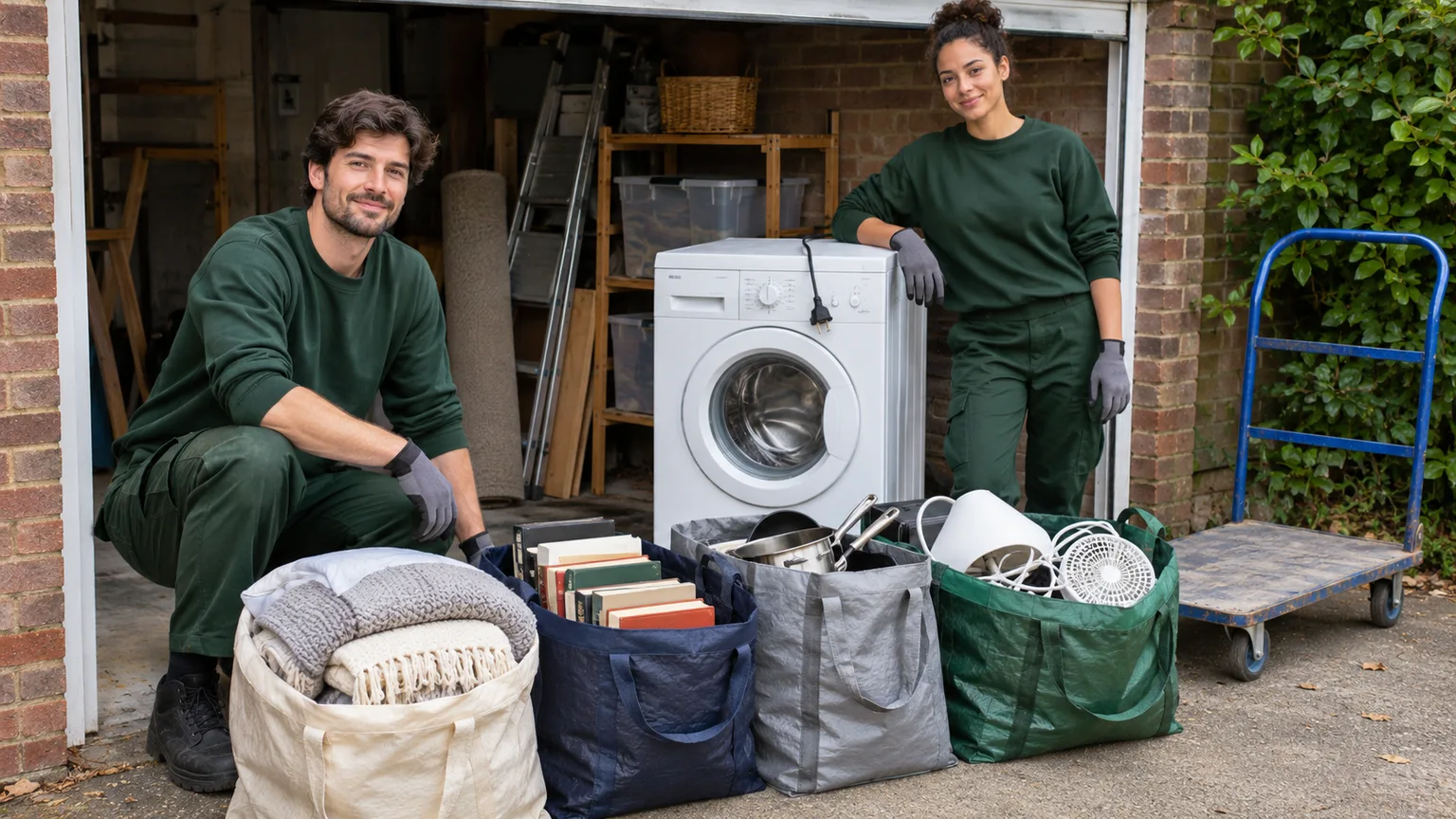
We remove the contents identified in the quotation, including selected furniture from a furnished room. Boxes or bags elsewhere can be included when named in the enquiry. The team carries and loads those agreed items.
The larger piece’s dimensions connect its starting point with the doorways and route out. A tall cabinet, compact chair and dense book box present different carrying tasks.
| Contents | What is identified | Why it helps the removal |
|---|---|---|
| One main piece | A sofa, table or cabinet is named with its current location and approximate dimensions. | The quotation can cover that item while the rest of the room stays furnished. The team considers its shape along the route and the space it occupies in the collection vehicle. |
| Accompanying containers | The enquiry describes boxes or bags leaving with the larger furniture. | Their contents and quantity contribute to the combined load. Books can add weight, while clothing and packaging have different characteristics; those groups remain visible rather than hidden behind a furniture count. |
| Separate collection points | Smaller contents or another piece may be stored in a different room. | The quotation connects the identified points with the carrying route. A partial collection across rooms can therefore be assessed without removing every possession from any room involved. |
Two recycling centres, with different ways to bring the load
Hornsey Street is at 40 Hornsey Street, N7 8HU. Its entrance drop-off allows certain materials to be handed in on foot or by bicycle, but does not permit pedestrians inside the main centre. Large furniture, large appliances and general household rubbish are excluded from that point. Regis Road in Kentish Town, NW5 3EW is another named household centre, with furniture and electrical categories.
Our Archway collection carries the accepted furniture and smaller contents from their rooms to the vehicle. That physical removal is separate from a resident taking a personal load to either centre; retained furnishings and neighbours’ belongings stay outside the agreed collection.
| Combined load limit | Guide price | How the guide relates to the job |
|---|---|---|
| Up to 50 kg | £55 | The minimum band has a confirmed weight limit and no separate published volume cap. The quotation establishes the arrangement for bulky lightweight items and the proposed collection contents. |
| Up to 3 yd³ and 250 kg | £120 | Both ceilings apply to the domestic load. Furniture, identified devices and smaller bags or boxes count together, including dense contents that may occupy relatively little space. |
| Up to 6 yd³ and 500 kg | £180 | The load must remain within volume and weight limits together. Empty furniture and tightly packed containers contribute differently, so the complete material description informs the proposed removal. |
| Up to 9 yd³ and 760 kg | £240 | The larger guide still has two ceilings. Agreed items at different points in the property form the same collection, rather than counting only the main furniture visible near the entrance. |
| Up to 12 yd³ and 1,000 kg | £305 | Loads exceeding either allowance require a quote. Whole-property jobs, business rubbish and equipment-focused removals receive the appropriate assessment rather than an unlimited extension of a household band. |
The complete route to the practical loading point
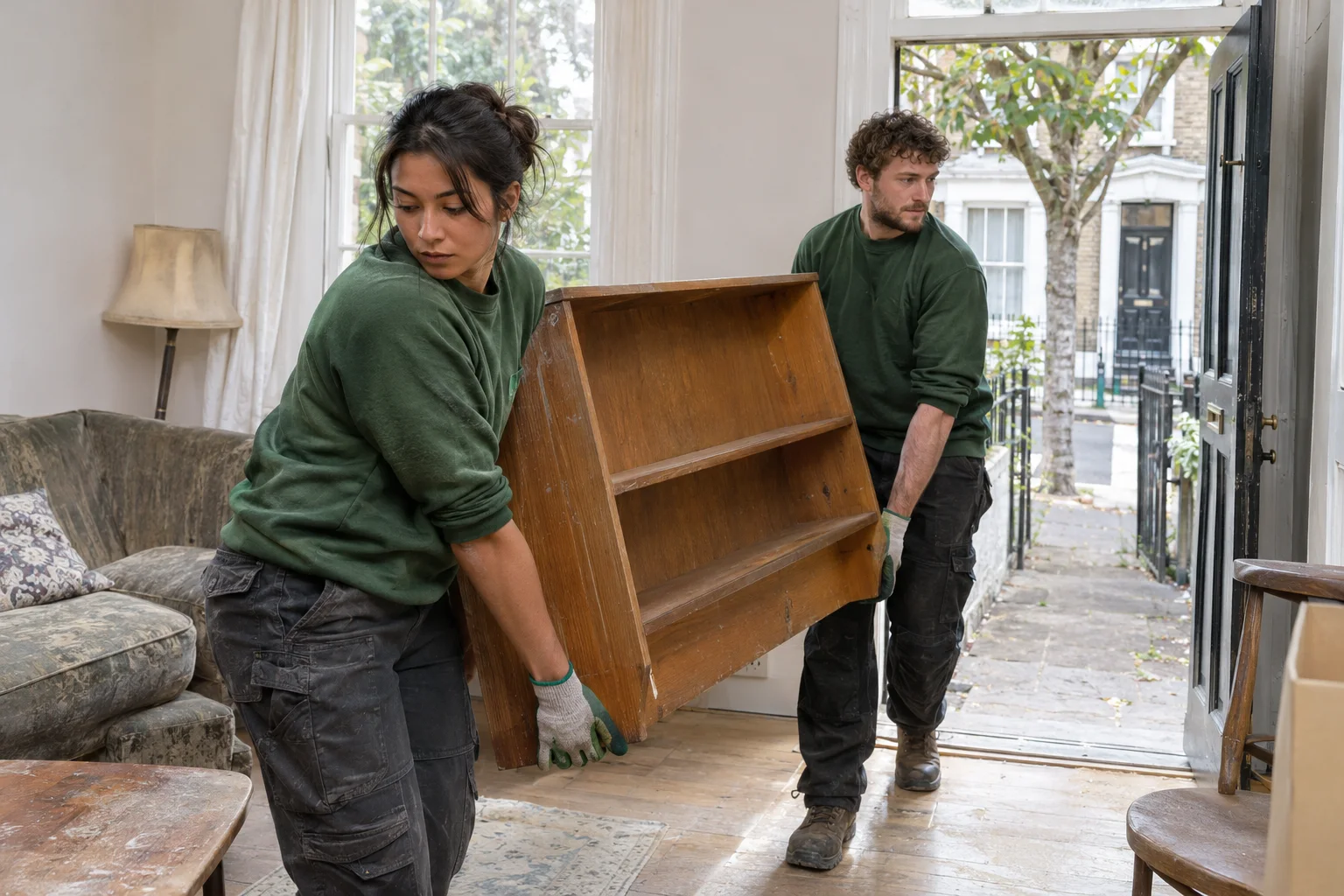
The floor, doors, stairs or an available lift connect an indoor location with the building exit. The assessment follows the particular item along that route, including any shared entrance involved.
A collection can cover several identified points without clearing the whole property. The quotation brings those locations together and establishes the contents to be carried and loaded.
| Route element | Relevant feature | Work covered by the arrangement |
|---|---|---|
| Room exit | The item starts at its agreed location among other contents. | The removal list distinguishes unwanted furniture from pieces being retained. The team assesses the actual route from that point through the room doorway rather than treating the whole room as empty. |
| Floor connection | Stairs or an available lift link the identified location with the building exit. | The quote considers the item’s dimensions and the available route. Contents upstairs and bags already beside an entrance create different carrying work within the same proposed removal. |
| Vehicle loading point | The practical stopping position establishes where the contents are loaded. | The team carries the agreed pieces to that point and loads the vehicle. This connects physical removal from the property with onward transport, instead of only providing a destination receiving self-delivered waste. |

Reuse options and a mixed removal have different purposes
Islington’s published reuse option concerns household items that can be cleaned and refurbished for resale. That is different from a mixed clearance containing several material groups and rubbish requiring disposal.
We transport the agreed contents for responsible handling and recycle as much as possible. The quote identifies household, business or building materials through the appropriate enquiry, with whole-property clearance assessed as an individual job.
| Material or origin | Useful distinction | Relevant enquiry |
|---|---|---|
| Reusable furniture | Islington’s reuse service is described for items that can be cleaned and refurbished for resale. | That route has its own acceptance arrangements. Our quotation can address the mixed unwanted contents requiring removal, with recycling where suitable and responsible disposal of material following another route. |
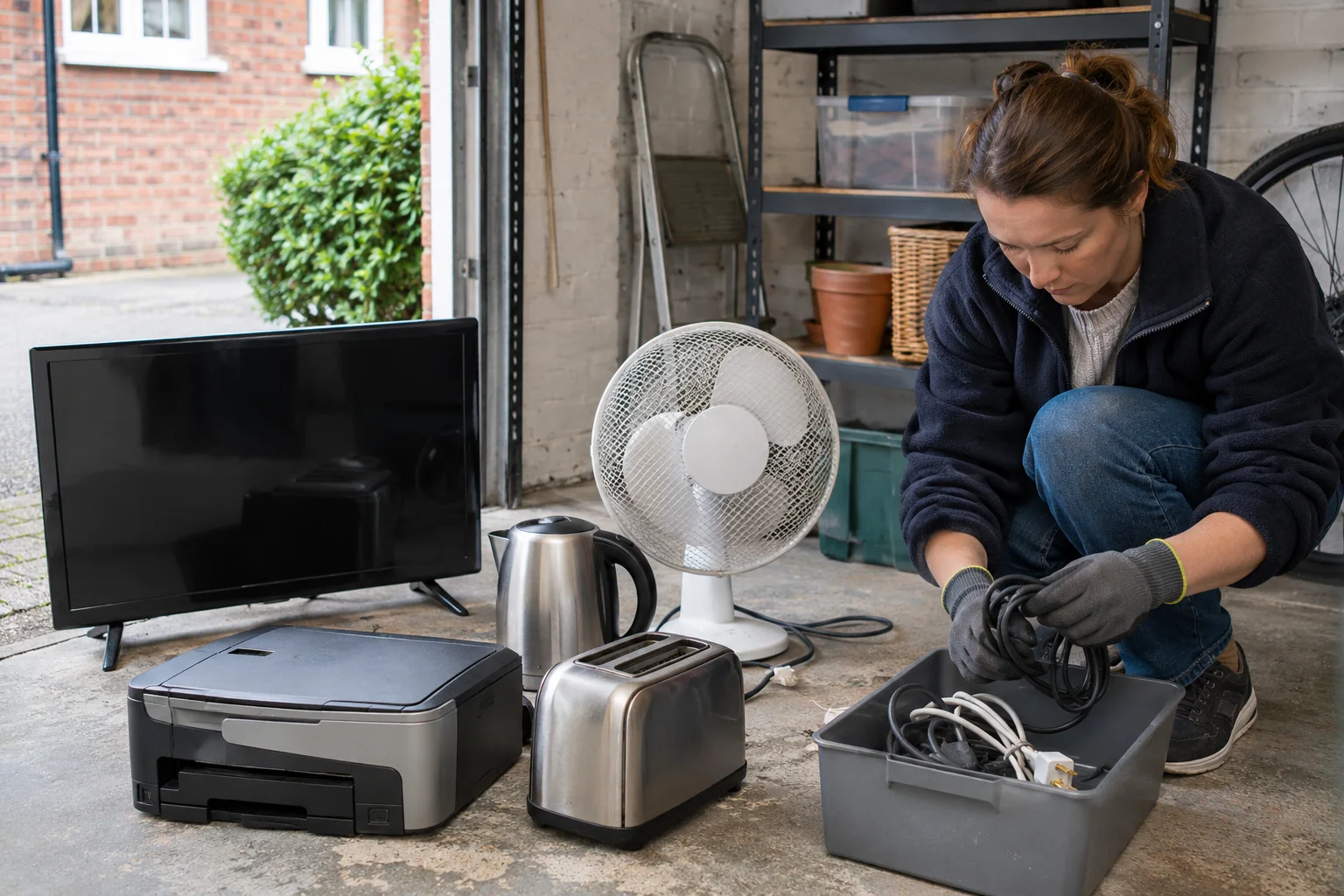
| Electrical equipment | Appliances and devices remain identifiable alongside furniture and ordinary belongings. | Their size, type and location form part of the enquiry. Equipment-focused collections can follow the electrical service, while owners complete any personal-information preparation before devices are handed over. |
| Business or building waste | Commercial contents and renovation debris differ from a resident’s ordinary belongings. | The relevant service assesses those materials and their origin. A household furniture guide is not a universal business tariff or a substitute for the weight-based building waste enquiry. |
Collections in Archway
We cover Archway and all London and the M25. Same-day appointments are available, with the collection arranged for the contents and schedule. Our 24/7 phone line accepts enquiries about selected furniture or larger household removals.
Local reuse and recycling information
Frequently asked questions
Can I walk into the main Hornsey Street recycling centre?
No. Islington directs pedestrians and cyclists to a separate drop-off point at the Hornsey Street entrance. Large furniture, large appliances and general household rubbish are excluded there. Our Archway collection separately carries the contents accepted for removal from the property to the vehicle.
Is the main centre located in Archway?
The council identifies it at 40 Hornsey Street, N7 8HU. It is a borough recycling option, while our property collection attends the agreed Archway address.
Can the room remain furnished after collection?
Yes. The quotation identifies the unwanted pieces and accompanying contents. Retained furniture stays outside that removal list, allowing a selected item to leave independently.
Does the reuse option cover every damaged item?
Islington describes its reuse route for household items that can be cleaned and refurbished for resale. Its acceptance differs from a mixed rubbish removal enquiry.
Why include the floor when describing a cabinet?
The location connects the item with its route to the vehicle. Stairs, doors or an available lift matter to the carrying work assessed for the proposed removal.